
Telemedicine has evolved into a primary vehicle for delivering intelligent care, with millions of users now engaging in online medical consultations annually. This shift marks a fundamental realignment of the healthcare sector, where the focus has moved from reactive clinical visits to proactive, technology-driven oversight. Current market valuations reflect this reality, showing that the integration of artificial intelligence within remote patient monitoring systems reached $2.79 billion in 2025 and has surged to approximately $3.45 billion in the current year of 2026. This trajectory represents a robust compound annual growth rate of over 23 percent, illustrating how quickly digital transformation is being embraced across the medical spectrum. By decentralizing care, providers can now manage patient health more effectively than ever before, using intelligence to bridge the traditional distance between the home and the hospital. This financial momentum is indicative of a broader systemic change that prioritizes precision and continuous data flow.
Understanding the Technology and Its Growth
The Mechanics of AI Integration: Intelligent Data Interpretation
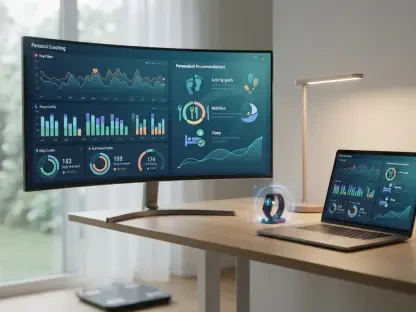
AI integration in remote monitoring goes far beyond the simple transmission of biometric data from a patient’s home to a medical facility. At its core, the technology utilizes sophisticated machine learning algorithms designed to interpret complex physiological metrics in real time, transforming raw numbers into actionable clinical intelligence. These systems continuously analyze critical indicators such as heart rate variability, blood pressure fluctuations, and glucose levels to establish a personalized health baseline for every individual. When the AI detects subtle deviations that might suggest a brewing medical complication, it flags these issues long before they would be visible to a human observer during a standard checkup. This automated layer of interpretation acts as a persistent, digital safety net, ensuring that chronic conditions are managed with a level of granularity that was previously impossible. By filtering out noise and highlighting significant trends, the technology allows for a highly nuanced understanding of patient health.
Historical Factors: Foundations of Initial Adoption
The initial rise of the remote patient monitoring market was largely fueled by the global challenge of managing chronic conditions like cardiovascular disease and diabetes. Historically, these illnesses required frequent, in-person supervision that strained both hospital resources and patient schedules. As the prevalence of these conditions grew, the healthcare industry recognized that the traditional model of episodic care—where a patient is only evaluated during an office visit—was insufficient for preventing long-term complications. The introduction of digital health records and the subsequent proliferation of connected medical devices created the necessary technological foundation for artificial intelligence to take root. By digitizing the patient experience, the industry paved the way for a more integrated approach where health information could be accessed and analyzed from anywhere. This historical push for better management of long-term illness laid the groundwork for the current period of exponential expansion we are seeing across the globe.
Future Trends and Market Expansion
Strategic Catalysts: Home-Based Care and Predictive Analytics
Looking toward the end of the decade, the market is projected to reach a massive valuation of $8.02 billion by 2030, driven by several emerging strategic catalysts. One of the most significant shifts is the transition toward home-based care models, which are increasingly favored by both patients and healthcare payers. For patients, receiving high-quality medical oversight in their own environment improves quality of life and reduces the stress associated with hospital visits. Simultaneously, the evolution from reactive to predictive monitoring allows AI systems to forecast potential emergencies before they occur. By analyzing historical data patterns and real-time inputs, these systems can predict events like heart failure exacerbations days in advance. This proactive capability allows medical teams to implement preventive measures, such as adjusting medication dosages, which can effectively stabilize a patient without an emergency room visit. Such predictive power significantly reduces hospital readmission rates, which is a key metric for healthcare efficiency.
Technological Synergy: Wearables and Telemedicine Infrastructure
The growth of the artificial intelligence sector in healthcare is deeply intertwined with the rising sophistication of wearable technology. Modern sensors have evolved from basic fitness trackers into medical-grade devices capable of continuous, clinical-quality data collection. These wearables, which range from advanced smartwatches to specialized adhesive patches, provide a constant stream of biometric data that AI systems can analyze without requiring any active input from the patient. Telemedicine serves as the indispensable delivery vehicle for these generated insights, providing secure communication channels needed for healthcare providers to act on the data. The synergy between these two technologies creates a closed-loop system where health data is collected, interpreted by AI, and then addressed through a virtual consultation. Recent statistics confirm that the infrastructure for a decentralized, intelligent healthcare network is already firmly in place. As communication technology continues to improve, the integration of real-time AI data into video visits will become the standard.
Regional Market Dynamics
Global Leadership: North American Dominance and Investment
Regionally, North America continues to hold the position of market leader due to its early investment in digital health and a robust ecosystem of technology startups and established medical manufacturers. The region’s advanced healthcare infrastructure and the presence of significant capital for research and development have allowed it to set the standard for AI implementation in remote monitoring. Furthermore, regulatory bodies in the United States and Canada have become increasingly supportive of digital health solutions, providing clear pathways for the approval of AI-driven medical software. This supportive environment has encouraged large hospital networks to adopt these technologies on a massive scale, driving significant market growth. The high cost of traditional healthcare in the region also serves as a motivator for the adoption of efficient, automated monitoring tools that can lower expenses while maintaining high standards of care. Consequently, North American companies are at the forefront of developing the next generation of predictive algorithms that will shape the global market.
Emerging Powerhouses: Rapid Digital Transformation in Asia-Pacific
In contrast, the Asia-Pacific region is identified as the fastest-growing market for AI in remote patient monitoring as we approach 2030. This rapid expansion is fueled by massive healthcare expenditures in emerging economies such as China and India, where governments are looking to digital solutions to manage large and aging populations. The swift digital transformation in these nations is aimed at overcoming geographical barriers and the shortage of medical professionals in rural areas. By leveraging AI-powered monitoring, these countries can provide high-quality oversight to millions of citizens without needing to build an equivalent number of physical hospitals. Additionally, the region has a high rate of smartphone and wearable device penetration, which provides the necessary hardware for remote care systems to thrive. As investment flows into local medical technology firms, the Asia-Pacific market is expected to innovate rapidly, creating cost-effective solutions that could eventually be exported back to Western markets. This dynamic shift ensures that growth will be a global phenomenon.
Strategic Directions for an Intelligent Future
The global transition toward intelligent health systems represented a pivotal moment in medical history, where the clinical environment expanded far beyond the hospital walls. As healthcare organizations adopted these AI-driven monitoring tools, they successfully reduced the burden on physical facilities and shifted the focus toward preventive maintenance. To ensure the success of this $8.02 billion industry, stakeholders prioritized the development of standardized data protocols that allowed for seamless interoperability across different platforms. Furthermore, the industry moved into a phase where the ethical use of patient data and the transparency of algorithmic decision-making became central to maintaining public trust. Leaders focused on expanding access to these technologies in underserved communities to prevent a digital divide in health outcomes. By investing in robust cybersecurity and user-centric design, the medical community established a resilient framework that redefined the relationship between technology and human well-being for the foreseeable future.