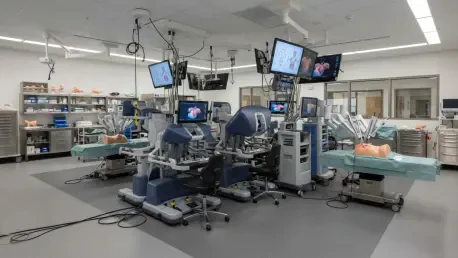

The academy’s mission extends beyond teaching mechanical operation, focusing instead on the holistic coordination required for a successful robotic surgical team. This pioneering initiative at Imo State University, established in partnership with the Imo Robotic Centre, serves as a significant turning point for medical infrastructure across the African continent. By integrating sophisticated robotics into the university’s curriculum, the program seeks to bridge a long-standing gap in technological accessibility and specialized expertise. Professor Kingsley Ekwueme, a distinguished Consultant Urologist, leads this ambitious project with the objective of training 500 surgical professionals by the year 2028. This effort is not merely an academic expansion but a calculated strategic movement to modernize surgical capabilities starting from Southeast Nigeria. It addresses a critical need for local mastery over systems that were previously only available in distant international medical centers.
Academic Integration: Redefining Surgical Excellence in West Africa
The formalization of this partnership through a Memorandum of Understanding in August 2026 marked a definitive transition toward a new era of medical education within Nigeria. By housing the academy’s headquarters and departmental buildings directly on the IMSU campus, the institution has effectively merged high-level academic theory with real-world clinical application. This integration provides students and seasoned practitioners alike with unprecedented access to robotic systems that provide three-dimensional, highly magnified views of the surgical field. Such technological immersion allows for far greater precision during operations in confined spaces, effectively reducing the risk of accidental tissue damage. As the university transforms into a premier hub for innovation, it sets a standard for other regional institutions to follow, emphasizing that the future of African medicine lies in the adoption of digital precision and automated assistance to enhance human surgical skill.
Clinical outcomes at the newly established center have already begun to demonstrate the transformative power of this technology for patient care. The recent completion of West Africa’s first successful gynecological robotic surgery stands as a testament to the efficiency of these advanced systems, with the patient being discharged on the same day as the procedure. This milestone highlights the drastic reduction in surgical trauma and blood loss compared to traditional open surgeries. Furthermore, the versatility of the robotic platform extends to multiple specialties, including urology, cardiac surgery, and general oncology. By minimizing complications and accelerating recovery times, the academy ensures that patients can return to their daily lives much faster, thereby reducing the burden on the broader healthcare system. The training provided ensures that every member of the surgical staff, from nurses to anesthesiologists, is proficient in handling these complex tools.
Economic Resurgence: Combatting Capital Flight through Local Innovation
One of the most profound motivations behind the establishment of the robotic academy is the urgent need to mitigate health-related capital flight. For many years, the Nigerian economy has experienced a significant drain on foreign exchange reserves as citizens traveled to Europe, North America, or Asia for complex surgical interventions. By establishing a world-class facility within Imo State, the academy and the Imo Robotic Centre are providing a viable local alternative for those who previously felt compelled to seek treatment abroad. This strategy keeps vital financial resources within the domestic economy while simultaneously making elite healthcare more accessible to a broader demographic. Reducing the reliance on international medical tourism is a critical step toward national self-sufficiency in the health sector. The initiative proves that local institutions can offer services that meet or exceed international standards if provided with necessary technological support.
Beyond financial retention, the project aims to reverse the long-standing ‘brain drain’ that has seen many of Nigeria’s most talented medical professionals seek opportunities in foreign nations. By creating an environment characterized by state-of-the-art facilities and professional growth opportunities, the academy acts as a magnet for experts who wish to apply their skills in their home country. Professor Ekwueme’s transition from a leadership role in the United Kingdom to heading this initiative serves as a powerful example of this paradigm shift. This movement encourages Nigerian specialists living abroad to return and contribute to a burgeoning medical revolution. As these experts repatriate their knowledge, they provide the mentorship necessary to cultivate a new generation of surgeons who are trained on home soil. This cycle of knowledge transfer is essential for maintaining a sustainable and robust healthcare workforce that can manage the challenges of modern medicine.
Infrastructure Growth: Expanding Access to Advanced Oncology and Diagnostics
The scope of this medical advancement is not confined solely to surgical suites; it includes the development of a comprehensive medical hub featuring an adjacent oncology center. This facility is designed to focus specifically on advanced cancer diagnostics and specialized oncology services, filling a major gap in the regional healthcare landscape. The support of the Imo State Government, particularly under the guidance of Governor Hope Uzodimma, has been instrumental in facilitating the logistical and administrative framework required for such a massive undertaking. This partnership between the public sector and academic institutions ensures that the necessary infrastructure is in place to support long-term healthcare goals. By centralizing these high-tech services, the region becomes a beacon of medical excellence, capable of addressing some of the most complex health challenges faced by the population. The oncology center represents a commitment to holistic care that goes beyond immediate surgery.
To ensure that the advantages of robotic technology are not limited to a single geographic area, the academy has outlined a plan to assist other hospitals throughout Nigeria with equipment procurement. Professor Ekwueme has emphasized that the academy’s expertise includes identifying and sourcing affordable robotic systems, which is vital for the decentralization of advanced healthcare. By providing technical guidance on installation and maintenance, the IMSU initiative seeks to empower other medical centers to adopt similar technologies. This nationwide expansion strategy aims to make robotic surgery a standard option rather than a luxury reserved for a few. Furthermore, the academy offers certification programs that establish a gold standard for surgical excellence, ensuring that patients across the country receive a consistent quality of care. This collaborative approach fosters a network of healthcare providers who are unified by shared technological standards and clinical protocols.
Strategic Implementation: Future Paths for Regional Medical Sovereignty
The sustainability of this medical revolution depends heavily on supportive federal policies and strategic economic incentives. Professor Ekwueme has actively advocated for the implementation of tax waivers on the importation of robotic equipment and specialized medical supplies. High import duties currently contribute significantly to the overhead costs of advanced healthcare, which can ultimately lead to higher out-of-pocket expenses for patients. By reducing these financial barriers, the government can play a direct role in making robotic surgery more affordable and sustainable for the average citizen. Policy adjustments of this nature are necessary to ensure that the initial investment in technology translates into long-term public health benefits. Furthermore, creating a favorable regulatory environment encourages further private investment in medical innovation, ensuring that Nigeria remains at the forefront of the African medical sector. Such measures are essential for protecting the growth of this nascent industry.
The successful launch of the robotic surgery academy at Imo State University established a blueprint for achieving medical independence through targeted technological investment. Stakeholders identified that human proficiency remained the most critical component of the system, leading to a focused effort on certifying the next 500 professionals by 2028. These trained teams provided the foundation for a healthcare model that prioritized precision, safety, and local accessibility. Moving forward, the focus shifted toward integrating these advancements into national health insurance frameworks to ensure equitable access for all socioeconomic groups. Experts recommended that ongoing research collaborations be maintained with international robotic firms to keep local hardware at the cutting edge of global developments. This strategic focus on continuous education and infrastructural expansion ensured that the initiative did not remain a static achievement but instead evolved into a dynamic engine for regional development.