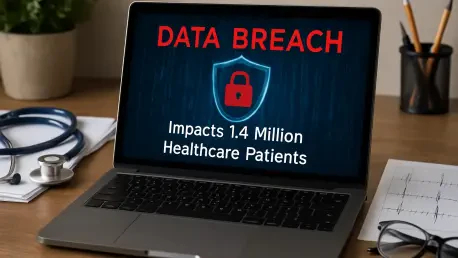

The vulnerability of the modern healthcare supply chain was laid bare in January 2026 after a sophisticated phishing campaign successfully targeted Xsolis, a prominent provider of clinical data and utilization management software. By compromising internal credentials, unauthorized actors gained access to an environment containing the highly sensitive records of approximately 1.4 million patients across the United States. This incident highlights the cascading risks associated with third-party vendors, as the breach did not just impact a single hospital but rippled through various health systems and insurance providers that rely on Xsolis for clinical documentation and medical necessity reviews. Because many individuals interact with these platforms indirectly, the discovery of such a massive exposure often comes as a shock to those who have no direct brand recognition of the software firm in question. The specific data points accessed during the intrusion include Social Security numbers, detailed medical treatment records, and health insurance information, all of which are considered high-value assets on the dark web.
1. Examine the Notification Letter to See Exactly What Personal Data Was Compromised
The first step for any individual who receives a formal communication from Xsolis or a partner healthcare provider is to conduct a meticulous review of the document to determine the scope of the exposure. These letters are legally required under the HIPAA Breach Notification Rule and are designed to provide a transparent account of what specific identifiers were accessed by the unauthorized party. It is crucial to distinguish whether the compromise was limited to basic contact information or if it extended to more sensitive details like Social Security numbers and clinical diagnoses. Understanding this distinction allows the recipient to tailor their response strategy, as the theft of medical history requires a significantly different mitigation approach than the theft of a home address or a phone number. Every notification contains a unique reference code or contact information for a dedicated help desk, which should be utilized to clarify any ambiguities regarding the timeline of the January 2026 incident.
Beyond the immediate details of the data categories, the notification letter often serves as the primary link between the software vendor and the specific hospital where the patient received care. Because Xsolis operates as an intermediary, the letter should explicitly name the covered entity—the hospital or insurer—that provided the patient’s data to the platform. This information is vital for cross-referencing past medical visits and identifying which specific accounts may be at higher risk for fraudulent activity in the coming months. Patients should also pay close attention to the date the breach was discovered versus the date the notification was mailed, as this timeline provides insight into the duration of the exposure. Storing the physical letter in a secure location is a necessary precaution, as it serves as the official record of the event and may be required if the individual needs to prove they are a victim of identity theft when disputing future fraudulent charges or applying for credit protections.
2. Sign up for the Complimentary Identity Protection Services if They Are Provided in the Notice
When a breach involves highly sensitive identifiers such as Social Security numbers, organizations like Xsolis typically offer a period of complimentary identity theft protection and credit monitoring services. It is strongly recommended that affected individuals enroll in these services immediately upon receiving their activation codes, as these platforms provide an automated layer of security that tracks changes to credit reports in real time. These services often include insurance coverage for legal fees and lost wages incurred while restoring one’s identity, as well as access to fraud resolution specialists who can navigate the complexities of clearing a compromised record. While these services do not “fix” the breach, they act as a vital early warning system that can alert a person to the opening of new lines of credit or unauthorized inquiries that might otherwise go unnoticed for months. The enrollment window is usually limited to a few months following the notification, so prompt action is required to ensure the benefit is not forfeited.
While complimentary monitoring is a significant resource, it is important to view it as a foundational tool rather than a comprehensive solution. These services primarily focus on financial credit monitoring and may not capture every instance of medical identity theft or the fraudulent use of health insurance details. Therefore, the individual should utilize the service’s dashboard to set up custom alerts for any changes to their personal profile, such as address updates or new phone numbers linked to their identity. Additionally, recipients should investigate whether the provided service includes “dark web monitoring,” which scans illicit marketplaces for the presence of the specific data points lost in the January 2026 Xsolis incident. Utilizing these tools provides a proactive stance against the long-term nature of data misuse, as stolen information is often hoarded and utilized by malicious actors long after the initial security event has faded from the headlines.
3. Look over Your Credit History for Any Accounts or Transactions You Did Not Authorize
Frequent and thorough inspection of credit reports is an essential practice for the 1.4 million individuals impacted by this security failure. In the United States, consumers are entitled to free credit reports from the three major bureaus—Equifax, Experian, and TransUnion—and these should be scrutinized for any unfamiliar accounts, loans, or inquiries. Since the Xsolis breach involved Social Security numbers, the risk of “synthetic identity theft,” where a criminal combines real and fake information to create a new credit profile, is particularly high. Victims should look for “soft” inquiries from lenders they do not recognize, as these are often the first signs that a criminal is testing the validity of the stolen data. If any discrepancy is found, no matter how minor it may seem, it must be reported to the credit bureau immediately to initiate a dispute process and prevent further damage to the individual’s financial standing.
The analysis of credit history should extend beyond a one-time check and become a recurring habit, especially in the wake of such a large-scale clinical data exposure. Malicious actors frequently wait for several months or even years after a breach before attempting to use the stolen data, hoping that the victims have lowered their guard. By rotating the requests for free reports among the three bureaus every four months, an individual can maintain a continuous stream of oversight throughout the year. It is also beneficial to check for any sudden changes in credit scores, as an unexplained drop can indicate that an unauthorized account has defaulted or reached its limit. This level of financial self-defense is a necessary response to the reality that clinical data, once leaked, cannot be truly retracted, making the vigilant monitoring of the downstream effects the most effective way to mitigate long-term personal and financial harm.
4. Inspect Your Medical Insurance Summaries for Any Treatments or Charges That Seem Incorrect
Medical identity theft is a particularly insidious consequence of the Xsolis breach because it involves the corruption of a person’s health records and insurance history. Affected patients must carefully audit every Explanation of Benefits (EOB) statement sent by their insurance provider to ensure that the listed services match the treatments they actually received. If an EOB shows charges for a procedure, prescription, or office visit that did not occur, it may indicate that someone else is using the patient’s stolen medical identity to obtain healthcare services. This type of fraud can lead to the exhaustion of insurance policy limits and the insertion of incorrect medical information—such as a different blood type or allergy—into the victim’s permanent health file. Such inaccuracies pose a direct threat to patient safety in future medical emergencies, making the verification of insurance summaries a critical health priority rather than just a financial one.
To effectively monitor for medical fraud, individuals should maintain a personal log of all healthcare encounters, including the dates of service and the names of the providers visited. Comparing this log against the insurance carrier’s digital portal or paper summaries allows for the quick identification of “phantom” claims that are common in medical identity theft cases. If a discrepancy is identified, the patient should contact both the insurance company’s fraud department and the healthcare provider listed on the suspicious claim to clarify the charges. It is also wise to request a “summary of benefits” specifically covering the period starting in early 2026 to ensure no historical claims were backdated or altered during the period of unauthorized access. Addressing these issues early prevents the long-term complication of debt collection actions initiated by medical offices for services the victim never authorized or received.
5. Be on the Lookout for Suspicious Phone Calls, Messages, or Emails Referencing the Security Incident
Following a high-profile breach like the one at Xsolis, it is common for cybercriminals to launch secondary “follow-on” attacks that leverage the public’s awareness of the incident. These social engineering tactics often involve fraudulent phone calls, text messages, or emails—commonly known as vishing, smishing, and phishing—where attackers pose as Xsolis representatives or insurance agents. They may claim that the victim’s account requires “immediate verification” or that additional personal information is needed to process a settlement claim. It is important to remember that legitimate organizations will never ask for a full Social Security number or password over the phone or through an unsolicited email. Any communication that creates a false sense of urgency or demands sensitive credentials should be treated with extreme skepticism and verified through an official, known-good phone number found on the company’s primary website.
The sophistication of these secondary attacks has increased, with some attackers using the specific details leaked in the breach to make their fraudulent claims appear more authentic. For example, a caller might mention the specific name of a hospital or a date of service to gain the victim’s trust before requesting financial information. To counter this, individuals should adopt a policy of never clicking on links provided in unsolicited messages regarding the breach, even if they appear to come from a trusted source. Instead, they should navigate directly to the official portal of their healthcare provider or Xsolis to check for updates. Implementing multi-factor authentication (MFA) on all sensitive accounts, particularly email and health insurance portals, provides a critical second line of defense that can stop an attacker even if they have already obtained the user’s primary login credentials through a phishing attempt.
6. Set up a Credit Freeze or Fraud Alert if Your Social Security Number Was Part of the Leak
For those whose Social Security numbers were specifically confirmed as part of the Xsolis data exposure, implementing a credit freeze is often the most robust defensive measure available. A credit freeze, also known as a security freeze, restricts access to an individual’s credit report, making it nearly impossible for identity thieves to open new accounts in that person’s name. Because most creditors need to see a credit report before approving a new line of credit, the freeze acts as a definitive barrier to unauthorized activity. Setting up a freeze is a free process that must be done individually with each of the three major credit bureaus: Equifax, Experian, and TransUnion. While a freeze requires the individual to temporarily “thaw” their credit when they actually want to apply for a loan or a new utility service, the minor inconvenience is far outweighed by the security it provides against the high-stakes risk of permanent identity theft.
Alternatively, individuals may choose to place a fraud alert on their credit files, which is a less restrictive but still effective option. A fraud alert requires creditors to take extra steps to verify a person’s identity before issuing credit, such as calling the individual at a pre-registered phone number. Unlike a freeze, which must be managed at all three bureaus, placing a fraud alert with one bureau automatically triggers the other two to do the same. This is particularly useful for those who may be in the middle of a home purchase or car loan application and need their credit to remain relatively accessible. Regardless of the chosen method, taking this decisive action in the immediate aftermath of the January 2026 incident ensures that the stolen Social Security data becomes significantly less valuable to criminals, as the primary path to financial exploitation is effectively blocked.
7. Maintain Records of All Correspondence and Reports Regarding Any Fishy Activity
Organizing a comprehensive file of all documents related to the Xsolis breach is a vital step for long-term recovery and legal protection. This record should include the original notification letter, copies of any police reports filed if identity theft occurred, and a detailed log of all conversations with bank representatives, insurance agents, or credit bureau staff. If any fraudulent activity is detected, documenting the date, time, and name of the person contacted is essential for building a case to reverse unauthorized charges or clear a tarnished credit history. In the digital age, it is also wise to take screenshots of any fraudulent transactions or suspicious emails before they are deleted or corrected. Having a centralized “breach response folder” ensures that if the individual needs to participate in future legal actions or insurance claims, all the necessary evidentiary support is readily available and chronologically organized.
The importance of a paper trail cannot be overstated when dealing with the complex bureaucracy of the healthcare and financial industries. For instance, if an individual discovers that their medical records have been altered, they may need to provide proof of the breach to various clinical departments to have those records corrected. Likewise, if a debt collector contacts the victim regarding a fraudulent medical bill, having the notification from Xsolis and a corresponding fraud affidavit can quickly resolve the dispute. Maintaining these records for several years is advisable, as the repercussions of a data breach of this magnitude can manifest in waves. By keeping a diligent history of the steps taken to secure their identity, victims demonstrate a proactive commitment to their financial and personal security, which can be a deciding factor in successfully navigating the aftermath of the 1.4 million-record compromise.
The collective response to the Xsolis breach demonstrated a significant shift in how the healthcare industry approached the security of third-party clinical ecosystems. Stakeholders recognized that the January 2026 incident served as a definitive turning point, prompting hospitals and insurers to implement more rigorous auditing standards for the software vendors that handled their patient data. Regulatory bodies suggested that the widespread adoption of zero-trust architectures became the new baseline for preventing the lateral movement of attackers within clinical environments. Many organizations moved toward a model where patient identifiers were heavily encrypted even when in use by third-party platforms, significantly reducing the utility of stolen data. Ultimately, the lessons learned from this exposure encouraged a more resilient and transparent framework for managing the intersection of technology and patient privacy, ensuring that the industry moved forward with a heightened focus on systemic data integrity.