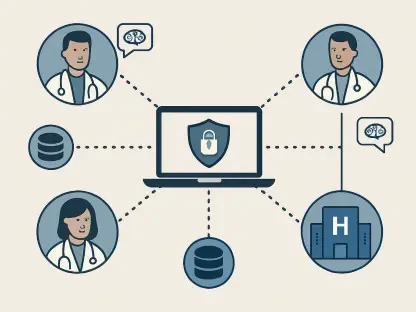

The release of the AIHGle 2.0 framework by Singapore’s Ministry of Health and the Health Sciences Authority has effectively transformed the city-state into a global laboratory for institutionalized medical artificial intelligence. This significant update signals a transition from the cautious, exploratory phase of the early 2020s to a rigorous operational era where governance is no longer an afterthought but a central pillar of clinical development. By building upon the foundational principles established in previous iterations, the government has created a comprehensive ecosystem that addresses the complexities of generative AI and deep learning models. This ensures that the rapid pace of technological innovation does not outstrip the necessary safety oversight required for patient care. The 2026 framework provides a robust legal foundation by aligning modern progress with the Health Products Act, offering developers a predictable environment that removes the ambiguity previously hindering large-scale implementation.
Defining AI as a Medical Device
Classification Clarity: Distinguishing Administrative Tools From Clinical Solutions
The newly implemented guidelines provide essential clarity by establishing clear distinctions between administrative software and high-stakes clinical AI devices, which was previously a major hurdle for HealthTech startups. Under the updated 2026 standards, software used for simple administrative tasks such as medical transcription or scheduling remains unregulated to encourage operational efficiency without unnecessary red tape. However, any digital tool that utilizes complex algorithms to suggest a specific diagnosis, predict patient deterioration, or recommend a treatment plan is now strictly classified as a medical device. This classification forces companies to undergo rigorous registration processes that verify the clinical validity of their algorithms before they can be deployed in any public or private hospital. By providing specific, practical examples within the AIHGle 2.0 documentation, the Health Sciences Authority has eliminated the guesswork that often led to regulatory delays and expensive compliance revisions for developers.
Furthermore, this nuanced classification system allows the healthcare sector to prioritize its monitoring efforts on the technologies that carry the highest risk to patient safety. The registration process now requires comprehensive technical documentation that proves how an AI model arrives at its conclusions, moving away from the “black box” nature of earlier machine learning iterations. This transparency is vital for establishing clinical trust, as physicians are more likely to integrate AI recommendations into their workflows when the underlying logic is clearly defined and verified by a central authority. The mandate for clear labeling also ensures that end-users understand the limitations of each tool, preventing over-reliance on software that may not have been trained for specific demographic nuances. Consequently, the 2026 rules have created a structured pathway where innovation is encouraged within a safe, clearly defined perimeter, allowing the most effective technologies to reach the bedside faster than ever before.
Life Cycle Oversight: Managing Technical Integrity and Model Maintenance
The transition to a comprehensive life cycle approach represents a fundamental shift in how the Health Sciences Authority monitors medical technology from inception to decommissioning. Unlike traditional medical hardware, which remains relatively static after manufacturing, AI software is prone to “model drift,” where performance levels may degrade as the underlying data environment changes over time. To combat this, the 2026 regulations mandate that developers implement continuous validation protocols and regular performance benchmarks to ensure that the tool remains safe throughout its entire operational life. This proactive monitoring ensures that any decrease in diagnostic accuracy is identified and corrected immediately, preventing potential harm to patients. By requiring companies to submit periodic safety updates and performance reports, the framework creates a culture of accountability that extends well beyond the initial product launch or market entry.
Beyond just technical maintenance, the life cycle oversight includes strict protocols for software updates and the integration of new training datasets that may modify the behavior of the AI. Each significant update now requires a re-evaluation of the device’s risk profile, ensuring that “feature creep” does not introduce unforeseen vulnerabilities or ethical biases. This rigorous approach is particularly important for autonomous systems that learn from real-time clinical data, as it provides a safety net that catches anomalies before they escalate into systemic failures. The framework also outlines clear procedures for the decommissioning of AI tools, ensuring that patient data remains protected even when a specific technology is phased out or replaced by a more advanced version. This end-to-end management strategy not only protects the patient but also safeguards the reputation of the developer by ensuring their products consistently meet the highest standards of reliability.
Global Leadership and Market Influence
Regulatory Maturity: World Health Organization Validation and Standards
A major milestone achieved this year is the World Health Organization’s formal recognition of Singapore’s Health Sciences Authority as a Maturity Level 4 regulator for medical products. This prestigious rating is the highest possible global standard, indicating that Singapore’s regulatory systems are not only robust and transparent but also serve as a benchmark for international best practices. This recognition confirms that the nation’s oversight of AI in healthcare is among the most sophisticated in the world, positioning the city-state as a key influencer in the development of global regulatory harmonisation. For other nations looking to draft their own medical AI policies, the AIHGle 2.0 framework serves as a proven blueprint that balances the need for rapid technological advancement with the uncompromising requirement for public safety. This global validation reinforces Singapore’s status as a premier destination for high-value research and development.
The implications of this Maturity Level 4 status extend far beyond simple prestige, as it facilitates smoother regulatory pathways through international cooperation and mutual recognition agreements. When the Health Sciences Authority approves a new AI-driven medical device, that approval carries significant weight with other high-functioning regulators, potentially shortening the time it takes for local firms to enter foreign markets. This streamlined process reduces the cost of global expansion for Singapore-based HealthTech companies, as they do not have to recreate their clinical evidence for every new jurisdiction. Moreover, international medical technology firms are increasingly choosing to launch their newest innovations in Singapore first, seeking the “gold standard” seal of approval that comes with HSA registration. This influx of global talent and technology further enriches the local ecosystem, fostering a virtuous cycle of innovation that benefits the entire national healthcare infrastructure.
Strategic Economic Positioning: Enhancing Regional Dominance and Scaling
By formalizing these strict yet clear guidelines, Singapore has solidified its role as the primary launchpad for HealthTech firms aiming to capture the rapidly growing Southeast Asian market. The predictable regulatory environment allows companies to establish a credible clinical track record in a highly respected jurisdiction before scaling their operations to more complex or less regulated regions. This strategic advantage is particularly important for startups that need to prove the efficacy of their AI solutions to skeptical international buyers or hospital boards. Having the backing of the 2026 AIHGle standards provides a level of quality assurance that is difficult to replicate elsewhere, making Singaporean products highly competitive on the global stage. As a result, the city-state is not just a consumer of advanced technology but a leading exporter of regulated, high-integrity medical AI solutions.
This economic positioning also encourages the development of localized AI models that are specifically tailored to the genetic and lifestyle profiles of Asian populations, filling a significant gap in the global market. Many AI tools developed in Western countries struggle with accuracy when applied to different demographics, but the 2026 framework encourages the use of diverse, local datasets for training and validation. By fostering a domestic industry that specializes in these nuances, Singapore is creating a unique niche that attracts regional healthcare providers looking for more relevant diagnostic tools. The synergy between government support, high regulatory standards, and a burgeoning private sector has created an environment where companies can thrive while maintaining a focus on clinical excellence. This holistic approach ensures that the economic benefits of the AI revolution are shared across the healthcare value chain, from developers to the patients receiving care.
Investment Dynamics and Legal Accountability
Pricing Regulatory Risk: Driving Venture Capital and Strategic Mergers
The clarity provided by the 2026 update has significantly boosted the appetite for investment in the HealthTech sector by allowing venture capital and private equity firms to price risk with precision. Before these rules were institutionalized, investors often hesitated to fund AI startups due to the uncertainty of whether a product would be classified as a medical device or if it would face sudden regulatory hurdles. Now, with a clear roadmap in place, early-stage companies can plan their development cycles and funding rounds with much higher confidence, leading to faster go-to-market timelines. This reduction in “regulatory friction” has also sparked a surge in merger and acquisition activity, as established healthcare providers seek to acquire proven AI startups to enhance their existing service offerings. The ability to conduct thorough due diligence based on standardized regulatory benchmarks has made these transitions smoother and more profitable.
Furthermore, the institutionalization of AI governance has encouraged larger institutional investors to enter the space, providing the significant capital required for late-stage clinical trials and global scaling. These investors are increasingly looking for companies that prioritize long-term compliance and ethical data usage over short-term growth, as the 2026 rules have made it clear that shortcuts are not tolerated. The framework’s emphasis on continuous validation also means that companies with high-performing, well-maintained models are valued more highly than those with opaque or stagnant algorithms. This shift in investment criteria is filtering down to the startup level, where founders are now prioritizing regulatory strategy from day one of their operations. This systemic change ensures that the capital flowing into the sector is supporting sustainable, high-quality innovations that have a genuine chance of improving long-term clinical outcomes across the healthcare system.
Professional Responsibility: Navigating Ethics and Liability in Clinical Practice
While the 2026 guidelines offer extensive technical and administrative clarity, they also reinforce the critical role of human judgment by maintaining that clinicians bear the ultimate responsibility for patient outcomes. The framework explicitly defines AI as a decision-support mechanism rather than a replacement for human expertise, ensuring that the “human-in-the-loop” principle remains a cornerstone of medical practice. This legal stance clarifies the liability landscape, providing doctors with the assurance that they are not expected to blindly follow algorithmic suggestions. Instead, they are encouraged to use AI as a powerful tool to augment their clinical observations, with the final diagnostic or treatment decision remaining a professional medical act. This clear division of accountability helps to mitigate the fears of malpractice that previously hindered the adoption of advanced software in high-stakes clinical environments.
To maintain patient trust, the framework also mandates strict adherence to data protection laws, ensuring that the training datasets used for AI are obtained and utilized in a fair and transparent manner. Patients must be informed when AI is being used as part of their care pathway, and they have the right to understand how their data is contributing to the improvement of these systems. This transparency is essential for social license, as the success of AI in healthcare ultimately depends on the willingness of the public to share their health information for the common good. By integrating these ethical considerations directly into the regulatory fabric, Singapore has created a model where technological progress does not come at the expense of individual rights. Stakeholders must now focus on developing robust internal auditing processes and investing in staff training to ensure that the interaction between human providers and AI systems remains seamless, ethical, and focused on delivering the best possible patient care. Finally, organizations should actively participate in regional regulatory forums to ensure their internal standards remained aligned with evolving international norms, as this proactive engagement was shown to be the most effective way to manage the long-term legal and ethical complexities of the medical AI landscape.