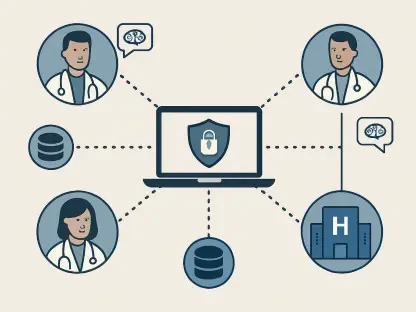

The integration of healthcare records for millions of veterans and active-duty service members represents one of the most ambitious digital undertakings in the history of the United States federal government. Currently, the Federal Electronic Health Record Modernization office, known as FEHRM, carries the immense responsibility of synchronizing medical data across the Department of Defense and the Department of Veterans Affairs. This massive initiative aims to provide a seamless single point of truth for over 18 million beneficiaries while supporting roughly 500,000 healthcare providers across a sprawling network of clinics and hospitals. However, a recent assessment by the Government Accountability Office has cast a long shadow over the project, identifying systemic vulnerabilities that could jeopardize the privacy and safety of those who serve the nation. The scale of the system makes it an attractive target for adversaries, yet the current oversight structure appears fragmented and insufficiently prepared for the evolving landscape of global cyber threats.
Identifying Governance Gaps and Policy Delays
The Lack of Unified Metrics and Accountability
One of the primary obstacles identified in the recent federal oversight findings is the persistent lack of unified governance within the FEHRM office itself. Although the organization was designed to act as a central authority, the Department of Defense and the Department of Veterans Affairs continue to operate with distinct security protocols. This separation of duties creates a complicated landscape where software security and network compliance are managed through different lenses, leading to significant gaps in the overall defense posture of the system.
Without a centralized decision-making process, the agencies struggle to reconcile their various internal policies with the broader requirements of a shared electronic health record environment. This administrative friction does more than just slow down the technical rollout; it obscures the visibility necessary to detect and respond to lateral movements by malicious actors. By failing to integrate their oversight, the agencies are essentially providing attackers with multiple entry points into what should be a hardened digital fortress for sensitive patient data.
Stalled Security Frameworks and Strategic Planning
Strategic planning within the modernization project has been further undermined by significant delays in the development of critical security frameworks intended to protect patient data. A primary example of this failure is the Joint Incident Management Framework, a protocol designed to coordinate the response of multiple agencies in the event of a significant cyberattack. This framework was originally scheduled for launch at the start of 2026, yet it remains unfinished as the project moves deeper into the current calendar year without a clear completion date in sight.
The delay is particularly concerning because it leaves the agencies without a battle-tested playbook for high-stakes digital emergencies. Furthermore, the lack of defined cybersecurity goals for the period from 2026 to 2030 creates a vacuum that hinders the ability to anticipate and mitigate sophisticated threats. The inability to finalize these documents suggests a lack of urgency in addressing the very real possibility of a coordinated assault. Strengthening these connections is the only way to ensure that patient safety remains uncompromised by administrative sluggishness.
Analyzing External Threats and Implementation Status
Vulnerabilities Exposed by Healthcare Sector Cyberattacks
The necessity for a more robust and unified defense strategy is starkly illustrated by the recent wave of ransomware attacks targeting the broader American healthcare sector. A high-profile disruption at Change Healthcare recently demonstrated how a single point of failure in a complex digital ecosystem can have cascading effects across the national medical infrastructure. While the federal electronic health record system was not directly breached in that specific incident, the fallout was felt acutely by the Department of Veterans Affairs and its millions of clinical users.
Thousands of veterans found themselves unable to access life-saving medications, and critical facility assessments were delayed as the underlying data services went offline for an extended period. This event highlighted the dangerous interdependencies that exist between federal systems and private sector partners. It served as a proof of concept for the type of systemic failure that could occur if the FEHRM office does not address the governance and security gaps currently residing within its multi-agency framework. Proactive defense must become the standard to prevent future care disruptions.
Divergent Agency Rollouts and Future Security Oversight
Ultimately, the successful resolution of the federal electronic health record initiative required a fundamental shift toward measurable performance and strict oversight across divergent agency rollouts. While the Department of Defense successfully completed its deployments, the Department of Veterans Affairs necessitated a strategic reset to address ongoing usability concerns and technical errors. Stakeholders realized that the long-term integrity of the nation’s largest medical database depended on the immediate adoption of the GAO’s recommendations regarding governance and unified management.
Moving beyond the fragmented models of the past, the DOD and VA began to prioritize the finalization of the Joint Incident Management Framework to ensure a coordinated response to future threats. This transition included the establishment of a unified set of cybersecurity metrics that allowed for real-time monitoring of system health across all participating agencies. By addressing these gaps, the federal government took decisive action to protect the sensitive data of those who served, turning a period of vulnerability into a foundation for a more resilient healthcare infrastructure.