
Hospitals and specialized clinics are increasingly recognizing that the traditional emphasis on administrative data privacy has been eclipsed by the urgent need to protect physical safety during a cyberattack. While the healthcare industry has spent years fortifying electronic records against theft, the current operational landscape of 2026 reveals that the true danger lies in the sudden loss of clinical functionality. When a digital network is compromised, the resulting downtime can paralyze diagnostic imaging, block access to real-time vitals, and disrupt the automated delivery of medications, creating a high-risk environment where medical errors are much more likely to occur. Physicians and nursing staff often find themselves forced to rely on manual, paper-based workflows that are no longer standard, leading to dangerous delays in triage and life-saving treatments. Consequently, cyber resilience has become a vital component of modern healthcare, shifting the focus from simply protecting static data to ensuring the continuous, safe operation of the medical services that patients rely on for their survival.
Operational Continuity: The Shift From Data Protection to Clinical Care
The modern medical environment functions as a complex ecosystem of interconnected systems that rely on a seamless flow of data between laboratory results, pharmacy databases, and bedside monitors. Any disruption to this information stream compromises the clinical chain of custody, making it exceedingly difficult for healthcare providers to make informed decisions in critical care situations. For instance, if a clinician cannot access a patient’s historical allergy data or current infusion rates due to a system lock, the probability of an adverse event increases dramatically. Cyber resilience in this context is defined not just by the strength of the initial defenses, but by the ability of the organization to maintain core functions in a degraded state and recover rapidly from an intrusion. Facilities must move beyond reactive measures, such as basic encryption and antivirus software, toward a model of architectural design that prioritizes clinical uptime. By ensuring that the most essential diagnostic tools remain accessible even when administrative networks are offline, hospitals can prevent a cyber event from turning into a human tragedy.
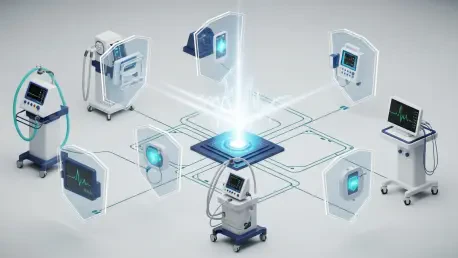
The widespread adoption of the Internet of Medical Things has significantly expanded the vulnerability surface of healthcare institutions by introducing thousands of networked devices like insulin pumps and ventilators. Many of these endpoints were engineered primarily for medical efficacy and lack the sophisticated security protocols found in enterprise IT equipment, making them attractive targets for malicious actors. If these devices are compromised, the threat moves from the digital realm into the physical world, where unauthorized changes to settings could directly harm a patient. A resilient approach to this challenge involves the implementation of strict micro-segmentation, which isolates critical medical equipment from the rest of the hospital’s digital infrastructure. This ensures that a localized breach, such as an infected laptop in a staff office, does not provide a path for an attacker to reach life-support systems. Furthermore, ongoing behavioral monitoring of these connected devices allows for the early detection of anomalies, ensuring that any deviation from normal operation is identified and mitigated before it can impact the safety or integrity of patient care.
The transition toward a more secure healthcare environment necessitated a fundamental shift in how leadership perceived the intersection of technology and patient safety. Decision-makers moved away from viewing cybersecurity as a siloed IT concern and instead integrated it into the overarching clinical risk management framework. They established comprehensive training programs that equipped medical staff with the skills to maintain high-quality care during digital outages, ensuring that manual protocols remained sharp and effective. Procurement processes were updated to favor vendors who demonstrated a commitment to security-by-design, thereby hardening the supply chain against future vulnerabilities. Additionally, the industry saw an increased reliance on automated threat intelligence that provided early warnings about emerging risks specific to medical hardware. This proactive stance ensured that the infrastructure remained robust against sophisticated threats, ultimately transforming digital endurance into a foundational element of the care delivery model. This evolution successfully reduced the impact of disruptions and reinforced the stability of the entire healthcare system for the benefit of every patient.