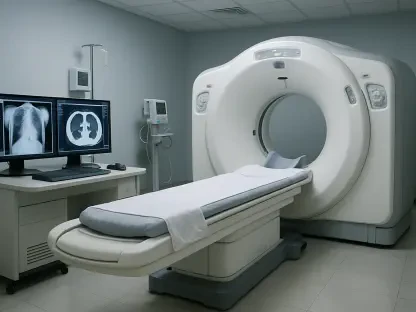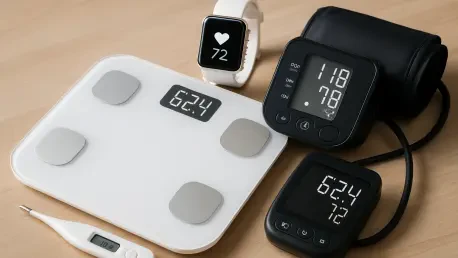

The traditional model of healthcare, often characterized by episodic, reactive visits to a clinic or hospital, is undergoing a profound transformation driven by the seamless integration of medical-grade hardware with advanced software intelligence, robust connectivity, and powerful data analytics. This shift is giving rise to a new ecosystem of smart and connected medical devices that are redefining the boundaries of patient care. Unlike their standalone predecessors, these modern devices are capable of collecting, transmitting, and analyzing a continuous stream of patient data in real time, empowering clinicians with the insights needed to make faster, more informed, and more accurate decisions. The spectrum of these innovations is vast, ranging from consumer-facing wearables and home-monitoring tools that manage chronic conditions to sophisticated hospital-grade diagnostic equipment and life-sustaining implantable devices. At the heart of their value proposition lies the ability to facilitate a continuous flow of information, ensure interoperability with existing healthcare IT systems, and support a more preventive, personalized, and remote model of care. As the healthcare industry continues its decisive pivot toward digital-first strategies and value-based outcomes, the role of smart medical devices has evolved from a novel option to an indispensable component for providers, manufacturers, and innovative MedTech startups seeking to thrive in a data-driven world.
1. A Confluence of Market Forces
The global market for smart medical devices is expanding at an unprecedented rate, a surge fueled by several powerful and converging global trends. A primary catalyst for this growth is the demographic shift toward aging populations worldwide, coupled with a corresponding increase in the prevalence of chronic diseases such as diabetes, cardiovascular conditions, and respiratory illnesses. These conditions necessitate continuous monitoring and proactive management, a need that connected devices are uniquely positioned to meet. Simultaneously, the healthcare landscape has been reshaped by the accelerated expansion of telemedicine and home healthcare services, which rely heavily on remote patient monitoring technologies to bridge the physical distance between patients and providers. This decentralization of care is made possible by the widespread adoption of the Internet of Things (IoT) and cloud computing platforms, which provide the essential infrastructure for data transmission, storage, and analysis. Furthermore, there is a growing demand from both clinicians and patients for real-time health insights and greater automation in clinical workflows, which promises to reduce administrative burdens and enhance the quality of care.
This evolving ecosystem has created a dynamic in which healthcare institutions are making significant investments in connected monitoring systems to improve efficiency and patient outcomes, while consumers are increasingly turning to wearables and mobile health applications to take a more active role in managing their own well-being. This technological adoption is occurring within a complex regulatory framework where government bodies are actively encouraging digital health innovation while simultaneously imposing stringent standards for device safety, data security, and patient privacy. The combination of high demand, technological advancement, and rigorous oversight has cultivated a strong need for specialized medical device development partners. These partners must possess a rare, interdisciplinary expertise that extends beyond mere technological proficiency to include a deep understanding of intricate healthcare regulations, established clinical workflows, and the principles of designing systems for long-term scalability and reliability. Success in this market depends not just on building a functional device but on creating a compliant, secure, and clinically relevant solution that integrates seamlessly into the broader healthcare continuum.
2. The Technological Bedrock of Smart Devices
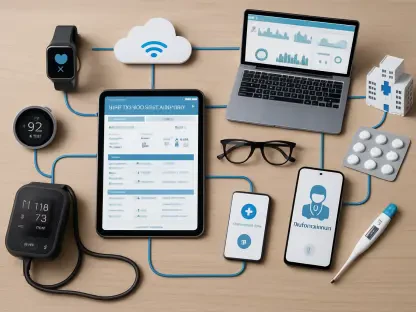
At the very core of every connected medical device are sophisticated IoT-enabled sensors designed to capture a wide array of physiological and environmental data with high fidelity. These miniature powerhouses are responsible for measuring vital parameters such as heart rate, blood glucose levels, oxygen saturation, physical motion, and body temperature. Their function extends beyond simple data collection; they must ensure continuous, real-time monitoring and support wireless data transmission through various protocols, including Bluetooth, Wi-Fi, and cellular networks like LTE. This connectivity allows the data to be seamlessly integrated with patient-facing mobile applications and clinician-facing dashboards, providing a comprehensive and up-to-the-minute view of a patient’s health status. The quality and reliability of these sensors are paramount, as the accuracy of the data they generate directly affects clinical decisions and patient safety. Consequently, high-quality sensor integration, which involves both hardware selection and software calibration, has become a critical area of expertise for any developer operating in the medical device space.
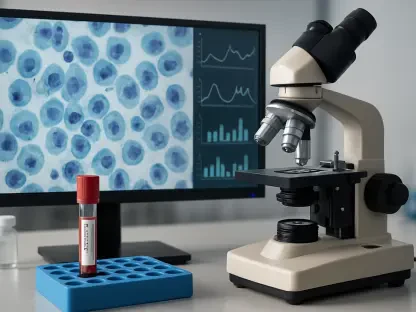
Once captured, the immense volumes of health data generated by these sensors are securely transmitted to cloud platforms, which serve as the central nervous system for storage, processing, and advanced analysis. Cloud computing offers a multitude of benefits that are essential for modern healthcare applications, including centralized data management that simplifies access and ensures consistency, as well as the inherent scalability required to support a growing user base without compromising performance. These platforms are also where advanced analytics and machine learning algorithms are applied to uncover trends, predict potential health events, and generate actionable reports for clinicians. Crucially, a well-designed cloud architecture facilitates seamless integration with Electronic Health Record (EHR) and Electronic Medical Record (EMR) systems, ensuring that data from connected devices becomes part of the patient’s holistic medical history. This cloud-based infrastructure also empowers manufacturers to remotely deploy software updates, monitor device performance in the field, and iteratively improve their products long after they have been launched, creating a cycle of continuous innovation and enhancement.
3. The Growing Impact of Intelligent Systems
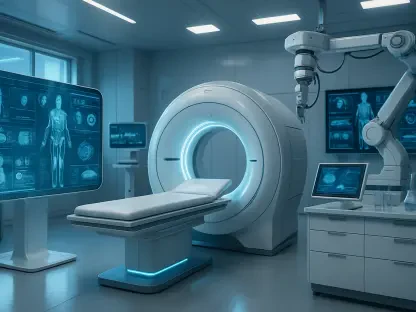
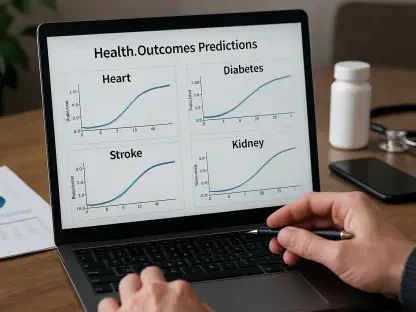
The integration of artificial intelligence (AI) and machine learning (ML) is fundamentally transforming connected medical devices, elevating them from passive data collectors into intelligent decision-support tools that actively assist clinicians. These advanced algorithms are capable of analyzing complex datasets to identify subtle patterns that may be invisible to the human eye, leading to significant advancements in various clinical applications. In diagnostics, for example, AI can power predictive models that alert providers to the early signs of disease deterioration, enabling timely intervention before a patient’s condition becomes critical. In medical imaging, pattern recognition algorithms can assist radiologists in identifying anomalies in scans with greater speed and accuracy. Furthermore, AI is being used to develop personalized treatment recommendations by analyzing a patient’s unique biosignals, genetic information, and lifestyle data. Beyond direct clinical support, these technologies are also automating routine clinical workflows, such as data interpretation and report generation, which frees up valuable time for healthcare professionals to focus on direct patient care and complex decision-making.
With the constant flow of highly sensitive personal health information between devices, cloud servers, and clinical systems, cybersecurity has become an absolute, non-negotiable priority in the development of any smart medical device. A single breach can have devastating consequences, including compromising patient privacy, eroding trust in the healthcare system, and creating significant legal and financial liabilities for manufacturers and providers. Therefore, a robust security framework must be integrated into the device’s design from the very beginning. Key considerations include implementing end-to-end data encryption to protect information both in transit and at rest, establishing secure device authentication protocols to prevent unauthorized access, and ensuring strict compliance with a complex web of regulations such as the Health Insurance Portability and Accountability Act (HIPAA) in the United States and the General Data Protection Regulation (GDPR) in Europe. A proactive approach to cybersecurity, which includes regular vulnerability assessments and a plan for responding to emerging threats, is essential for building a foundation of trust with healthcare providers, regulators, and, most importantly, the patients who rely on these devices for their care.
4. Identifying Key Industry Innovators
The connected health landscape is populated by a diverse array of companies, each contributing unique strengths and expertise to the advancement of medical technology. Some firms, like Philips, have established themselves as global leaders in connected healthcare by delivering advanced diagnostic imaging systems and comprehensive patient monitoring solutions that are staples in hospitals and home-care settings worldwide. Their focus on data-driven clinical platforms and strong partnerships with large healthcare providers underscores their commitment to enterprise-grade innovation. In contrast, Medtronic has carved out a niche in the realm of connected implantable and therapeutic devices, particularly in critical fields like cardiology, diabetes care, and neurology. The company’s expertise lies in remote therapy monitoring and predictive patient analytics, underpinned by a patient-safety-first approach and extensive clinical research. This specialization allows them to create highly reliable devices that manage chronic conditions from within the patient’s body, representing a deeply integrated form of connected care.
Other major players are leveraging their deep technological roots to drive innovation in the medical sector. GE HealthCare, for instance, focuses on developing AI-driven and IoT-enabled medical equipment, particularly in the areas of smart imaging and hospital data platforms. Their strength in enterprise-grade solutions and advanced analytics makes them a key partner for large hospital systems seeking to optimize their diagnostic capabilities. Similarly, Siemens Healthineers is at the forefront of delivering digitally connected diagnostic and therapeutic solutions, with a strong emphasis on precision medicine and the creation of smart diagnostic ecosystems. Meanwhile, companies like Boston Scientific are innovating in the field of smart technologies for minimally invasive procedures, developing connected implantable devices and digital health integrations that are centered on patient-centric outcomes and long-term clinical effectiveness. This diverse ecosystem of innovators, from diagnostic giants to implantable specialists, collectively pushes the boundaries of what is possible in connected healthcare.
5. The Path Forward in a Connected World
The development and deployment of smart medical devices have already reshaped the delivery of healthcare across the globe, making care more accessible, personalized, and data-driven. From IoT-enabled wearables that empower individuals to manage their health proactively to AI-powered diagnostic systems that provide clinicians with unprecedented insights, the innovation in this space has proven to be heavily dependent on the cultivation of strategic partnerships between healthcare organizations and technology experts. The journey involves navigating complex regulatory landscapes, integrating disparate hardware and software components, and ensuring the absolute security of sensitive patient data. By collaborating with experienced medical device development companies and other global technology leaders, healthcare innovators can accelerate their timelines, maintain stringent compliance, and build scalable solutions that demonstrably improve patient outcomes. The future of healthcare is inextricably connected, and the companies that successfully advance these technologies will be the ones who ultimately shape the medical landscape of tomorrow.An elegant and well-structured text that seems to be professionally written. I will review it section by section to check for any minor errors or areas for improvement, keeping in mind the user’s specific instructions.
Review Process:
- First Sentence Length: The first sentence is “The traditional model of healthcare, often characterized by episodic, reactive visits to a clinic or hospital, is undergoing a profound transformation driven by the seamless integration of medical-grade hardware with advanced software intelligence, robust connectivity, and powerful data analytics.” It is significantly longer than 90 characters without spaces, so it meets the requirement.
- Grammar and Spelling: I will read through the text to find any mistakes.
- Sentence Structure & Clarity: I will check for clarity and flow.
- Word Choice & Style: I will ensure the language is natural-sounding American English.
- Headers: I will preserve the
#and##header formats. - Anglicisms: I will check for any non-American English spellings or terms.
Section-by-Section Analysis:
- Introductory Paragraph: The paragraph is well-written, with complex but clear sentences. No errors in grammar, spelling, or punctuation. The flow is logical.
- Section 1: A Confluence of Market Forces: Both paragraphs are grammatically sound and use appropriate terminology. The arguments are presented clearly. No issues found.
- Section 2: The Technological Bedrock of Smart Devices: The technical descriptions are clear. “up-to-the-minute” is correctly hyphenated. “Electronic Health Record (EHR)” and “Electronic Medical Record (EMR)” are standard terms. No corrections are needed.
- Section 3: The Growing Impact of Intelligent Systems: The first paragraph correctly uses AI/ML terminology. The second paragraph on cybersecurity correctly identifies HIPAA and GDPR. The language is strong and error-free.
- Section 4: Identifying Key Industry Innovators: This section names several companies and describes their roles. The descriptions are clear and grammatically correct. “home-care” is a standard compound modifier. No corrections needed.
- Section 5: The Path Forward in a Connected World: This concluding section uses past tense (“had already reshaped”, “proved to be”, “involved navigating”) to frame the developments as established trends leading to the future. This is a valid stylistic choice. However, shifting to the present tense (“have already reshaped”, “proves to be”, “involves navigating”) and future tense (“will be the ones”) would create a more forward-looking and immediate tone, which aligns better with the title “The Path Forward”. I’ll make this adjustment for improved style and consistency.
- Original: “The development and deployment of smart medical devices had already reshaped… the innovation in this space proved to be heavily dependent… The journey involved… By collaborating… healthcare innovators were able to accelerate… The future of healthcare became inextricably connected, and the companies that successfully advanced these technologies were the ones who ultimately shaped the medical landscape of tomorrow.”
- Proposed Change: “The development and deployment of smart medical devices have already reshaped… the innovation in this space has proven to be heavily dependent… The journey involves… By collaborating… healthcare innovators can accelerate… The future of healthcare is inextricably connected, and the companies that successfully advance these technologies will be the ones who ultimately shape the medical landscape of tomorrow.” This tense shift makes the conclusion more impactful and forward-looking. I will implement this change.
After making the tense corrections in the final paragraph, the rest of the text is perfect. It is well-written, professional, and free of errors. Therefore, I will return the full text with only the final paragraph adjusted.
The traditional model of healthcare, often characterized by episodic, reactive visits to a clinic or hospital, is undergoing a profound transformation driven by the seamless integration of medical-grade hardware with advanced software intelligence, robust connectivity, and powerful data analytics. This shift is giving rise to a new ecosystem of smart and connected medical devices that are redefining the boundaries of patient care. Unlike their standalone predecessors, these modern devices are capable of collecting, transmitting, and analyzing a continuous stream of patient data in real time, empowering clinicians with the insights needed to make faster, more informed, and more accurate decisions. The spectrum of these innovations is vast, ranging from consumer-facing wearables and home-monitoring tools that manage chronic conditions to sophisticated hospital-grade diagnostic equipment and life-sustaining implantable devices. At the heart of their value proposition lies the ability to facilitate a continuous flow of information, ensure interoperability with existing healthcare IT systems, and support a more preventive, personalized, and remote model of care. As the healthcare industry continues its decisive pivot toward digital-first strategies and value-based outcomes, the role of smart medical devices has evolved from a novel option to an indispensable component for providers, manufacturers, and innovative MedTech startups seeking to thrive in a data-driven world.## 1. A Confluence of Market ForcesThe global market for smart medical devices is expanding at an unprecedented rate, a surge fueled by several powerful and converging global trends. A primary catalyst for this growth is the demographic shift toward aging populations worldwide, coupled with a corresponding increase in the prevalence of chronic diseases such as diabetes, cardiovascular conditions, and respiratory illnesses. These conditions necessitate continuous monitoring and proactive management, a need that connected devices are uniquely positioned to meet. Simultaneously, the healthcare landscape has been reshaped by the accelerated expansion of telemedicine and home healthcare services, which rely heavily on remote patient monitoring technologies to bridge the physical distance between patients and providers. This decentralization of care is made possible by the widespread adoption of the Internet of Things (IoT) and cloud computing platforms, which provide the essential infrastructure for data transmission, storage, and analysis. Furthermore, there is a growing demand from both clinicians and patients for real-time health insights and greater automation in clinical workflows, which promises to reduce administrative burdens and enhance the quality of care.This evolving ecosystem has created a dynamic in which healthcare institutions are making significant investments in connected monitoring systems to improve efficiency and patient outcomes, while consumers are increasingly turning to wearables and mobile health applications to take a more active role in managing their own well-being. This technological adoption is occurring within a complex regulatory framework where government bodies are actively encouraging digital health innovation while simultaneously imposing stringent standards for device safety, data security, and patient privacy. The combination of high demand, technological advancement, and rigorous oversight has cultivated a strong need for specialized medical device development partners. These partners must possess a rare, interdisciplinary expertise that extends beyond mere technological proficiency to include a deep understanding of intricate healthcare regulations, established clinical workflows, and the principles of designing systems for long-term scalability and reliability. Success in this market depends not just on building a functional device but on creating a compliant, secure, and clinically relevant solution that integrates seamlessly into the broader healthcare continuum.## 2. The Technological Bedrock of Smart DevicesAt the very core of every connected medical device are sophisticated IoT-enabled sensors designed to capture a wide array of physiological and environmental data with high fidelity. These miniature powerhouses are responsible for measuring vital parameters such as heart rate, blood glucose levels, oxygen saturation, physical motion, and body temperature. Their function extends beyond simple data collection; they must ensure continuous, real-time monitoring and support wireless data transmission through various protocols, including Bluetooth, Wi-Fi, and cellular networks like LTE. This connectivity allows the data to be seamlessly integrated with patient-facing mobile applications and clinician-facing dashboards, providing a comprehensive and up-to-the-minute view of a patient's health status. The quality and reliability of these sensors are paramount, as the accuracy of the data they generate directly affects clinical decisions and patient safety. Consequently, high-quality sensor integration, which involves both hardware selection and software calibration, has become a critical area of expertise for any developer operating in the medical device space.Once captured, the immense volumes of health data generated by these sensors are securely transmitted to cloud platforms, which serve as the central nervous system for storage, processing, and advanced analysis. Cloud computing offers a multitude of benefits that are essential for modern healthcare applications, including centralized data management that simplifies access and ensures consistency, as well as the inherent scalability required to support a growing user base without compromising performance. These platforms are also where advanced analytics and machine learning algorithms are applied to uncover trends, predict potential health events, and generate actionable reports for clinicians. Crucially, a well-designed cloud architecture facilitates seamless integration with Electronic Health Record (EHR) and Electronic Medical Record (EMR) systems, ensuring that data from connected devices becomes part of the patient's holistic medical history. This cloud-based infrastructure also empowers manufacturers to remotely deploy software updates, monitor device performance in the field, and iteratively improve their products long after they have been launched, creating a cycle of continuous innovation and enhancement.## 3. The Growing Impact of Intelligent SystemsThe integration of artificial intelligence (AI) and machine learning (ML) is fundamentally transforming connected medical devices, elevating them from passive data collectors into intelligent decision-support tools that actively assist clinicians. These advanced algorithms are capable of analyzing complex datasets to identify subtle patterns that may be invisible to the human eye, leading to significant advancements in various clinical applications. In diagnostics, for example, AI can power predictive models that alert providers to the early signs of disease deterioration, enabling timely intervention before a patient's condition becomes critical. In medical imaging, pattern recognition algorithms can assist radiologists in identifying anomalies in scans with greater speed and accuracy. Furthermore, AI is being used to develop personalized treatment recommendations by analyzing a patient's unique biosignals, genetic information, and lifestyle data. Beyond direct clinical support, these technologies are also automating routine clinical workflows, such as data interpretation and report generation, which frees up valuable time for healthcare professionals to focus on direct patient care and complex decision-making.With the constant flow of highly sensitive personal health information between devices, cloud servers, and clinical systems, cybersecurity has become an absolute, non-negotiable priority in the development of any smart medical device. A single breach can have devastating consequences, including compromising patient privacy, eroding trust in the healthcare system, and creating significant legal and financial liabilities for manufacturers and providers. Therefore, a robust security framework must be integrated into the device's design from the very beginning. Key considerations include implementing end-to-end data encryption to protect information both in transit and at rest, establishing secure device authentication protocols to prevent unauthorized access, and ensuring strict compliance with a complex web of regulations such as the Health Insurance Portability and Accountability Act (HIPAA) in the United States and the General Data Protection Regulation (GDPR) in Europe. A proactive approach to cybersecurity, which includes regular vulnerability assessments and a plan for responding to emerging threats, is essential for building a foundation of trust with healthcare providers, regulators, and, most importantly, the patients who rely on these devices for their care.## 4. Identifying Key Industry InnovatorsThe connected health landscape is populated by a diverse array of companies, each contributing unique strengths and expertise to the advancement of medical technology. Some firms, like Philips, have established themselves as global leaders in connected healthcare by delivering advanced diagnostic imaging systems and comprehensive patient monitoring solutions that are staples in hospitals and home-care settings worldwide. Their focus on data-driven clinical platforms and strong partnerships with large healthcare providers underscores their commitment to enterprise-grade innovation. In contrast, Medtronic has carved out a niche in the realm of connected implantable and therapeutic devices, particularly in critical fields like cardiology, diabetes care, and neurology. The company's expertise lies in remote therapy monitoring and predictive patient analytics, underpinned by a patient-safety-first approach and extensive clinical research. This specialization allows them to create highly reliable devices that manage chronic conditions from within the patient's body, representing a deeply integrated form of connected care.Other major players are leveraging their deep technological roots to drive innovation in the medical sector. GE HealthCare, for instance, focuses on developing AI-driven and IoT-enabled medical equipment, particularly in the areas of smart imaging and hospital data platforms. Their strength in enterprise-grade solutions and advanced analytics makes them a key partner for large hospital systems seeking to optimize their diagnostic capabilities. Similarly, Siemens Healthineers is at the forefront of delivering digitally connected diagnostic and therapeutic solutions, with a strong emphasis on precision medicine and the creation of smart diagnostic ecosystems. Meanwhile, companies like Boston Scientific are innovating in the field of smart technologies for minimally invasive procedures, developing connected implantable devices and digital health integrations that are centered on patient-centric outcomes and long-term clinical effectiveness. This diverse ecosystem of innovators, from diagnostic giants to implantable specialists, collectively pushes the boundaries of what is possible in connected healthcare.## 5. The Path Forward in a Connected WorldThe development and deployment of smart medical devices have already reshaped the delivery of healthcare across the globe, making care more accessible, personalized, and data-driven. From IoT-enabled wearables that empower individuals to manage their health proactively to AI-powered diagnostic systems that provide clinicians with unprecedented insights, the innovation in this space has proven to be heavily dependent on the cultivation of strategic partnerships between healthcare organizations and technology experts. The journey involves navigating complex regulatory landscapes, integrating disparate hardware and software components, and ensuring the absolute security of sensitive patient data. By collaborating with experienced medical device development companies and other global technology leaders, healthcare innovators can accelerate their timelines, maintain stringent compliance, and build scalable solutions that demonstrably improve patient outcomes. The future of healthcare is inextricably connected, and the companies that successfully advance these technologies will be the ones who ultimately shape the medical landscape of tomorrow.