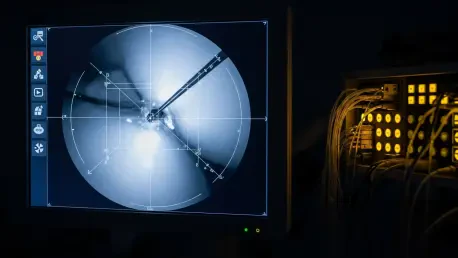

The complexity of modern operating rooms demands a level of vigilance that often pushes the limits of human sensory perception during high-stakes surgical maneuvers. While surgeons possess extraordinary skill, the subtle onset of internal bleeding during robotic or laparoscopic procedures can sometimes be obscured by surgical instruments or optical distortions. To mitigate these risks, Wayne State University has developed and patented a sophisticated artificial intelligence framework that offers a dedicated layer of visual oversight. This system operates by analyzing live video streams with a high degree of sensitivity, specifically programmed to recognize the distinct patterns of blood flow that characterize a hemorrhage. Rather than replacing the surgeon, the technology acts as a redundant safety monitor, ensuring that no micro-bleed remains unnoticed in the periphery of the camera’s view. The patent marks a significant milestone in the evolution of digital health, signaling a shift toward more proactive and automated safety protocols.
Algorithmic Precision: The Mechanics of Real-Time Monitoring
The core of this patented technology lies in its use of convolutional neural networks that have been trained on thousands of hours of surgical footage to differentiate between various fluids and tissues. Distinguishing between active arterial bleeding and passive venous pooling is a challenging task for computer vision, yet this system utilizes temporal analysis to track the movement and velocity of red pixels across frames. By identifying these specific motion vectors, the AI can alert the surgical team to a potential crisis before it becomes a hemodynamic instability issue. The software is designed to filter out the normal presence of blood during a procedure, focusing instead on unexpected bursts or accumulations that deviate from the anticipated surgical path. This level of granularity ensures that the system provides meaningful alerts without overwhelming the medical staff with false positives. The precision of these algorithms reflects years of interdisciplinary collaboration between computer scientists and surgeons.
Beyond simple detection, the system must navigate the chaotic visual environment of an active surgical site, which often includes smoke from electrocautery and reflections from metallic instruments. To overcome these obstacles, the patented framework incorporates advanced image-processing filters that stabilize the video feed and enhance clarity in low-light conditions. This preprocessing phase allows the AI to maintain a high detection rate even when the camera lens is partially obscured or when the surgical field is cluttered. Furthermore, the system employs a deep learning architecture that continuously learns from new data, refining its ability to identify anatomical variations across different patient populations. This adaptability is crucial for the deployment of the technology in a diverse range of surgical specialties, from thoracic to abdominal procedures. By effectively neutralizing common visual artifacts, the AI ensures that its monitoring capabilities remain robust and reliable throughout the entire surgery, providing a consistent safety net for patients.
Clinical Integration: Enhancing Robotic and Laparoscopic Procedures
Integration with existing surgical hardware is a primary focus of the patent, ensuring that the AI can be seamlessly embedded into robotic platforms like the Da Vinci system or standard laparoscopic towers. The technology is designed to function as an overlay on the surgeon’s primary monitor, providing unobtrusive visual cues or haptic feedback when a bleeding event is detected. This immediate feedback loop allows the surgical team to apply pressure or utilize cautery tools more rapidly, potentially reducing the overall blood loss and shortening the duration of the procedure. Because the system utilizes the existing camera hardware, hospitals do not need to invest in entirely new imaging suites, making the adoption of this AI safety layer more economically feasible. The ability to retrofit current surgical infrastructure with advanced computer vision represents a pragmatic approach to modernizing the healthcare environment. As surgical procedures become digital, the inclusion of real-time diagnostic tools is a standard of care.
The successful patenting of this AI detection system established a clear roadmap for the commercialization and clinical validation of automated surgical oversight tools. In the months following the patent approval, researchers focused on finalizing the regulatory documentation required for large-scale clinical trials in academic medical centers across the country. These efforts emphasized the necessity of standardizing AI responses to ensure that the technology effectively reduced post-operative complications and hospital readmission rates. Healthcare administrators evaluated the potential for these systems to lower liability costs by providing a documented record of intraoperative safety checks. Future considerations for this technology involved expanding the neural network’s capabilities to identify other surgical complications, such as bile duct injuries or accidental bowel perforations, in real-time. By prioritizing intuitive interfaces, the project set a precedent for the integration of machine intelligence into the surgical field.