
The recent FDA clearance of the Liberty Endovascular Robotic System marks a pivotal transition from manual vessel manipulation to robotic-assisted precision in oncology care. This technological leap, spearheaded by Microbot Medical, addresses the fundamental physical and technical constraints that have historically defined minimally invasive procedures. Dr. Zachary L. Bercu, a prominent figure at the Emory University School of Medicine, views this system as a transformative platform that redefines the scope of interventional oncology. By offering meticulous control over microwires and microcatheters, the system moves beyond the limitations of human dexterity, which can be affected by fatigue, tremor, or the sheer complexity of vascular pathways. As the medical field embraces this shift, the primary goal remains the standardization of high-level care, ensuring that life-saving interventions are not only more accurate but also more widely accessible to patients who previously faced significant surgical risks. This evolution represents a departure from the traditional reliance on purely manual skills, favoring a future where robotic augmentation serves as the backbone of vascular navigation and therapeutic delivery.
Clinical Precision in Targeted Cancer Therapy
In the specialized field of interventional oncology, the Liberty system provides a critical advantage for treating localized malignancies, particularly those found within the liver and kidneys. These organs possess highly intricate vascular structures that often require physicians to navigate what is known as “tortuous anatomy”—vessels that are exceptionally narrow, twisted, or fragile. The precision afforded by robotic assistance allows for the delivery of therapeutic agents directly to the tumor site with a level of accuracy that is difficult to sustain manually. This is especially relevant for modern oncology protocols that prioritize personalized dosimetry. The goal is to maximize the absorbed dose of chemotherapy or radiation within the tumor while simultaneously shielding the surrounding healthy tissue from collateral damage. Robotic motor control enables operators to reach distal arterial branches that might remain inaccessible during manual procedures, thereby optimizing the risk-benefit ratio for every patient and ensuring that the most potent treatments are concentrated exactly where they are needed most.
The implementation of this technology also fosters a phenomenon described as the democratization of specialized medical skills. Traditionally, the ability to navigate the most difficult vascular pathways was a skill reserved for veteran interventionalists with decades of experience. However, the Liberty system levels the playing field by providing a standardized interface that enhances the technical capabilities of all users. An interventionalist with only a year of specialized experience can now utilize robotic precision to match the technical outcomes of a much more seasoned professional. This shift ensures that patient outcomes are increasingly determined by the quality of the technology and the standardized protocol rather than the individual manual dexterity of a specific doctor. Furthermore, the efficiency gained through robotic navigation can reduce the overall duration of procedures. This allows clinical teams to manage a higher volume of cases without increasing the cognitive or physical burden on the staff, ultimately expanding the capacity of healthcare facilities to treat a growing patient population effectively.
Synergy of Augmented Intelligence and Imaging
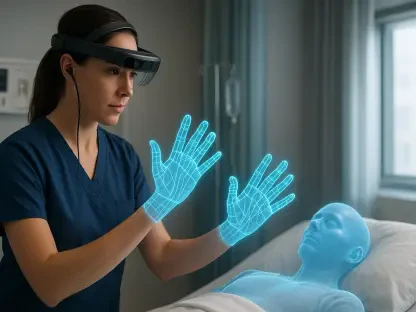
The conceptual framework of the Liberty system is best understood through the lens of “augmented intelligence” rather than full autonomy. Dr. Bercu compares the current advancements in the angiogram suite to the sophisticated navigation software used in everyday transit, such as Google Maps. In this model, the robotic system does not replace the physician but rather serves as a powerful enhancement to their existing expertise. While the robot handles the mechanical precision of wire and catheter movements, the physician remains the essential “pilot” of the procedure, making high-level clinical decisions based on real-time data. This approach maintains a human-in-the-loop safety profile while leveraging the mechanical advantages of robotics to execute movements with sub-millimeter accuracy. This partnership between human intuition and robotic consistency is what defines the next generation of interventional care, providing a safety net that filters out human error while amplifying the physician’s ability to perform complex maneuvers.
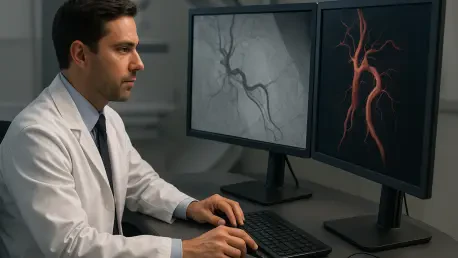
This technological synergy is further enhanced by the integration of advanced imaging tools, such as cone-beam CT and embolization guidance software. High-resolution imaging provides the necessary “map” of the patient’s internal vascular architecture, while the Liberty system acts as the “adaptive vehicle” capable of following that map with unparalleled precision. The ability to overlay real-time robotic position data onto pre-operative and intra-operative scans allows for a more streamlined workflow. Physicians can visualize the exact path required to reach a tumor and execute that path with a single, controlled interface. This reduction in the “trial and error” often associated with manual navigation leads to lower contrast media usage and shorter fluoroscopy times, which benefits the patient’s systemic health. By creating a unified ecosystem where imaging and motion are perfectly synchronized, the medical community is moving toward a more predictable and efficient model for complex endovascular interventions.
Occupational Safety and Ergonomic Improvements
One of the most profound, yet frequently overlooked, benefits of the Liberty system involves the preservation of the long-term health of the physicians themselves. Interventional radiology is a notoriously demanding specialty, requiring doctors to stand for many hours while wearing heavy lead aprons to protect against radiation. This constant “axial loading” is the leading cause of chronic spinal injuries and career-ending disabilities among specialists. The introduction of robotic systems allows the operator to step away from the patient’s bedside and sit or stand in a more ergonomic position. By focusing on a high-definition monitor rather than leaning over a patient table, the physician can maintain a neutral posture that significantly reduces physical strain. This improvement in the working environment is not merely a matter of comfort; it is a strategic move to extend the careers of highly skilled professionals, ensuring that their experience remains a resource for the healthcare system for many more years.
In addition to ergonomic benefits, the use of robotic-assisted systems drastically reduces the physician’s exposure to ionizing radiation. Because the Liberty system can be operated from a console located several feet away from the radiation source, the operator is subjected to a much lower dose of scatter radiation. In more advanced configurations, the control station can be placed in a separate, shielded room entirely, effectively eliminating the physician’s radiation dose during the active portions of the procedure. This reduction in exposure is critical for preventing long-term health issues such as radiation-induced cataracts or various forms of occupational cancer. By prioritizing the safety of the medical staff, hospitals can create a more sustainable work environment that attracts new talent to the field while protecting the health of the current workforce. The transition to robotic assistance thus represents a holistic improvement that serves both the patient and the practitioner simultaneously.
Remote Intervention and Rural Healthcare Access
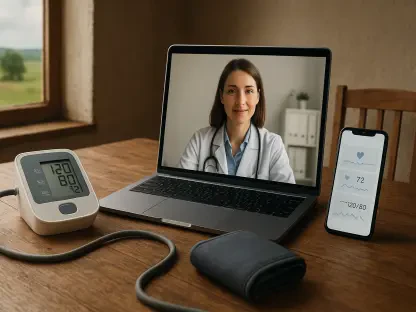
The potential for “tele-robotic” or remote endovascular procedures represents perhaps the most ambitious frontier for the Liberty system. Currently, a significant geographic gap exists in the delivery of specialized care, with many rural counties lacking access to trained interventional radiologists. The Liberty system’s portable and nimble design, which utilizes disposable components, makes it uniquely suited for a “hub-and-spoke” model of care. In this scenario, a specialist located at a major academic center or a central urban hospital can perform a procedure on a patient located hundreds of miles away at a rural clinic. This capability could fundamentally change the landscape of emergency and oncology care, allowing for immediate intervention in cases where time is a critical factor. By removing the need for either the patient or the specialist to travel long distances, tele-robotics can bridge the gap between underserved populations and the highest standards of modern medical technology.
Implementing a global remote care network requires more than just technical success; it necessitates a complete rethinking of the logistical and regulatory frameworks governing medicine. While the technical feasibility of remote stenting and arterial access has already been demonstrated in various clinical settings, the non-technical hurdles remain significant. Physicians must navigate complex licensing requirements to practice across state or international borders, and healthcare systems must establish new reimbursement models that account for remote robotic surgery. Additionally, the medical community must work to build patient trust in a system where the primary surgeon is not physically present in the room. Despite these challenges, the clinical momentum driven by the Liberty system suggests that these barriers are being systematically addressed. As stakeholders collaborate to solve these legal and ethical puzzles, the dream of universal access to expert interventional care is becoming a tangible reality, promising to eliminate the “zip code effect” in cancer treatment outcomes.
Strategic Integration and Future Care Standards
The medical community successfully transitioned toward a model where robotic precision was no longer viewed as an optional luxury but as a fundamental standard for vascular intervention. Stakeholders recognized that the integration of the Liberty Endovascular Robotic System provided a multifaceted solution to the most pressing challenges in oncology and physician welfare. By focusing on the distal navigation of the vascular tree, clinicians achieved superior outcomes in liver and kidney cancer treatments, characterized by higher localized doses and fewer systemic side effects. The shift in focus from manual dexterity to digital precision allowed for a more uniform quality of care across different hospital systems. This transition was supported by rigorous clinical data that highlighted the reduction in procedural complications and the improvement in overall workflow efficiency, demonstrating that the initial investment in robotic technology yielded significant long-term dividends for both patient health and institutional stability.
As the technology matured, the emphasis moved toward institutionalizing the ergonomic and safety protocols that robotics made possible. The reduction in occupational hazards for interventionalists was documented as a primary factor in the increased longevity of the specialist workforce, which in turn helped stabilize the rising demand for complex vascular procedures. Furthermore, the groundwork was laid for a more equitable healthcare landscape, where remote capabilities began to dissolve the boundaries of traditional medical practice. Legislative bodies and insurance providers started to adapt their frameworks to accommodate the unique requirements of tele-robotic surgery, reflecting a global commitment to improving access for rural and underserved communities. The integration of these systems ultimately served as a catalyst for a broader evolution in medical standards, ensuring that the synthesis of human expertise and robotic augmentation remained at the forefront of the fight against cancer and other complex vascular diseases.