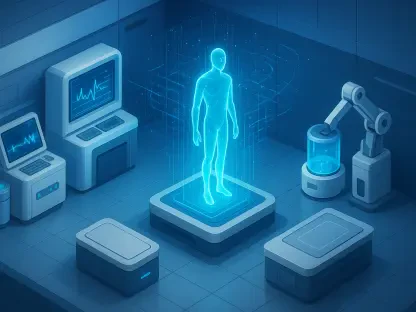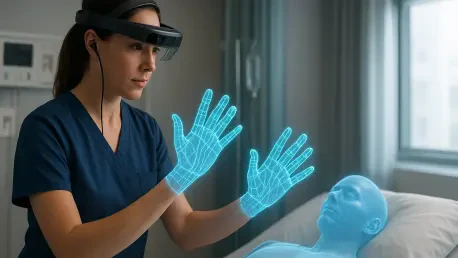

High-fidelity virtual environments provide a realistic stress test for hospital staff, exposing them to the intricacies of patient care without endangering actual lives. This evolution in medical training marks a departure from traditional, static classroom settings toward highly interactive simulations that mirror the frantic pace of a modern emergency room. As healthcare systems grapple with staffing shortages and the need for rapid upskilling, Virtual Reality (VR) has emerged as a cornerstone of continuing professional development. A recent systematic review published in BMC Nursing meticulously analyzes how these immersive tools impact in-service nurses—professionals who are already active in the field. Unlike students, these practitioners require training that respects their limited time while addressing high-stakes clinical scenarios. The study synthesizes data from 30 investigations to determine whether VR is truly superior to conventional methods in fostering clinical excellence.
Targeted Research: Focusing on Practicing Professionals
The research conducted by Shanmei Zhou and her team at the Chengdu University of Traditional Chinese Medicine is particularly noteworthy because it specifically isolates the experiences of in-service nurses. While much research focuses on undergraduate nursing students, the professional needs of working nurses are fundamentally different, requiring a higher level of complexity and relevance to their specific daily duties. By broadening the search to include both international databases like PubMed and extensive regional repositories such as CNKI, the researchers captured a more comprehensive snapshot of global trends in simulation technology. This inclusive data collection is essential in 2026, as the rapid adoption of digital health tools in Asia and Europe has created a wealth of evidence that might otherwise be overlooked. The focus on currently employed staff ensures that the findings are directly applicable to hospital administrators looking to improve retention and safety.
Methodological rigor was a central pillar of this investigation, as the team carefully categorized evidence into randomized controlled trials and quasi-experimental studies to maintain high standards of validity. Utilizing the RoB 2.0 tool for randomized trials and ROBINS-I for non-randomized research allowed for a nuanced understanding of the potential biases inherent in early-stage tech adoption. By applying the Standardized Mean Difference metric, the researchers were able to synthesize results from diverse clinical environments, ranging from intensive care units to specialized surgical wards. This unified approach provides a clear window into how immersive environments influence not just theoretical understanding, but the actual physical execution of complex medical tasks. Such a systematic breakdown is vital for institutions that are deciding how to allocate limited budgets between traditional workshops and the latest generation of head-mounted displays and haptic feedback systems.
Quantifying Results: The Statistical Impact on Clinical Skills
The quantitative results of the meta-analysis indicate that the shift toward immersive learning is yielding substantial dividends in practical performance. With an effect size measured at 2.19, the improvement in clinical skills is categorized as massive by current educational benchmarks, suggesting that VR bridges the gap between seeing a procedure and doing it. In a virtual environment, a nurse can practice inserting a central line or managing a chest tube repeatedly until the muscle memory is flawless. This hands-on engagement far exceeds the retention rates typical of manual-based learning or passive video observation. The interactive nature of these systems allows for the simulation of rare but critical events that a nurse might not encounter during a standard shift, ensuring they are prepared for the worst-case scenario. This practice is particularly effective for honing the fine motor skills required in specialized pediatric care where precision is paramount.
Beyond physical maneuvers, the study highlights significant progress in the domains of theoretical knowledge and clinical judgment. The acquisition of medical information saw a significant boost, likely because the context-rich environment of VR helps nurses connect abstract concepts to real-world patient outcomes. One of the most striking findings involves the improvement of critical thinking through “branching” narratives, where every decision made by the nurse leads to a different physiological response from the virtual patient. This immediate feedback loop forces practitioners to analyze data rapidly and adjust their care plans in real time, mirroring the high-pressure decision-making required in modern medicine. Interestingly, the impact on self-efficacy was more conservative, with only a modest gain reported. This suggests that while nurses are becoming more capable through VR training, they remain acutely aware of the gravity of their roles, avoiding the trap of overconfidence.
Navigating the DatThe Quality of Current Evidence
Despite the impressive statistical gains, the researchers applied the GRADE framework to evaluate the certainty of the evidence, uncovering a complex relationship between high results and low certainty. The paradox identified in the study suggests that while the impact on skills and knowledge is high, the “very low” certainty rating stems from the high degree of heterogeneity among the included studies. This variability is largely due to the diverse range of hardware and software currently in use across the globe. Some hospitals may utilize simple smartphone-based viewers, while others invest in fully immersive rooms with multi-sensory feedback and high-resolution optics. This lack of standardization makes it difficult to draw a single, universal conclusion about VR’s efficacy without accounting for the specific technology used. As the industry moves toward more uniform standards, the gap between statistical impact and evidence certainty is expected to close, providing a clearer roadmap.
To ensure the integrity of their conclusions, the research team also addressed the common issue of publication bias through the “trim-and-fill” method. This statistical technique accounts for the tendency of journals to publish positive outcomes more frequently than null or negative results, which can sometimes skew the perceived effectiveness of new technologies. Even after making these rigorous adjustments, the overall benefit of VR training remained statistically significant, reinforcing the idea that the technology provides genuine value to the nursing profession. This layer of analysis is crucial for hospital boards that require robust data before committing to the significant financial investment required for high-end VR labs. The findings suggest that while the current body of research is still evolving, the positive trend is too strong to ignore. Hospitals that integrate these tools now are likely to find themselves at a competitive advantage in terms of staff proficiency and quality care.
Future Considerations: Bridging the Gap to Clinical Mastery
The practical advantages of VR education extend beyond skill acquisition into the realm of operational efficiency and patient safety. For working nurses, the primary benefit is the ability to engage in “deliberate practice” within a safe, controlled setting where mistakes do not lead to actual patient harm. This psychological safety allows nurses to push the boundaries of their knowledge and learn from failure in a way that is impossible on a hospital ward. Furthermore, VR addresses the logistical hurdles of coordinating schedules for staff who work different shifts. Traditional group training sessions often pull nurses away from the bedside or require them to attend on their days off, whereas VR modules can be completed individually and asynchronously. This flexibility ensures that every member of the staff receives the same high-standard education, regardless of their shift. By making training more accessible, hospitals can foster a culture of continuous learning.
The observation regarding modest self-efficacy gains actually pointed toward a sophisticated level of professional development that prioritized accuracy over ego. These virtual simulations served as a realistic stress test that helped nurses recognize the limits of their own expertise, thereby encouraging a more collaborative and cautious approach to patient care. Moving into the next phase of implementation, the focus shifted toward developing more standardized curricula that could be shared across different healthcare systems. The conclusion of the meta-analysis provided a foundation for future large-scale randomized trials that aimed to bring higher certainty to the impressive skill gains observed. By integrating VR into the daily routine of professional nursing development, healthcare leaders moved closer to a model where clinical mastery was achieved through evidence-based simulation. This transition proved essential for maintaining high standards in an increasingly complex medical landscape.