
The modern healthcare landscape is often characterized by a digital paradox where massive investments in software fail to eliminate the problem of isolated data silos. Even in advanced facilities, critical information remains trapped within individual departments, forcing clinical staff and finance professionals to operate in functional vacuums. This fragmentation leads to scenarios where the same data point must be manually entered multiple times across various platforms, increasing the likelihood of error and depleting staff morale. When administrative tasks consume a disproportionate amount of a clinician’s day, the primary focus on patient outcomes inevitably suffers. Hospital leadership struggles to gain a comprehensive view of resource consumption, making it difficult to drive meaningful improvements in clinical efficiency. By moving away from disjointed systems and toward integrated data capture, the industry is beginning to bridge these long-standing gaps via connected workflow.
Integrating Clinical and Operational Data
The Mechanics: Point-of-Care Documentation
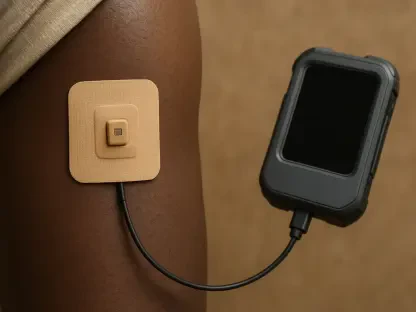
Implementation of handheld scanning technology, such as the h-trak system, provides a tangible solution to the problem of documentation lag and data inaccuracy. By scanning a patient’s identification alongside the specific implants and consumables used during a procedure, clinical teams can capture a detailed record in real-time. This granular approach eliminates the need for clinicians to rely on memory when updating digital records hours after a surgery has concluded. Instead of manual data entry being a secondary chore, it becomes a seamless component of the clinical workflow, ensuring every item used is accounted for without distracting from patient needs. This immediacy creates a reliable source of truth that serves as the foundation for all subsequent administrative processes, reducing the burden on front-line workers. By allowing tools to operate quietly in the background, automation can transform digital systems into active engines of operational clinical intelligence.
Data Integrity: The Multi-Purpose Workflow
A single scan at the point of care triggers a sequence of events that supports five distinct hospital functions simultaneously across the organization. Once an item is scanned, the data is automatically routed to update clinical records, initiate inventory reordering, facilitate financial costing, ensure traceability, and assist in procurement planning. This multi-purpose workflow ensures that clinical activities in the operating room are aligned with the financial and logistical realities of the administration. By ensuring data integrity is maintained at the source, hospitals can avoid the common pitfalls associated with manual record-keeping. The resulting accuracy is far superior to traditional methods, providing a level of precision that allows for better patient safety and more accurate billing practices across all departments. This integration allows for a unified view of the patient journey, where every resource consumed is linked to the clinical outcome, providing a clear picture of value.
Efficiency: Resource Visibility and Control
Effective resource management hinges on the ability of an organization to see exactly what is being used and at what specific cost to the institution. Without connected data capture, hospitals often find themselves overstocking expensive items to avoid shortages, which ties up vital capital that could be better spent on staff or new equipment. Furthermore, the lack of real-time visibility into usage can lead to significant waste through product expiration or unnecessary variety in surgical kits. By integrating clinical usage data directly with procurement systems, organizations can adopt inventory models that reduce storage needs and minimize risk. This level of transparency ensures that every department has access to the same high-quality information. Resultantly, hospital leaders can make more informed decisions about resource allocation, ensuring the facility remains financially viable while maintaining high standards of care for all patients treated within a healthcare system.
Achieving Transparency and Interdepartmental Unity
Case Study: Driving Real-World Efficiency
Success of this implementation highlights the practical benefit of prioritizing data integrity at the moment a clinical action is performed. Implementation of connected data capture can be found in the operations of the University Hospitals of Derby and Burton, where dozens of operating rooms were synchronized. Before adopting a unified system for point-of-care capture, the trust faced hurdles with manual stock tracking and opaque financial reporting that made decision-making difficult. The move to a connected workflow allowed the trust to gain immediate visibility into the costs associated with nearly half a million surgical procedures. This high level of transparency enabled administrators to see exactly where resources were being deployed and identify specific areas where efficiency could be improved. By replacing fragmented manual processes with a streamlined digital solution, the hospital significantly enhanced its ability to manage large-scale operations through precise data control.
Interdepartmental Unity: Breaking Cultural Barriers
The transition to a unified data system fundamentally changes interdepartmental interactions by removing friction caused by conflicting or missing information. When procurement, finance, and clinical departments all operate from a single dataset, the traditional barriers between these teams begin to dissolve. Instead of spending hours reconciling disparate reports or searching for missing inventory details, staff members can focus on collaborative goals like waste reduction and patient throughput. This transparency builds a culture of trust across the hospital, as every stakeholder knows they are working with the most accurate and up-to-date information available. As a result, the time previously spent on cumbersome paperwork is redirected toward more value-added activities, such as direct patient interaction or specialized training. The shift toward connectivity thus serves as a catalyst for a more responsive environment that can better adapt to the demand of modern medicine.
Strategic Connectivity: Foundations for Growth
The adoption of connected data capture provided a clear roadmap for hospitals that sought to eliminate administrative bottlenecks and improve overall operational resilience. By focusing on the point of care as the site for data generation, healthcare leaders successfully bridged the gap between complex human processes and digital infrastructure. This shift allowed organizations to move beyond isolated silos, creating a unified environment where clinical excellence and financial sustainability supported one another. Leaders established that looking ahead from 2026 to 2028, the most successful strategies would prioritize connectivity over the expensive replacement of legacy systems. They ensured that every scan was accurate at the source to avoid the common pitfalls of large-scale IT projects. By embracing this resilient model, the industry moved closer to an era where data served as a bridge rather than a barrier to the delivery of high-quality care, ensuring resources were utilized where they were most needed.