
The integration of internet-connected medical devices into patient care environments has reached a point where a single compromised thermostat can jeopardize the safety of an entire surgical department. While the protection of electronic health records was once the primary focus for cybersecurity teams, the proliferation of specialized internet of things sensors has expanded the attack surface into physical operations. Modern hospital campuses function as small cities, containing a dizzying array of clinical and non-clinical devices that must all communicate across a unified network to maintain efficiency. However, this level of connectivity introduces unprecedented risks where a vulnerability in an environmental control system might grant an attacker access to highly sensitive patient diagnostics. To mitigate these threats, administrators are shifting toward a framework that assumes no user or device is inherently trustworthy, regardless of its location within the physical building. This move represents a departure from traditional perimeter defenses that have proven insufficient.
The Convergence: Merging Clinical Care and Operational Technology
The complexity of contemporary medical environments stems from the seamless weaving together of life-sustaining equipment and standard building operations. In this unified digital ecosystem, a heart rate monitor or an infusion pump often shares the same infrastructure as the lighting controls or the elevator management system. This convergence between Information Technology and Operational Technology has effectively dissolved the traditional air gaps that once isolated critical clinical machinery from the broader business network. Consequently, a malicious actor does not necessarily need to bypass the highly guarded firewalls protecting the hospital database to cause significant harm. By gaining entry through a seemingly insignificant peripheral device, an intruder can navigate through the interconnected web of sensors and controllers. This expanded attack surface requires a holistic understanding of how every single digital component interacts within the facility, as any overlooked connection could serve as an unintended entry point for cyber threats.
A significant challenge in securing these environments is the widespread presence of legacy software and specialized proprietary platforms that lack modern security features. Many essential diagnostic tools and infrastructure management systems were designed years ago with a focus on longevity and functional reliability rather than digital resilience. These devices often run on outdated operating systems that cannot support contemporary antivirus software or frequent security patching cycles, creating persistent vulnerabilities. Furthermore, the specialized nature of these machines means that standard IT management tools are frequently incompatible, leaving security teams with limited visibility into their activity. This reliance on low-security hardware in high-tech medical settings introduces a dangerous gap that cannot be addressed by simply adding more traditional firewalls. Without a way to monitor and secure these components, the risk of an operational failure remains high, particularly as medical facilities continue to integrate more automation into their daily patient care workflows.
The Danger: Horizontal Movement and Initial Breaches
Cybercriminals increasingly focus their efforts on finding the most vulnerable points within a hospital, often identifying diagnostic imaging machines and environmental control systems as ideal targets. These systems are frequently less guarded than central patient databases, yet they are absolutely critical for maintaining sterile environments and performing life-saving screenings. Attackers utilize automated tools to scan for known flaws in the firmware of these devices, looking for any unpatched exploit that can provide an initial foothold. Once a single device like a CT scanner or a digital thermostat is compromised, it becomes a staging ground for more extensive and destructive actions against the facility. The danger is not merely the loss of data, but the potential for physical disruption that could force a hospital to divert patients or cancel essential surgeries. By targeting these essential but often overlooked components, malicious actors can exert maximum pressure on a healthcare provider, leveraging the critical nature of clinical operations to achieve their objectives.
After establishing a presence on a single compromised device, the most significant threat to the institution is the ability for an attacker to move horizontally through the network. This lateral movement, often referred to as east-west traffic, allows an intruder to traverse the internal environment while searching for higher-value targets like the central medical servers. Because many older hospital networks operate on a model of implicit trust, any user or device that has successfully bypassed the perimeter is often granted unrestricted access to other internal systems. This lack of internal barriers means that a breach of a simple building automation controller can lead directly to the core infrastructure where electronic health records are stored. An intruder can spend weeks or even months undetected, quietly probing different segments of the network and escalating their privileges without triggering any alarms. This ability to move freely across the digital landscape transforms a minor security incident into a catastrophic event that can compromise both patient privacy and safety.
The Solution: Verification and Logical Segmentation
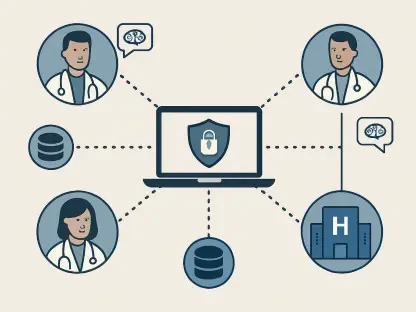
The Zero Trust model addresses these structural weaknesses by replacing the outdated concept of assumed trust with a rigorous policy of continuous verification. Under this architectural framework, no person, device, or application is ever trusted by default, regardless of whether they are located inside or outside the physical hospital perimeter. Every single request for access must be thoroughly authenticated and authorized based on specific user roles and predefined business logic before any digital connection is established. This approach ensures that identity is the new perimeter, requiring constant proof of legitimacy for every interaction within the network. By shifting the focus from protecting the network border to protecting individual assets and transactions, healthcare organizations can create a much more granular and resilient security posture. This methodology not only deters external attackers but also mitigates the risk of insider threats by ensuring that even legitimate users only have access to the specific tools required for their immediate tasks.
A foundational element of this modern security strategy is the implementation of micro-segmentation, which creates isolated digital zones around individual systems or logical groups. By dividing the massive hospital network into smaller, manageable parts, security administrators can effectively contain any potential breach within a very limited blast radius. If a specific imaging device or building controller is compromised, the micro-segmentation policies prevent the attacker from pivoting to any other part of the infrastructure. This technique provides a critical layer of protection for legacy devices that are otherwise impossible to patch or update, essentially cloaking them from the rest of the network. By enforcing strict communication rules between these segments, the organization can ensure that only necessary traffic is allowed, significantly reducing the opportunities for lateral movement. This granular control transforms the network into a series of secure islands, where even a successful initial breach is prevented from escalating into a widespread operational failure that endangers patient care.
The Strategic Approach: Resilience Through Security Overlays
Transitioning to a Zero Trust architecture does not necessitate a complete replacement of a hospital’s existing physical or digital infrastructure. Modern security platforms can function as an intelligent overlay, allowing IT teams to apply sophisticated access controls and monitoring without disrupting current clinical workflows. This approach enables healthcare providers to secure expensive medical equipment and legacy systems incrementally, avoiding the massive costs and logistical nightmares associated with a total hardware overhaul. By placing a software-defined layer over the existing network, administrators can gain real-time visibility into all device communications and enforce identity-based policies across the entire campus. This flexibility is essential for maintaining uninterrupted patient care while simultaneously modernizing the security environment to meet current threat levels. This incremental path allows for the gradual strengthening of defenses, prioritizing the most critical systems first while ensuring that daily hospital operations remain smooth and focused on the primary mission of patient wellness.
Healthcare leaders recognized that the only way to safeguard modern infrastructure was to move beyond reactive security and embrace proactive containment. By implementing Zero Trust principles, organizations successfully transformed their vulnerable, flat networks into resilient ecosystems where every connection was validated. The shift toward identity-driven access controls allowed facilities to maintain operational continuity even when individual components were targeted by sophisticated threats. Moving forward, the most effective strategy involved conducting regular audits of all connected devices and refining micro-segmentation rules to adapt to new clinical technologies. Security teams prioritized the deployment of automated monitoring tools that could detect anomalies in real-time across both IT and OT environments. These actions ensured that the hospital remained a safe harbor for patient data and a reliable environment for life-critical services. Ultimately, the adoption of continuous verification proved that building a resilient digital foundation was the most essential step in protecting the future of healthcare delivery and patient safety.