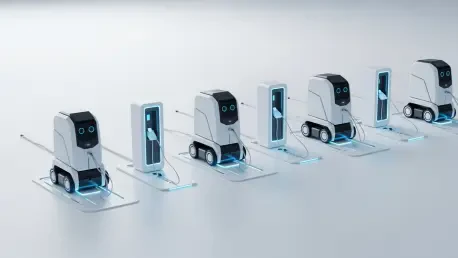

The landscape of modern healthcare is currently witnessing a profound shift as hospital hallways, once the sole domain of hurried clinicians and support staff, are increasingly populated by autonomous systems navigating complex environments with surgical precision. Valued at approximately 919 million dollars in 2026, the global hospital logistics and delivery robot market is positioned for an era of unprecedented expansion, with projections suggesting it will swell to nearly seven billion dollars by the middle of the next decade. This evolution represents more than just a technological upgrade; it is a fundamental reconfiguration of how medical facilities manage the internal movement of life-saving supplies, diagnostic samples, and essential equipment. As healthcare systems globally grapple with the twin pressures of aging populations and limited fiscal resources, the adoption of autonomous mobile robots has transitioned from an experimental luxury found only in elite research hospitals to a mission-critical infrastructure component for urban and rural centers alike. This transition is underpinned by a robust compound annual growth rate of 22.5 percent, signaling a shift toward fully automated internal supply chains that operate around the clock.
The ultimate objective of integrating this technology into the clinical workflow is to enhance patient outcomes by decoupling mundane logistical duties from the responsibilities of highly skilled healthcare professionals. When nurses and technicians are no longer required to spend significant portions of their shifts performing manual transport tasks, they can dedicate their specialized talents to direct patient care and complex decision-making. This operational pivot is increasingly viewed as a necessity rather than an elective improvement, particularly as hospitals face staggering financial pressures and a chronic shortage of qualified personnel. By automating the “circulatory system” of the hospital, administrators can ensure that medications, blood samples, and surgical kits move with consistent speed and reliability, reducing the risk of human error and eliminating the delays that often plague manual delivery systems. The current decade will likely be remembered as the era when robotics moved from the periphery of medicine to its very core, serving as the invisible backbone that keeps modern healthcare facilities functioning at peak efficiency.
Economic Drivers: The Impact of Labor and Operational Costs
Rising Operational Expenses: Managing the Workforce Crisis
The primary catalyst for the widespread adoption of delivery robots is the escalating cost of hospital labor, which now accounts for a significant majority of total operating expenses across the global healthcare sector. As of 2026, health systems are finding it increasingly difficult to balance their budgets while maintaining high standards of care, largely due to the rising wages required to attract and retain support staff. This financial burden is exacerbated by the reliance on temporary or contract labor to fill critical gaps in staffing, a strategy that often results in higher costs without providing long-term operational stability. In this environment, the investment in autonomous mobile robots becomes a financially prudent decision, as these machines offer a predictable, one-time capital expenditure followed by manageable maintenance costs, effectively shielding the hospital from the volatility of the labor market.
Beyond the immediate financial implications, the shortage of nursing and support personnel has created a structural crisis that threatens the quality of healthcare delivery in many regions. When clinical teams are understaffed, the added burden of manual logistics—such as transporting linens or delivering meals—can lead to burnout and high turnover rates, further depleting the available workforce. Automation serves as a pressure valve in this high-stress environment, taking over the repetitive and physically demanding tasks that contribute to staff fatigue. By handing off these low-value duties to robots, hospitals can stabilize their existing workforce and reduce the need for constant recruitment and training of entry-level logistical staff. This shift allows the human element of the hospital to remain focused on empathy and clinical excellence, which are qualities that technology cannot replicate.
Protecting the Workforce: Reclaiming Clinical Hours
The concept of “low-value walking” has become a central point of concern for hospital administrators who are looking for ways to maximize the efficiency of their medical teams. Studies have shown that in a traditional hospital setting, a single nurse might walk several miles during a single shift, often just to retrieve supplies or drop off samples at a laboratory. This expenditure of physical energy and time represents a significant waste of human capital, especially when the tasks could be performed more reliably by an autonomous system. By deploying a fleet of delivery robots, a hospital can “buy back” thousands of hours of clinical time each year, allowing nurses to spend more moments at the patient’s bedside where their expertise is most needed and most valued.
Market intelligence indicates that the long-term return on investment for hospital robotics is not just measured in dollars saved, but in the preservation of the clinical workforce’s well-being and morale. Hospitals that have successfully integrated autonomous delivery systems report higher levels of job satisfaction among their nursing staff, who no longer feel overwhelmed by the menial aspects of their roles. Furthermore, the use of robots for heavy-duty transport, such as moving large bins of medical waste or soiled linens, significantly reduces the incidence of workplace injuries related to lifting and pushing. This proactive approach to staff safety and mental health is becoming a competitive advantage for healthcare systems that want to be known as employers of choice in an increasingly competitive global market for medical talent.
Segmenting Robot Design and Functionality
Categories of Autonomous Mobile Robots: Tugs and Couriers
The current market landscape is predominantly led by autonomous tugs and cart-transport systems, which are designed to handle the heavy-duty logistics required to keep a hospital running. these robust machines are engineered to tow existing wheeled equipment, such as laundry carts or food service racks, throughout the facility’s service corridors and elevators. Their primary advantage lies in their seamless integration with the hospital’s established physical assets; there is no need to replace a fleet of standardized carts to begin the transition to automation. These “heavy lifters” are essential for managing the sheer volume of materials that must move through a hospital each day, providing a level of physical endurance and consistency that manual labor simply cannot match over a twenty-four-hour period.
In contrast to the large-scale tugs, compact delivery robots, or “clinical couriers,” serve a more specialized and agile role within the medical environment. These smaller units are typically equipped with secure, electronically locked compartments that can only be opened by authorized personnel using biometric scanners or proximity badges. They are the preferred choice for transporting high-value or time-sensitive items, such as chemotherapy drugs, blood products, or stat laboratory specimens that require a strict chain of custody. Because of their smaller footprint and advanced navigation sensors, these robots can move safely through high-traffic patient areas, such as outpatient clinics and nursing units, without causing disruption or posing a safety risk to visitors and patients who may be unfamiliar with autonomous technology.
Advanced Capabilities: Mobile Manipulation and Clinical Support
A more sophisticated tier of technology is emerging in the form of mobile manipulation robots, which are equipped with one or more robotic arms to interact directly with their environment. Unlike traditional delivery robots that require a human to load and unload their cargo, these advanced machines can perform complex tasks such as opening heavy doors, pressing elevator buttons, and even picking up items from a pharmacy counter or a nursing station shelf. While currently more expensive to deploy than standard mobile platforms, these robots offer a higher degree of autonomy and can function in legacy hospital buildings that were not originally designed with “robot-friendly” infrastructure. Their ability to manipulate physical objects allows them to serve as true assistants to clinical teams, bridging the gap between simple transport and active task participation.
Medication delivery remains the most critical and revenue-intensive application for hospital robots, as the precision required in pharmacy logistics leaves no room for human error. Automation ensures that the right medication reaches the correct ward at exactly the right time, minimizing the risks associated with manual transport and ensuring that patient treatments are never delayed by logistical bottlenecks. Additionally, the automation of laboratory specimen transport is seeing rapid growth, as diagnostic turnaround time is a key metric for hospital performance and patient safety. By providing a continuous flow of samples from the nursing unit to the laboratory, robots eliminate the “batching” of samples that often occurs when manual couriers are used, leading to faster results and more timely clinical interventions for critically ill patients.
The Infrastructure of Automation
Technical Foundations: Hardware and Navigation Systems
The physical construction of a hospital robot is a masterpiece of modern engineering, requiring a balance of durability, hygiene, and sophisticated sensory perception. To navigate the unpredictable and high-stakes environment of a medical facility, these machines are equipped with a suite of sensors, including LiDAR for distance mapping, ultrasonic sensors for detecting glass or obstacles, and high-definition cameras for object recognition. These systems must be robust enough to operate 24/7, necessitating high-capacity battery technology and rapid-charging stations that allow the robots to top up their power during brief periods of inactivity. Furthermore, the materials used in their construction must be resistant to harsh medical-grade disinfectants, ensuring that the robots themselves do not become vectors for hospital-acquired infections as they move between different clinical zones.
While the hardware is the most visible part of the system, the fleet management software acts as the critical “central nervous system” that coordinates the movements of every robot in the hospital. This software must be capable of real-time path planning, allowing robots to reroute themselves dynamically if a hallway is blocked or if an emergency requires a clear path for a medical team. The software must also integrate deeply with the hospital’s existing digital infrastructure, including the building management system for elevator control and the electronic health record system for tracking medication deliveries. This level of connectivity allows for a truly “smart” logistics network where every item is tracked from the moment it leaves the pharmacy or supply room until it reaches its final destination, providing a comprehensive audit trail for hospital administrators.
Deployment and Maintenance: Professional Service Models
The successful implementation of a robotic fleet requires more than just high-quality hardware and software; it necessitates a comprehensive suite of professional services that handle everything from site assessment to long-term maintenance. Hospitals are incredibly complex environments where wireless signals can be inconsistent and floor layouts are often subject to change due to ongoing renovations. Consequently, vendors that provide localized technical support and proactive route optimization are seeing the greatest success in the market. These services ensure that the robots remain a helpful addition to the staff rather than a technical burden, as specialists can remotely monitor the fleet and intervene before a minor software glitch becomes a major operational disruption.
Maintenance programs for hospital robots have evolved to become highly proactive, utilizing predictive analytics to identify when a component might fail before it actually breaks down. For a hospital that relies on robots for life-saving medication delivery, downtime is not an option, making these service contracts a vital part of the overall investment. As the technology matures, there is an increasing emphasis on training hospital staff to work alongside their mechanical counterparts, ensuring that nurses and technicians understand how to interact with the robots effectively. This human-centric approach to deployment helps to demystify the technology and encourages a culture of innovation within the hospital, where staff members are empowered to suggest new ways to utilize the autonomous systems to improve daily workflows.
Regional Market Maturation
Global Leadership: North America and South Korea
North America, particularly the United States, is currently the largest regional market for hospital logistics robots, driven by a healthcare system that prioritizes operational efficiency and technological innovation. The presence of massive, multi-campus health systems provides the scale necessary to justify significant investments in autonomous technology, as a single successful pilot program can be expanded across dozens of facilities. American hospitals are also facing some of the highest labor costs in the world, making the return on investment for robotics exceptionally fast compared to other regions. As a result, many of the leading manufacturers in this sector are headquartered in the United States, benefiting from a rich ecosystem of software developers and medical technology experts who are pushing the boundaries of what these machines can achieve.
In East Asia, South Korea has emerged as a global leader in the integration of digital health and “smart hospital” initiatives, with the government providing significant support for the adoption of domestic robotics technology. Many South Korean hospitals are now designed from the ground up to be robot-ready, featuring integrated communication systems that allow robots to navigate through doors and elevators without human assistance. This holistic approach to hospital design creates an environment where robots are not just added onto an existing structure but are a fundamental part of the building’s operational logic. The high level of public trust in technology and the rapid aging of the South Korean population have created a perfect storm of demand, making the country a vital testing ground for the latest advancements in autonomous clinical support.
Cultural and Structural Drivers: Japan and China
The Japanese market is uniquely characterized by its emphasis on social acceptance and the development of “polite” robots that can navigate crowded spaces with high levels of social intelligence. Given Japan’s long-standing culture of service robotics and its shrinking workforce, there is a deep societal understanding of the need for automated assistants in the healthcare sector. Japanese developers often focus on compact, aesthetically pleasing designs and sophisticated navigation algorithms that prioritize safety and non-intrusive movement. These robots are frequently used in long-term care facilities and geriatric wards, where their presence is viewed as a supportive tool that allows human caregivers to focus more on the emotional needs of their elderly residents.
China is currently experiencing the fastest growth rate in the hospital logistics robot market, fueled by a massive national effort to modernize its healthcare infrastructure through the construction of hundreds of new “internet hospitals.” These modern facilities are often built on a grand scale, with wide corridors and high ceilings that are perfectly suited for autonomous vehicle traffic. Chinese tech giants and a wave of agile startups are competing to provide integrated solutions that combine robotics with artificial intelligence and big data analytics. The ability of Chinese firms to scale production rapidly and lower hardware costs is likely to have a significant impact on the global market, making autonomous logistics accessible to healthcare systems in developing nations that might otherwise find the technology cost-prohibitive.
Competitive Strategies and Strategic Alliances
Industry Innovation: Specialized Solutions and Social Intelligence
The competitive landscape of the hospital logistics robot market is currently transitioning from a focus on hardware manufacturing to a more holistic emphasis on integrated solution providers. Pioneer companies have moved beyond simply selling robots to offering comprehensive logistics platforms that link the physical movement of goods with real-time supply chain data. This allows hospital managers to see not only where a robot is located but also exactly what it is carrying and when it will arrive at its destination. By creating this level of transparency, manufacturers are becoming strategic partners in the hospital’s operational management, providing insights that help to optimize everything from pharmacy inventory levels to the scheduling of surgical procedures.
Innovation is also being driven by firms that specialize in “socially intelligent” automation, creating robots that can recognize human social cues and respond appropriately in high-pressure environments. These machines are designed to yield the right-of-way to a doctor rushing to an emergency or to slow down and provide a wide berth when they sense a patient with limited mobility is nearby. This focus on the human-robot interaction is essential for the long-term success of the industry, as the presence of robots in patient-facing areas must be perceived as helpful and non-threatening. By investing in advanced computer vision and behavioral modeling, companies are ensuring that their robots can seamlessly blend into the complex social fabric of a busy nursing unit or a crowded hospital lobby.
Collaborative Growth: Partnerships and Market Consolidation
Strategic alliances are becoming the preferred method for companies to expand their capabilities and offer a more comprehensive range of services to healthcare clients. We are seeing an increasing number of partnerships between heavy-duty logistics providers and specialized firms that focus on robotic manipulation or artificial intelligence. These collaborations allow a single vendor to provide a hospital with a complete fleet of machines, ranging from large autonomous tugs for the laundry room to sophisticated mobile assistants for the surgical suite. This consolidation of services simplifies the procurement process for hospital administrators and ensures that all automated systems can communicate through a single, unified platform, reducing the risk of technical conflicts between different brands of robots.
The importance of reliability and security in this competitive market cannot be overstated, as a single high-profile failure could set back the adoption of robotics across an entire region. To build the necessary trust with healthcare leadership, many specialized delivery firms are pursuing rigorous third-party certifications and clinical trials to prove the safety and efficacy of their systems. These companies are also investing heavily in “military-grade” encryption and secure data protocols to protect the sensitive medical information that their robots may carry or record. In a sector where patient privacy is a legal and ethical mandate, the ability to provide a secure and dependable delivery system is often more important to a hospital than the raw speed or lower cost of a particular robotic platform.
Overcoming Barriers to Adoption
Infrastructure Challenges: Integrating with Legacy Facilities
One of the most persistent hurdles to the widespread deployment of hospital robots is the physical and digital infrastructure of older medical buildings. Many legacy hospitals were constructed with narrow hallways, steep ramps, and elevator systems that are manually operated or lack the wireless interfaces required for robot communication. Upgrading these facilities to be “robot-ready” can be a significant financial undertaking, often requiring the installation of facility-wide Wi-Fi networks and the retrofitting of dozens of automatic doors. Administrators must carefully weigh these infrastructure costs against the long-term savings of automation, a process that can lead to slow adoption cycles in regions with older healthcare networks.
Furthermore, the integration of robots into the existing hospital workflow requires a deep understanding of the facility’s unique internal culture and operational quirks. A robot that works perfectly in a modern, streamlined surgical center might struggle in a busy urban trauma hospital where the environment is chaotic and unpredictable. Successful vendors must spend months on-site, mapping the facility and working closely with department heads to ensure that the robots do not interfere with emergency procedures or create traffic jams in critical areas. This “tailored” approach to implementation is time-consuming and labor-intensive, but it is the only way to ensure that the technology is accepted by the staff and becomes a permanent part of the hospital’s operational fabric.
Security and Psychology: Cybersecurity and Staff Perception
As hospitals become increasingly digitized, cybersecurity has moved to the forefront of the challenges facing the robotics industry. Each autonomous mobile robot is essentially a mobile computer with multiple sensors and cameras connected to the hospital’s internal network, making it a potential target for sophisticated cyberattacks. A security breach could not only compromise sensitive patient data but could also lead to a dangerous disruption of hospital operations if a fleet were to be disabled or hijacked. Consequently, IT departments are demanding that robot vendors prove their systems meet the highest standards of data protection and can operate safely even if the hospital’s primary network is compromised.
The human element of robotics, specifically the psychological impact on hospital staff, is another critical barrier that must be managed with care. Some employees may view the introduction of robots as a threat to their job security or as an unwelcome distraction in an already stressful work environment. To overcome this resistance, hospitals must involve their nursing and support staff early in the planning process, demonstrating how the robots will actually make their jobs easier rather than replacing them. When staff members understand that the robots are there to handle the “dirty, dull, and dangerous” tasks, they are much more likely to embrace the technology and view it as a valuable clinical tool. Effective communication and ongoing training programs are the keys to transforming a robotic fleet from a controversial experiment into a beloved member of the healthcare team.
Business Models and Future Projections
Economic Innovation: The Shift Toward Subscription Models
The financial model for acquiring hospital robots is undergoing a significant transformation, moving away from high upfront capital expenditures toward a more flexible “Robotics-as-a-Service” (RaaS) approach. Under this model, a hospital does not own the robots but instead pays a monthly subscription fee that covers the hardware, software updates, and all necessary maintenance and technical support. This shift allows healthcare facilities to classify their robotics investment as an operating expense rather than a capital one, making it much easier for department managers to justify the cost within their annual budgets. The RaaS model also ensures that hospitals always have access to the latest technology, as the vendor is responsible for upgrading the fleet as new hardware and software become available.
As this service-based model matures, it is opening the market to mid-size hospitals and specialized outpatient clinics that previously found the cost of robotics to be prohibitive. Smaller centers are discovering that even a modest fleet of two or three robots can significantly streamline their pharmacy and laboratory workflows, providing a level of efficiency that was once the exclusive domain of massive university medical centers. This democratization of technology is expected to be a major driver of market volume over the next decade, as thousands of smaller facilities worldwide begin to automate their logistics for the first time. The flexibility of the subscription model also allows hospitals to scale their fleet up or down based on seasonal demand, providing a level of operational agility that is essential in a modern healthcare environment.
Future Horizons: Artificial Intelligence and Predictive Logistics
Looking toward the mid-2030s, the integration of advanced artificial intelligence will likely move the role of hospital robots from reactive transport to predictive logistics. Future fleets will use machine learning algorithms to analyze historical data and anticipate surges in demand, such as those that occur during shift changes or before a scheduled block of surgeries. A “predictive” robot might pre-position surgical supplies or linens near a specific ward before a human staff member even realizes they are needed, further reducing wait times and improving the overall flow of the hospital. This shift toward proactive automation will transform the robot into a truly intelligent participant in the care delivery team, capable of making autonomous decisions to optimize the hospital’s internal supply chain.
The next decade will likely witness the hospital logistics robot becoming as ubiquitous as the mobile computer workstation or the electronic health record system is today. As the technology continues to advance, the distinction between logistical support and direct clinical assistance will continue to blur, with robots taking on increasingly complex roles in patient monitoring and environment management. These systems reached a level of maturity that allowed them to function as the invisible, reliable engine of the modern medical facility, proving that automation was not about replacing the human touch in medicine but about protecting and enhancing it. By 2036, the presence of autonomous machines in a hospital was no longer a sign of the future; it was simply the standard for a safe, efficient, and sustainable global healthcare system.