
The healthcare sector is currently navigating a pivotal transition where traditional, labor-intensive administrative habits are being rapidly discarded in favor of streamlined, digital workflows that prioritize speed and accuracy. At the very center of this massive organizational evolution lies a critical comparison between the old guard of manual data entry and specialized automation tools designed for the Epic Electronic Medical Record ecosystem. As we move through the middle of this decade, medical institutions are finding themselves at a definitive tipping point, struggling to process unprecedented volumes of patient health information while simultaneously attempting to keep operational overhead at a manageable level. Relying on manual keyboard input is increasingly characterized by leadership as a severe bottleneck that not only stalls system-wide efficiency but also actively degrades data integrity and depletes the mental energy of highly trained medical staff across the country.
The Financial and Operational Toll of Manual Processes
The continued presence of manual data entry within clinical and billing departments acts as a primary catalyst for operational friction that hampers the growth of modern healthcare networks. When administrative professionals are forced to manually migrate sensitive information between disparate software systems, they inevitably fall into a cycle of repetitive, low-value labor that consumes hours of the workday. It is common to see employees entering the same patient identification numbers and complex insurance details across multiple screens, a process that is inherently sluggish and naturally susceptible to human error. Current industry data suggests that these manual workflows maintain a persistent error rate that frequently results in denied insurance claims and substantial delays in patient care delivery. These inaccuracies do not just affect the bottom line; they create a ripple effect that compromises the trust patients place in their providers to manage their health records precisely.
Beyond the immediate data entry errors, the psychological and professional cost of administrative drudgery is becoming an unsustainable burden for the modern healthcare workforce. Physicians and nursing staff often report losing significant portions of their work week to clerical duties that have little to do with direct clinical outcomes or patient interaction. This diversion of focus is a leading contributor to the skyrocketing rates of professional burnout observed in clinics and hospitals that have been slow to adopt automated solutions. When medical experts spend their time fighting with legacy input methods rather than applying their diagnostic skills, the entire healthcare delivery model suffers from reduced capacity. Shifting these responsibilities away from humans ensures that the workforce can re-engage with the humanistic aspects of medicine. This strategic pivot is necessary to maintain a stable environment where staff feel their expertise is utilized effectively rather than wasted on redundant tasks.
Redefining Workflows With Intelligent Digital Assistants
Integrating automation tools within the complex Epic environment is not a strategy designed to replace the nuanced expertise of physicians or nurses but rather to provide them with digital assistants. These software components are specifically engineered to handle the repetitive tasks that constitute the “grunt work” of modern medicine, such as the seamless transfer of demographic data across multiple browser windows. Robotic Process Automation and intelligent interfaces now manage the intricate cross-referencing of insurance documents against internal hospital records without requiring a single keystroke from a human operator. By allowing sophisticated technology to govern these background operations, healthcare organizations effectively liberate their employees to concentrate on high-value cognitive work. This shift enables medical teams to devote their full attention to complex problem-solving and personalized patient care, which are areas where human intuition and empathy remain irreplaceable.
The broader psychological impact of removing mundane administrative chores from the daily routine of healthcare professionals is nothing short of transformative for institutional culture. Recent surveys of hospital staff indicate that a vast majority of workers now view these automated systems as the primary mechanism for increasing overall efficiency while lowering chronic work-related stress levels. Automation provides a predictable, logical framework that ensures data continues to flow smoothly through the system even during peak hours, without needing constant manual intervention or oversight. This creates a much more stable and less frantic working environment, as staff no longer fear that a simple typing mistake will lead to a catastrophic billing error or a clinical oversight. As these tools become more deeply embedded in the Epic ecosystem, they foster a sense of reliability and technical sophistication that encourages staff retention and improves the quality of the professional experience.
Targeted Use Cases for Maximum Automation Impact
Identifying the specific areas where automation can deliver the highest return on investment is crucial for hospital administrators looking to modernize their infrastructure. Within the Epic framework, the processes of patient access and referral management have emerged as prime candidates for total digital transformation due to their high volume and rule-based nature. Advanced automation scripts are now capable of reading incoming digital forms, extracting relevant data points, and coordinating complex appointment schedules with zero human involvement. This eliminates the need for staff to manually transcribe referral information from external faxes or emails, which has traditionally been a major source of data entry lag. By streamlining these initial touchpoints, a healthcare facility can ensure that the patient journey begins without the frustrating delays often associated with outdated paperwork. This efficiency at the front end of the process sets a positive tone for the entire clinical encounter.
Financial operations represent another significant area where automated tools provide an immediate and measurable boost to organizational performance and long-term sustainability. Modern software can verify insurance eligibility in real-time and cross-check documentation against payer-specific requirements, which significantly accelerates the billing cycle. This proactive approach prevents the common headaches associated with rejected claims and reduces the time spent on costly appeals processes that can drain administrative resources. Furthermore, the task of keeping internal records synchronized with external laboratory databases or pharmacy systems is handled with near-perfect reliability by automated bridges. This prevents the formation of dangerous “data silos” where different departments might otherwise operate based on conflicting or outdated information. Maintaining a single, accurate source of truth across all financial and clinical interfaces is a cornerstone of modern healthcare management.
Speed and Precision as Key Performance Indicators
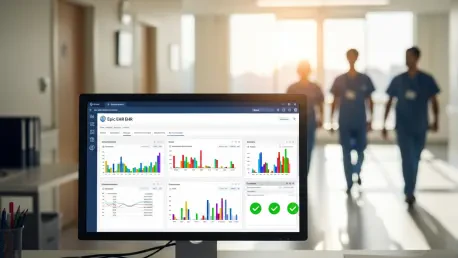
The objective reasons why automation is rapidly displacing manual entry become clear when examining the hard metrics surrounding operational speed and data precision. Digital tools operate at a velocity that human staff simply cannot replicate, frequently processing complex patient records ten times faster than the most experienced manual operator. This incredible speed allows a large hospital or specialized clinic to clear out multi-day administrative backlogs in just a few hours, ensuring that the system remains current and responsive. While human accuracy inevitably wavers due to factors like fatigue, distraction, or the sheer monotony of repetitive tasks, automated systems consistently maintain an accuracy rate of 99.5% or higher. This level of precision is absolutely essential for maintaining consistent revenue streams and meeting the increasingly stringent regulatory standards imposed on the healthcare industry. Speed and accuracy together create a foundation for a more resilient organization.
In addition to the raw speed of data processing, automated workflows provide a level of scalability and operational transparency that was previously impossible to achieve. These systems are highly elastic, meaning they can seamlessly accommodate sudden spikes in patient volume or seasonal billing demands without requiring the facility to hire temporary staff. This flexibility allows healthcare leaders to manage growth or unexpected health crises without the traditional overhead costs associated with paying for employee overtime. Every single transaction or data modification performed by an automated tool also leaves a clear, immutable digital footprint within the Epic environment. This creates a transparent audit trail that simplifies the process of conducting internal compliance reviews or responding to formal inquiries from government regulatory bodies. The ability to track every data movement with such granular detail enhances the overall security and accountability of the entire health system.
Integrating Strategy With the Human Element
Even as technology becomes more sophisticated, the role of human oversight remains a fundamental necessity for navigating the specific and complex scenarios that arise in medicine. Automation is inherently poorly suited for “edge cases” that require qualitative reasoning, moral judgment, or deep empathy, such as a nuanced billing dispute involving a grieving family. In these highly sensitive instances, the most effective organizational model is a hybrid one where the software manages the routine and predictable work while the human expert intervenes to resolve exceptions. This collaborative approach ensures that institutional integrity and patient safety are always maintained through a combination of digital efficiency and human wisdom. By delegating the repetitive tasks to the machine, the human staff can devote their professional focus to the rare situations where their unique expertise is most needed. This synergy between man and machine represents the highest level of administrative maturity.
Forward-thinking executives successfully implemented these automation strategies by focusing on a phased approach that prioritized scalability and long-term staff adaptability. The most effective transitions occurred when leadership teams conducted comprehensive audits of their existing workflows to pinpoint specific high-friction areas, such as manual prior authorizations or complex scheduling overlaps. By establishing clear key performance indicators early in the process, these organizations were able to quantify the success of their digital assistants and justify further investment in advanced technical infrastructure. It was also discovered that providing ongoing training and support for administrative staff helped to mitigate any initial resistance to the new technology, turning potential skeptics into enthusiastic champions of the system. This methodology ensured that the integration of automated tools into the Epic environment was not just a technical update but a holistic improvement in care.