
The medical technology landscape is currently witnessing a significant shift as automation moves from complex surgical suites directly to the patient’s bedside, fundamentally changing how routine procedures are managed in hospital wards. ENvue Medical is leading this charge with the ENvue Drive, a robotic-assisted system that changes the paradigm of enteral feeding tube placement. By merging advanced artificial intelligence with high-fidelity electromagnetic navigation, the system provides clinicians with a visual roadmap that previously existed only in the imagination of the operator. This shift represents a broader trend toward digitizing tactile medical tasks, ensuring that even the most common procedures benefit from the same level of technological oversight as neurosurgery. As healthcare facilities face increasing pressure to improve outcomes while managing staffing shortages, the introduction of automated bedside assistance offers a scalable solution. The system is designed to navigate the complexities of human anatomy with a degree of accuracy that manual techniques simply cannot replicate in a consistent manner for patients.
Navigating the Hazards: Addressing Conventional Procedure Risks
For decades, the placement of feeding tubes has remained a “blind” procedure, relying on a clinician’s ability to feel the resistance of internal tissues to guide a flexible tube into the stomach. This reliance on tactile feedback is fraught with danger, as evidenced by a consistent misplacement rate that fluctuates between three and five percent across various clinical settings. When a tube is inadvertently directed into the respiratory tract rather than the esophagus, the consequences are often immediate and severe, ranging from pneumothorax to the lethal administration of liquid nutrition into the lungs. These errors are not merely clinical failures but systemic ones, reflecting an archaic reliance on human intuition in a field where visual confirmation should be the standard. The ENvue Drive addresses this specific vulnerability by replacing guesswork with a digital interface that tracks the tube’s journey. By doing so, it creates a safety buffer that protects patients from the inherent variability of manual handling in high-stress environments.
Beyond the immediate physical risks to the patient, the traditional manual method imposes a significant economic and operational burden on the modern healthcare infrastructure. Every suspected misplacement requires a confirmatory X-ray, which not only exposes the patient to radiation but also delays the start of necessary nutritional support and consumes valuable radiology resources. If a tube is found to be in the wrong position, the entire process must be restarted, leading to increased clinician fatigue and extended hospital stays. The financial implications of treating a single case of pulmonary complication resulting from a misplaced tube can reach tens of thousands of dollars, making the case for technological intervention quite compelling. By implementing a robotic-assisted system, hospitals can streamline their workflows and redirect staff attention toward more complex care needs. This transition signals a move toward a environment where procedural variability is minimized through the application of technology-driven protocols and visual data sets.
Technical Precision: Integrating Intelligent AI and Robotics
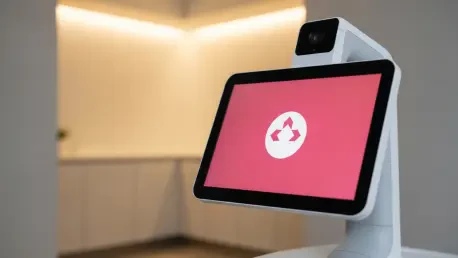
The technical foundation of the ENvue Drive lies in its sophisticated electromagnetic tracking system, which functions essentially as a high-precision GPS for the internal landscape of the human body. A specialized sensor at the tip of the feeding tube transmits its coordinates to the system’s processor forty times per second, generating a continuous and fluid visual representation of the tube’s location on a digital display. This high-frequency data collection is paired with “Ask Oscar,” a proprietary AI-powered navigation software designed to analyze the trajectory and predict the optimal path through the gastrointestinal tract. Unlike traditional methods that provide no feedback until the procedure is finished, this software offers active guidance, alerting the clinician the moment a tube deviates toward the lungs or becomes coiled in the throat. This level of real-time intelligence transforms the procedure from a reactive task into a proactive one, where potential errors are identified and corrected long before they result in harm.
Mechanical precision is further enhanced by the robotic component of the system, which provides five degrees of freedom to assist the clinician in navigating the often-tortuous path of the upper digestive system. While a human hand may experience micro-tremors or lose a consistent angle during a difficult insertion, the robotic arm maintains absolute stability, allowing for subtle adjustments that are nearly impossible to achieve manually. This hardware does not operate in isolation; it works in tandem with the clinician’s expertise, acting as a force multiplier that standardizes the quality of care regardless of the individual operator’s experience level. The system’s ability to maintain a steady trajectory even when faced with anatomical resistance ensures that the tube reaches its destination with minimal trauma to the patient’s delicate mucosal tissues. By combining this mechanical reliability with the interpretive power of artificial intelligence, the platform sets a new benchmark for bedside intervention and patient outcomes.
Standardized Care: Ensuring Stability in Clinical Settings
Looking ahead, the implementation of such robotic systems required hospitals to rethink their training programs and shift focus toward digital literacy among nursing and nutritional staff. In the past months of rollout, clinical educators discovered that incorporating these tools led to a much faster mastery of procedural skills compared to traditional mentorship models. This transition was facilitated by the system’s secondary sensors, which acted as reference points to recalibrate the internal anatomical map if a patient shifted or coughed during the procedure. Such resilience to patient movement addressed one of the most significant challenges of bedside care, where the environment is rarely as controlled as an operating room. Medical directors should now consider how to integrate these data-rich platforms with broader electronic health records to create a seamless loop of documentation and quality assurance. The objective data generated by the ENvue Drive allowed for a retrospective analysis of every single procedure to optimize the facility.
The successful deployment of this robotic-assisted technology marked a significant turning point in the history of bedside medicine, proving that automation could thrive outside the surgical suite. By moving away from the “blind” standards of the past, healthcare providers successfully reduced the incidence of avoidable complications and optimized their resource allocation. The transition was not merely about adopting a new tool, but about embracing a philosophy of care that utilized every available data point to ensure patient safety. Future considerations involved the expansion of this navigation platform into other critical areas, such as the placement of central venous catheters and arterial lines, where precision was equally vital. As these systems became standard equipment in intensive care units and general wards, they established a foundation for a more resilient and tech-forward healthcare environment. The shift toward integrated robotics demonstrated that high-tech solutions were not just luxury items but essential parts of the modern care strategy.