
Though virtual reality provides a potent psychological reprieve, the fifteen-minute setup time required for each session places a substantial burden on nursing workflows. In the modern landscape of cancer treatment, clinical efficacy is no longer measured solely by the destruction of malignant cells but also by the preservation of a patient’s mental and emotional well-being. Chemotherapy remains a cornerstone of systemic treatment, yet the process is frequently defined by significant physical discomfort and a profound sense of situational anxiety rooted in the hospital environment itself. Patients often experience what clinicians call “time toxicity,” a cumulative emotional and physical burden resulting from hours spent in sterile waiting rooms and infusion chairs. To combat this, healthcare facilities have begun exploring immersive technology as a non-pharmacological intervention designed to provide a sensory distraction. By utilizing high-fidelity audiovisual environments, virtual reality seeks to cognitively distance individuals from the clinical setting, effectively shortening the perceived duration of treatment and mitigating the acute stress associated with life-saving but taxing medical protocols.
Clinical Methodology
Study Parameters: A Longitudinal Perspective
The VRtuose study, conducted at the Centre Léon Bérard in Lyon, employed a rigorous longitudinal design to evaluate how virtual reality immersion affects the patient experience across four consecutive chemotherapy cycles. This extended timeframe was critical for moving beyond the “novelty effect,” where initial excitement about a new technology might mask its true clinical utility or long-term limitations. The study focused on a cohort of sixty adult women diagnosed with various stages of breast cancer, with a median age of fifty-one. This demographic provided a diverse cross-section of disease progression, ranging from early-stage cases (seventy-two percent at Stage I or II) to those receiving palliative care for metastatic cancer. Interestingly, the participants showed a high baseline of health engagement, with seventy percent already utilizing supportive care services such as psychological counseling or complementary medicine. By tracking these patients over several months, researchers were able to gather concrete data on how regular exposure to immersive environments influences psychological resilience and treatment adherence in a real-world outpatient oncology unit.
Technical Specifications: The Clinical Hardware
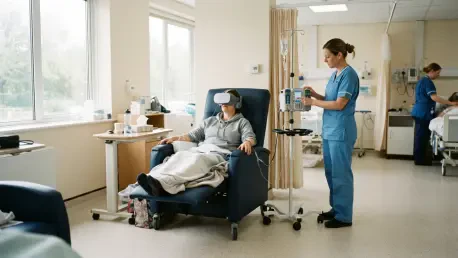
To ensure a high-quality and safe experience, the study utilized the PICO G3 standalone headset, which is a Class I European Union-certified medical device specifically designed for ease of use in professional settings. The hardware was paired with specialized software developed by Lumeen, offering a library of over one hundred and fifty diverse audiovisual programs. These modules were categorized into “evasion” experiences, such as realistic 360-degree nature scenes and global travelogues, and structured relaxation exercises focused on mindfulness and guided breathing. Recognizing the physical constraints of an infusion ward, the technology was highly adjustable, allowing patients to wear their own corrective glasses comfortably beneath the headset. Furthermore, the system provided flexibility in auditory delivery, offering a choice between integrated spatial audio or noise-canceling headphones. This technical versatility was essential for creating an environment where patients could effectively isolate themselves from the rhythmic sounds of infusion pumps and clinical chatter, facilitating a deeper sense of immersion and cognitive distance from their immediate medical reality.
Patient Interaction
Adoption Patterns: Sustaining Patient Engagement
One of the most revealing findings of the recent research was the high level of initial enthusiasm and the subsequent stabilization of technology adoption among the participants. When the virtual reality headsets were first introduced, ninety-two percent of the patients accepted the intervention for their first chemotherapy session, highlighting a significant appetite for distraction tools. Over the course of the four-cycle study period, nurses offered a total of two hundred and seventeen sessions, with an aggregate uptake rate of seventy-seven percent. While the acceptance rate dipped slightly in later visits, stabilizing at around seventy percent, nearly half of the cohort maintained perfect compliance, utilizing the technology during every single treatment session. When refusals did occur, they were rarely attributed to the technology itself; instead, patients cited temporary physical malaise or a simple lack of interest on that specific day. This pattern of use suggests that immersive digital tools are not merely a passing trend but are viewed by many patients as a valuable component of their supportive care regimen that remains relevant throughout the duration of their treatment.
Content Preferences: The Power of Evasion
The psychological impact of virtual reality is heavily dependent on the type of content provided, and the patients in the study expressed a clear and consistent preference for specific types of media. Participants overwhelmingly chose realistic 360-degree footage of nature and global travel over abstract relaxation or meditation modules. These “evasion” videos, which typically lasted between seven and twelve minutes, provided a profound sense of transportation that abstract graphics could not replicate. Patients reported that seeing the world outside the hospital walls—whether it was a quiet forest or a bustling foreign city—offered a more effective mental escape than guided breathing exercises. This preference highlights an important aspect of sensory distraction: for individuals trapped in a high-stress medical environment, the ability to “leave” the room visually and auditorily is more therapeutic than simply trying to calm the mind while remaining present in the clinic. The high engagement with travel content suggests that the primary value of virtual reality in oncology lies in its ability to temporarily replace a sterile reality with a vibrant, non-medical one.
Safety and Feasibility
Physical Tolerance: Evaluating Cybersickness and Safety
A primary hurdle for the adoption of head-mounted displays in clinical settings has long been the risk of “cybersickness,” a form of motion sickness characterized by nausea and dizziness. However, the data from the VRtuose trial confirmed that the current generation of medical-grade hardware is exceptionally safe and well-tolerated by patients undergoing chemotherapy. Using the Simulator Sickness Questionnaire, researchers found that the median distress score was a mere one on a scale where higher numbers indicate significant discomfort. While some patients noted minor sensations such as mild eye strain or general fatigue, these were categorized as negligible and did not interfere with the treatment process. Most impressively, ninety-one percent of patients reported feeling entirely secure and comfortable while wearing the headset, even though their vision was completely obscured in a public clinical space. There were zero serious adverse events recorded throughout the study, demonstrating that the technology can be deployed safely without exacerbating the existing physical side effects of systemic chemotherapy, such as the nausea often associated with infusion protocols.
Implementation Gap: The Provider Paradox
While the patient-facing data was overwhelmingly positive, the study also identified a significant implementation gap between patient satisfaction and clinical efficiency. This paradox centers on the fact that what is highly beneficial for a patient’s psychological state can be simultaneously disruptive to the operational flow of a busy oncology unit. While patients reported an eight out of ten satisfaction rating and a strong willingness to repeat the experience, the clinical staff viewed the technology through a much more critical lens. The transition from a controlled experimental study to a standard medical protocol is hindered by the logistical reality that nurses are already managing a high volume of complex tasks, including drug preparation and the monitoring of potential infusion reactions. This gap suggests that the success of a digital intervention cannot be measured by patient feedback alone; it must also account for the operational sustainability within the existing healthcare infrastructure. Without addressing the friction between these two perspectives, even the most effective psychological tools risk being sidelined in favor of maintaining clinical throughput and safety.
Operational Impact
Nursing Workload: The Fifteen-Minute Bottleneck
The primary operational challenge identified in the research was the significant amount of dedicated labor required to facilitate a single virtual reality session. Time-motion measurements revealed that each session demanded a median of fifteen minutes of a nurse’s time, which is a substantial commitment in a high-turnover outpatient unit. This labor includes retrieving the hardware, ensuring the batteries are sufficiently charged, assisting the patient with the physical fitting, and guiding them through the menu to select their desired content. Furthermore, the post-session requirements—including chemical decontamination and sanitization of the headset—add another layer of complexity to the nursing workflow. In an environment where every minute is accounted for in the administration of toxic medications, adding fifteen minutes of technical support per patient is often viewed as unsustainable. This bottleneck represents the largest barrier to making immersive technology a permanent fixture in oncology departments, as it directly competes with essential medical tasks and the intensive monitoring required during the infusion of chemotherapy drugs.
Staff Sentiment: Evaluating Institutional Readiness
Due to the increased workload and the disruption of established workflows, nursing staff expressed a lukewarm attitude toward the permanent implementation of virtual reality. When asked to rate their willingness to see the technology become a standard part of their daily routine, nurses provided a median score of only five out of ten. This rating reflects a deep-seated concern that the responsibility for technical management is being placed on the shoulders of medical professionals who are already stretched thin. The staff pointed out that while they recognize the psychological benefits for the patients, the practical reality of managing the devices often leads to a disruption of the clinical flow. This feedback underscores the need for a strategic shift in how digital health tools are deployed. Rather than relying on nursing staff to handle technical logistics, hospitals may need to consider utilizing dedicated digital health technicians, patient-resource coordinators, or specialized volunteers to manage the hardware, fitting, and sanitization processes. Only by offloading these tasks can the psychological benefits of the technology be maintained without compromising the efficiency and morale of the clinical team.
Situational Awareness: Balancing Distraction and Safety
While the goal of virtual reality is to provide a sense of “momentary distance” from the clinical environment, this immersion can occasionally lead to a concerning loss of situational awareness. Roughly twelve percent of patients in the study reported a sensation of feeling “lost” or disconnected from their surroundings, which raises important safety questions in an oncology setting. During the administration of chemotherapy, it is vital for patients to be able to communicate effectively with their medical team, particularly if they experience a sudden adverse reaction or physical discomfort. If a patient is too deeply immersed in a virtual world, they might miss important clinical cues or feel vulnerable while receiving toxic medications. This highlights a nuanced challenge for healthcare providers: finding the ideal level of immersion that allows for psychological reprieve while ensuring the patient remains sufficiently connected to the medical environment for safety purposes. Achieving this balance requires careful content selection and perhaps the development of hybrid-reality programs that allow for distraction without total sensory isolation, ensuring that the clinical team remains accessible at all times.
Strategic Evolution: Refining the Digital Integration
The VRtuose study served as a definitive feasibility trial that validated the safety and desirability of virtual reality in the outpatient oncology sector. Institutional leadership recognized that while the technology successfully mitigated situational anxiety for breast cancer patients, the burden of administration remained the primary obstacle to standard care. Stakeholders determined that the success of these “digital pills” was inherently tied to the personnel who managed the equipment rather than the software alone. They identified that for immersive tools to be sustainable, a new role—the Digital Health Technician—was required to manage the fifteen-minute setup and sanitization bottleneck. By offloading these technical duties from the nursing staff, hospitals preserved the efficiency of drug administration while allowing patients to continue accessing the profound psychological benefits of sensory distraction. Ultimately, the trial demonstrated that the clinic’s workflow necessitated a structural evolution to match the rapid advancements in patient-facing technology. Stakeholders concluded that integrating specialized support roles allowed for a more holistic approach to oncology that prioritized both clinical safety and the human experience of treatment.