
Hospital emergency departments across the United States are currently processing more diagnostic specimens than ever before, with urine samples accounting for nearly one out of every three patient encounters today. Beckman Coulter Diagnostics recently introduced the DxU 1800 System at the Association for Diagnostics & Laboratory Medicine (ADLM) Annual Scientific Meeting, aiming to resolve the recurring bottlenecks in clinical laboratories. This platform represents a significant leap for medical facilities within the Danaher Corporation portfolio by offering a fully integrated, streamlined solution for automated urinalysis. By combining advanced chemical analysis with high-definition microscopy, the system establishes a standardized workflow for one of the most frequently ordered tests in modern healthcare. As laboratory teams struggle with increasing sample volumes and a dwindling pool of specialized technical staff, this technology provides the scalability required to maintain high standards of patient care. This launch reflects a broader industry shift toward data-driven environments where total automation replaces fragmented and manual processes.
Addressing the Growing Burden on Diagnostic Services
Clinical Urgency: The High Volume of Patient Testing
The staggering volume of urine tests performed daily across American healthcare networks has necessitated a move toward more sophisticated diagnostic platforms that can keep pace with patient intake. Currently, nearly half of all hospital admissions require comprehensive urinalysis to facilitate effective patient assessment and treatment planning, while the test remains a top-ten order in primary care settings. The relentless demand stems from the sheer frequency of both acute and routine medical checks, placing a heavy administrative and physical burden on laboratory technicians who must process these samples quickly. In high-traffic environments, the speed of diagnostic turnaround directly influences patient outcomes, especially when clinicians are looking for early indicators of infection or organ distress. By addressing this volume with high-capacity automation, healthcare systems can better manage the flow of information from the bench to the bedside, ensuring that clinicians have the data they need exactly when it becomes most critical.
Maintaining a high throughput in a busy diagnostic facility requires more than just raw speed; it requires a system that can handle the complexities of sample variation without slowing down the entire workflow. When diagnostic results are delayed, it can lead to overcrowding in emergency rooms and delayed treatment starts, which negatively affects the overall efficiency of the healthcare system. The DxU 1800 System addresses these logistical hurdles by providing a reliable and consistent processing rate that does not fluctuate under pressure. This consistency allows hospital administrators to predict staffing needs better and manage patient expectations regarding the time it takes to receive a diagnosis. Furthermore, by reducing the time spent on every individual sample, the laboratory can absorb unexpected surges in volume that often occur during seasonal health crises or community outbreaks. This level of readiness is essential for maintaining the stability of the public health infrastructure in a fast-paced clinical environment.
Chronic Disease Management: Monitoring Metabolic Health
Beyond the sheer numbers, the rising prevalence of chronic conditions like diabetes and kidney disease has created a continuous need for reliable metabolic screening at an unprecedented scale. With current statistics showing that approximately 12% of the population lives with diabetes and nearly 15% of adults are affected by chronic kidney disease, the pressure to provide accurate longitudinal monitoring is immense. These patients require frequent testing to track the progression of their conditions and to ensure that their medications are working as intended. The DxU 1800 System was specifically engineered to meet these specific healthcare challenges by providing a robust platform that can handle complex screenings without the typical delays associated with manual intervention. By prioritizing accuracy in these high-stakes diagnostic areas, the system helps clinicians mitigate the long-term impacts of chronic diseases through better oversight. This proactive approach to metabolic monitoring is vital for reducing long-term hospitalizations.
In addition to chronic management, the millions of clinical encounters for urinary tract infections every year create a steady stream of samples that can easily overwhelm traditional, non-integrated systems. These acute cases require rapid identification to prevent complications such as sepsis or permanent kidney damage, making high-throughput automation a life-saving necessity. The ability to distinguish between routine screenings and urgent diagnostic needs within a single workflow is a key advantage of the new Beckman Coulter platform. It ensures that no matter how many samples are in the queue, the quality of the analysis remains uncompromised and the results are delivered within a clinically actionable timeframe. This reliability is particularly important in pediatric and geriatric care, where patients may not be able to communicate symptoms effectively and clinical data is the primary tool for diagnosis. By stabilizing the workflow for these high-frequency tests, laboratories can provide better support to the entire medical team and improve the recovery rates of patients across all demographics.
Driving Efficiency Through Integrated Workflows
Technological Synergy: Reducing Manual Labor
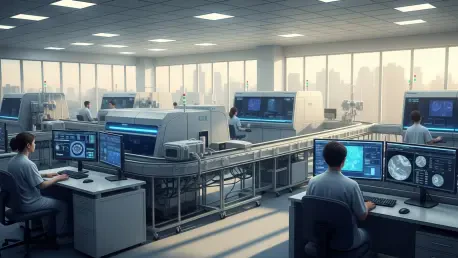
The central innovation of the DxU 1800 System lies in its ability to solve traditional laboratory inefficiencies by merging the DxU 1800c Chemistry analyzer with the proven DxU Iris Microscopy analyzer. This physical and digital integration creates a connected ecosystem that removes the need for technicians to manually hand off specimens between different pieces of diagnostic equipment. In the past, fragmented processes often led to variability in results and increased the potential for human error, especially during peak hours when the laboratory is most active. By unifying these two distinct testing phases into a single cohesive unit, the system ensures a smoother transition from chemical strip analysis to microscopic sediment examination. This holistic approach not only simplifies the physical layout of the laboratory but also synchronizes the data streams, allowing for a more comprehensive view of each patient’s sample. Such a level of coordination is vital for maintaining the integrity of the diagnostic process in modern medical facilities.
By eliminating the manual specimen handoffs that were once standard in clinical labs, the DxU 1800 System drastically reduces the physical footprint and the logistical complexity of the testing area. Technicians no longer need to navigate crowded laboratory spaces with racks of samples, which minimizes the risk of spills, mislabeling, or sample degradation. This streamlined movement of materials is mirrored by a unified software interface that allows for the seamless transfer of data from one analyzer to the other. When chemistry results indicate the need for a closer look, the microscopy unit is already prepared to receive the sample, ensuring that the transition is instantaneous. This level of hardware and software synergy represents a major advancement in the Danaher “connected science” philosophy, which aims to link every step of the diagnostic process. For the laboratory, this means fewer touchpoints and a more predictable schedule for results delivery, which eventually translates to more efficient use of both physical space and high-value laboratory equipment.
High-Throughput Performance: Strategic Ecosystem Integration
Specifically designed for high-capacity environments such as core laboratories and large reference facilities, the DxU 1800 System can process up to 300 samples per hour with remarkable precision. It features robust data management capabilities that allow for the storage of millions of results alongside digital strip images, which can be accessed for onscreen verification at any time. This digital workflow enables technicians to review findings instantly without ever needing to re-handle the physical sample, which significantly accelerates the path from specimen arrival to the final clinical decision. The inclusion of high-resolution digital imaging ensures that even minute details are captured and stored, providing a verifiable record that supports quality control and auditing requirements. As laboratories expand their operations to meet growing regional demands, having a system that scales efficiently becomes a competitive necessity for maintaining service levels. This high-capacity performance ensures that every sample is tracked and analyzed with total consistency.
The strategic vision behind the DxU 1800 System looked toward future expansions of the testing menu, including specialized assays for kidney function markers like creatinine and microalbumin. This forward-looking approach ensured that the system remained versatile even as the clinical needs of the population evolved throughout the middle of the decade. By focusing on standardization and deep automation, the platform provided clinicians with the reliable data necessary to manage chronic diseases more effectively and improve global health outcomes. Laboratories that integrated this technology found they could streamline their operations while preparing for the next generation of diagnostic requirements. Moving forward, healthcare administrators should prioritize the adoption of such integrated platforms to address the twin challenges of rising patient volumes and labor constraints. Investing in standardized, high-throughput systems now defined the diagnostic capabilities of medical centers and established a foundation for more efficient, patient-centered care that relied on accurate data.