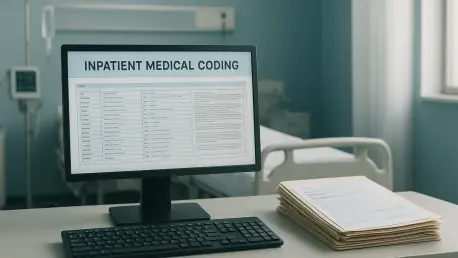

Somewhere in the quiet corridors of a major metropolitan hospital, a professional medical coder faces the daunting task of condensing a fifty-thousand-word clinical narrative into a single billable code. This labor-intensive process, which traditionally consumes nearly an hour of focused attention per patient, is currently being bypassed by a specialized intelligence capable of finishing the same task before a staff member can even finish brewing a cup of coffee. The recent expansion into the most challenging territory of healthcare administration represents a departure from simple automation toward a state where machines handle the high-stakes mid-cycle of the revenue cycle, fundamentally altering how hospitals manage their financial health.
This technological leap is not merely about speed; it is about reclaiming the fiscal stability of health systems that have been stretched thin by administrative overhead and labor shortages. For years, the industry settled for partial solutions that required constant human oversight, but the move toward true autonomy signifies a new era of trust in machine learning. By addressing the complexities of inpatient care, the focus has shifted from the easier tasks of outpatient billing to the sophisticated, document-heavy world of hospital stays. The implications for the healthcare sector are profound, as these advancements promise to streamline the path from clinical care to reimbursement with unprecedented precision.
The 90-Second Breakthrough: Redefining the Mid-Cycle Speed Limit
The ability of a machine to distill a complex clinical narrative into a billable code in less than two minutes represents a seismic shift in daily hospital operations. Previously, the industry relied on human-in-the-loop systems where AI acted as a mere suggestion engine, leaving the final decision and the resulting liability to human staff. However, the move toward true autonomy suggests that the technology has matured enough to handle the complex reasoning required for inpatient encounters without constant manual intervention. By targeting the mid-cycle revenue cycle, the platform addresses the phase between patient discharge and bill submission, which is often cited as the most difficult stage to automate due to the nuanced nature of hospital care.
Moving beyond simple automation means that the system is no longer just a digital assistant but a primary worker in the administrative chain. This shift is critical because it eliminates the bottleneck that occurs when human coders are overwhelmed by a backlog of charts. When an AI can process a comprehensive medical record in ninety seconds, the entire pace of the hospital’s financial department accelerates, allowing for a more fluid movement of capital. This speed does not come at the cost of accuracy; rather, it allows the system to analyze every word in the medical record with a level of consistency that is difficult for human workers to maintain during an eight-hour shift.
The significance of this transition cannot be overstated, as it represents the successful capture of the so-called holy grail of hospital administration. While prebill review and outpatient coding were the initial proving grounds, the mid-cycle represents the highest stakes in terms of both reimbursement value and compliance risk. By successfully automating this segment, health systems can finally close the gap between the delivery of care and the financial recognition of that care. This development effectively redefines the speed limit for hospital administration, proving that the most complex clinical data can be processed at the speed of modern digital commerce.
The Inpatient Bottleneck: Why Traditional Coding Is Reaching a Breaking Point
Hospital administrative departments are currently wrestling with a volume of documentation that would overwhelm even the most seasoned clinical teams. Each inpatient stay typically generates over sixty unique documents, including physician progress notes, lab results, and nursing logs, which combine to create a library of roughly fifty thousand words. Medical coders are tasked with translating this massive amount of data into specific codes selected from a library of over one hundred fifty thousand potential options. This manual distillation is inherently slow, often requiring up to an hour of concentrated effort for a single patient record, which creates a natural ceiling on how much a hospital can bill each day.
The healthcare industry is currently navigating a perfect storm where rising patient volumes intersect with a chronic shortage of qualified administrative staff. Many facilities find themselves perpetually understaffed, leading to a situation where patient accounts sit idle for days after a patient has been discharged. These delays are not merely an administrative nuisance; they directly inflate the number of days in accounts receivable, which can threaten the solvency of smaller or rural health systems. When capital is tied up in unbilled accounts, hospitals lose the ability to invest in new equipment or expand services for the community.
Furthermore, the financial toll of idle accounts creates a ripple effect throughout the entire organization. When coding is delayed, the entire billing cycle is pushed back, leading to late payments from insurance providers and increased friction with clinical staff who must answer questions about old cases. Traditional coding methods are simply reaching a breaking point where the human capacity to process data can no longer keep up with the complexity of modern medicine. Without a fundamental change in how these narratives are processed, the administrative burden of healthcare will continue to cannibalize the resources meant for patient treatment.
Inside the Technology: Generative AI as a Custom-Tuned Source of Truth
The core of this innovation lies in the deployment of Large Language Models that have been specifically tuned to understand the idiosyncratic and highly technical language of medicine. Unlike general-purpose AI models that might struggle with clinical jargon, these specialized systems are designed to bridge the gap between unstructured clinical prose and the highly structured requirements of medical billing. This approach rejects the idea of a one-size-fits-all algorithm, opting instead for bespoke tuning that adapts to the specific documentation habits and local clinical criteria of individual health systems. This customization ensures that the AI understands the unique context of each hospital’s patient population.
By creating a unified AI layer that spans across clinical documentation and coding, the technology captures the full narrative of care with high fidelity. This integration is essential for Clinical Documentation Integrity, as it allows the system to identify gaps in the record where the physician’s notes might not fully reflect the severity of the patient’s condition. When the AI operates as a source of truth, it ensures that every diagnosis and procedure is backed by evidence within the clinical record. This holistic view prevents the loss of critical information that often occurs when separate teams handle documentation and coding in isolation.
Moreover, the bespoke nature of the model allows it to grow more accurate over time as it processes more data from a specific health system. It learns the nuances of how different departments document care, which reduces the need for the system to flag encounters for human review. This high level of specialization is what allows the platform to move from being a general tool to a reliable piece of hospital infrastructure. By maintaining this unified layer, the technology provides a consistent and defensible record that can stand up to the scrutiny of both internal audits and external insurance reviews.
Validation Under Scrutiny: Proving AI Performance Against Human Experts
To gain the trust of skeptical hospital executives, the performance of the autonomous system was subjected to rigorous, third-party, blinded evaluations. These tests compared the AI’s output directly against the work of seasoned medical coders across a wide range of inpatient encounters. The results of these studies indicated that the AI could achieve a level of precision in Medicare Severity Diagnosis Related Group assignment that matched or even exceeded that of human experts. This finding is particularly significant because the diagnosis group is the primary driver of hospital reimbursement, and even small errors can lead to substantial financial discrepancies.
Beyond simple reimbursement metrics, the validation also measured the system’s ability to identify secondary diagnoses and complications with high accuracy. The AI demonstrated a remarkable capacity for mastering clinical quality capture, which is essential for reflecting the true complexity of the care provided. It also showed high precision in determining whether a condition was present on admission or developed during the hospital stay. This distinction is vital for both compliance with federal regulations and the accuracy of quality reporting, which impacts the public reputation of a medical facility.
Real-world traction among major institutions like Cleveland Clinic and Nebraska Methodist Health System further reinforces these findings. These early adopters have successfully integrated the technology to stabilize their revenue cycles and improve payment velocity over the last few years. By seeing the AI perform in high-stakes environments, other health systems are beginning to realize that the technology is no longer a theoretical concept but a proven solution. The data from these partnerships suggests that autonomous coding can handle the vast majority of inpatient volume, allowing hospitals to reallocate their human talent to the most difficult and medically nuanced cases.
Navigating the Industry Shift: From Administrative Friction to Financial Integrity
The introduction of autonomous coding arrives at a critical juncture in the relationship between healthcare providers and insurance payers. Reimbursement disputes and administrative friction currently cost the healthcare industry an estimated one billion dollars annually, largely due to disagreements over documentation and code selection. By using AI to create a transparent, documented source of truth, health systems can significantly reduce the frequency of these disputes. The platform creates a clear trail of evidence for every code assigned, which discourages arbitrary denials from payers and ensures that the hospital is fairly compensated for its services.
Transparency serves as a powerful solution to the long-standing divide between providers and payers. When both sides have access to a consistent and data-driven record, the opportunities for conflict are minimized. This shift allows hospitals to move away from a defensive posture regarding their billing and toward a model of financial integrity. Using AI to prevent upcoding while simultaneously ensuring that no legitimate care goes unbilled creates a balanced system that benefits all stakeholders. This strategic implementation allows hospital staff to transition away from repetitive manual tasks, focusing instead on high-risk clinical cases that require human empathy and complex judgment.
The transition toward an automated revenue cycle provided health systems with the tools to resolve administrative friction before it impacted clinical delivery. By shifting human coders from mundane entry tasks to the oversight of complex clinical documentation, hospitals significantly reduced the latency inherent in traditional billing models. This evolution proved that financial integrity and clinical excellence were not mutually exclusive but were rather two sides of the same operational coin. As the industry moved toward real-time integration at the point of care, the role of administrative staff underwent a permanent transformation. The focus shifted away from retroactive dispute management toward a proactive model that prioritized transparency and accuracy. Ultimately, the adoption of autonomous intelligence created a stabilized fiscal environment that allowed medical providers to concentrate on their primary mission of patient care without the constant threat of reimbursement delays.