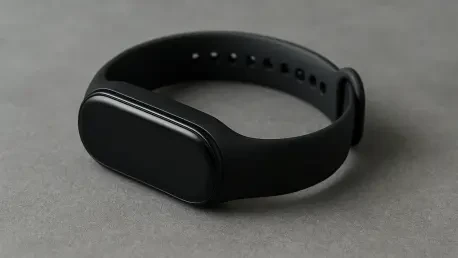

The Strap Pro distinguishes itself from competitors like WHOOP by offering full access to health and recovery data without a mandatory monthly subscription. This strategic pivot arrives at a time when the consumer electronics industry has become increasingly reliant on recurring revenue models, often locking basic physiological metrics behind paywalls. Speediance, by contrast, has prioritized a hardware-centric value proposition that empowers users to own their data outright. The device enters a competitive landscape where “invisible” technology is the primary trend, catering to a growing demographic of fitness enthusiasts who are exhausted by the constant notifications and glowing screens of traditional smartwatches. By stripping away the visual interface, the Strap Pro attempts to bridge the gap between high-fidelity laboratory equipment and comfortable daily wear. This design philosophy emphasizes long-term longitudinal data collection, allowing the technology to fade into the background of the user’s life while continuously monitoring vital signs with professional-grade precision.
Constructed from a premium titanium alloy, the Strap Pro is a testament to the engineering challenges of miniaturization. Weighing only 21 grams, it is significantly lighter than its stainless-steel counterparts, making it one of the most unobtrusive wearables currently available in 2026. This focus on materials is not merely an aesthetic choice; it reflects a commitment to durability and skin-friendly ergonomics for continuous 24/7 use. The device features a sleek, buttonless chassis that houses a sophisticated array of sensors, including a medical-grade optical heart rate monitor and an Electrodermal Activity sensor. This combination of high-end materials and advanced internal architecture positions the device as a serious contender for those who require robust health tracking without the bulk of a typical wrist-mounted computer. As the market shifts toward specialized recovery tools, the Strap Pro stands out as a hardware-first solution that refuses to compromise on the depth of information provided to the end-user.
Engineering Minimalism: The Philosophy of Disappearance
The design of the Speediance Strap Pro is rooted in a minimalist aesthetic that prioritizes functional utility over visual flair. By eliminating the screen entirely, the developers have removed the primary source of distraction found in modern wearables, effectively creating a “wear and forget” experience. This lack of a display allows the internal battery to be dedicated entirely to sensor accuracy and data processing, which is why the device can maintain high-frequency sampling rates without needing a daily charge. The exterior is smooth and free of buttons or external lights, preventing it from snagging on clothing or glowing during sleep. This streamlined profile is essential for maintaining consistent skin contact, as even minor gaps between the sensor and the skin can introduce significant noise into the physiological data. For users who value mental clarity and reduced screen time, the Strap Pro serves as a silent partner that performs complex biological analysis without demanding constant attention.
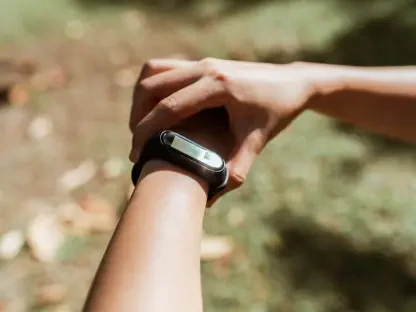
Optimizing the physical placement of the sensor has been a core focus of the Speediance development team. While the device is compatible with traditional wrist placement, it is specifically engineered for use on the upper arm, a location that has long been favored by professional athletes for its superior data integrity. In this position, the Strap Pro sits flat against the dense musculature of the bicep or tricep, where blood flow is more consistent and movement-related interference is significantly lower than at the wrist. The included elastic bands are constructed from a high-performance fabric that balances secure tension with long-term comfort, managing moisture effectively during intense cardiovascular sessions. By moving the sensor away from the complex bony structures of the wrist, Speediance has successfully minimized the “light leak” that often compromises optical heart rate accuracy during vigorous exercise. This focus on mechanical stability ensures that the longitudinal data collected overnight and during workouts remains reliable enough for serious physiological modeling.
Thermal Innovations: Transitioning to Core Temperature Estimation
One of the most significant technological leaps in the Strap Pro is its approach to thermal monitoring. While the majority of consumer wearables are limited to tracking peripheral skin temperature—a metric that fluctuates wildly based on room temperature, bedding, or clothing—the Strap Pro utilizes an advanced heat-flow sensor. This hardware, combined with proprietary physiological algorithms, allows the device to estimate core body temperature with a high degree of confidence. Core temperature is a far more vital metric for understanding the body’s internal state, as it provides a direct look into the circadian rhythm and metabolic health. By measuring the rate at which heat moves from the body into the environment, rather than just the temperature of the skin surface, the device offers a level of scientific depth that was previously reserved for clinical environments. This innovation represents a fundamental shift in how portable health trackers interpret thermal data for recovery and performance.
The practical application of core temperature data provides users with actionable insights that go beyond simple data points. The Speediance platform identifies a “Peak Window” for each user, which is the specific time of day when their internal temperature and biological clock align for optimal physical and cognitive performance. This allows athletes to schedule their most demanding training sessions when their bodies are naturally primed for exertion. Additionally, the “Warm-Up Readiness” feature monitors real-time temperature increases during the initial phases of a workout, informing the user when their muscles and metabolic systems are sufficiently prepared for high-intensity efforts. During endurance activities, the device tracks “Heat Load,” alerting the user to potential thermal strain that could lead to premature fatigue or heat exhaustion. By plotting these thermal trends against the body’s temperature nadir during sleep, the Strap Pro provides a comprehensive map of how the body regulates its internal environment across a 24-hour cycle.
Holistic Health Monitoring: Recovery and Biological Aging
The Strap Pro delivers a robust suite of standard physiological metrics, including Heart Rate, Heart Rate Variability (HRV), and Blood Oxygen Saturation. These data points are synthesized into a daily Recovery Score, which acts as a guide for the user’s physical readiness each morning. Unlike basic trackers that look at these metrics in isolation, the Speediance algorithm considers the relationship between sleep quality, cardiovascular stress, and thermal regulation. The inclusion of an Electrodermal Activity (EDA) sensor further enhances this analysis by detecting subtle changes in skin conductance. These changes are indicative of sympathetic nervous system activation, allowing the device to quantify stress levels that might not be visible through heart rate alone. This multi-layered approach to recovery monitoring ensures that the user receives a holistic view of their nervous system’s state, helping them decide whether to push for a new personal record or prioritize restorative rest.
Beyond immediate recovery, the Speediance ecosystem offers a unique perspective on long-term health through its “Wellness Age” and “Pace-of-Aging” metrics. These features analyze the user’s VO2 max, resting heart rate, and sleep consistency to estimate their biological age relative to their chronological age. While these metrics are intended as high-level approximations, they provide a powerful motivational framework for individuals focused on longevity and healthspan. The software visualizes how consistent lifestyle improvements, such as better sleep hygiene or increased cardiovascular efficiency, directly impact these biological markers over time. By shifting the focus from individual daily stats to a broader trend of physiological aging, the Strap Pro encourages a more sustainable and long-term approach to wellness. This long-form data visualization is particularly useful for users who are managing chronic health goals or those who want to see the tangible benefits of their training beyond simple muscle growth or weight loss.
Performance Accuracy: Heart Rate Stability and GPS Limitations
In the realm of athletic performance, heart rate accuracy is the standard by which all wearables are judged. The Strap Pro has demonstrated exceptional reliability in this area, often rivaling the performance of traditional chest straps during high-intensity interval training. Because the device is designed to be worn on the upper arm, it avoids the rapid acceleration and “wrist-flick” noise that frequently causes optical sensors on smartwatches to lose their lock on the pulse. During empirical testing involving rapid transitions from rest to near-maximum heart rate, the Strap Pro maintained a consistent and responsive data stream, accurately capturing the peaks and valleys of the cardiovascular effort. This level of precision is critical for athletes who use heart rate zones to dictate their training intensity. The stability of the optical sensor in this position ensures that the resulting recovery and exertion scores are based on high-quality raw data rather than algorithmic guesswork.
Despite the excellence of its heart rate monitoring, the Strap Pro faces challenges when it comes to spatial tracking for outdoor activities. Because the device does not contain an internal GPS module—a sacrifice made to maintain its ultra-light 21-gram profile and long battery life—it relies on a “Connected GPS” link to the user’s smartphone. This dependency means that the accuracy of distance and pace tracking is entirely subject to the quality of the phone’s GPS signal and the software’s ability to interpret that data. In various testing scenarios, the device has shown a tendency to slightly underestimate total distance, which can be a point of frustration for serious runners or cyclists who require pinpoint precision for their splits. While this limitation is a common trade-off in the screenless tracker category, it is an important consideration for those who primarily train outdoors without their phones. The device remains a powerhouse for indoor training, gym sessions, and general health monitoring, but it may require a secondary device for high-precision distance mapping.
Software Maturation: Navigating the First-Generation Ecosystem
The user interface of the Speediance mobile application is visually impressive, featuring a clean and modern design that avoids the cluttered look of many competing health platforms. It prioritizes the most critical data points—such as the Recovery Score and Sleep Quality—on the main dashboard, while allowing power users to dive into granular charts for HRV and core temperature. However, as is common with many first-generation hardware launches, the software ecosystem is still undergoing a period of refinement. Users have reported instances where the syncing process between the strap and the phone experiences latency, requiring several seconds for the data to fully populate after a workout. While the visual polish is high, the underlying data management system is still being optimized to handle the massive amounts of longitudinal information the sensors generate. This indicates that while the hardware is nearly flawless, the software experience is a evolving landscape that benefits from frequent firmware and app updates.
One of the primary areas identified for improvement is the precision of the sleep-tracking algorithm. Currently, the device occasionally struggles to differentiate between deep relaxation, such as reading in bed, and the actual onset of sleep. This can lead to inflated sleep duration numbers, which in turn skews the daily Recovery Score. A significant hurdle for users is the current inability to manually edit sleep start and end times within the app, meaning that an incorrect detection can negatively impact the accuracy of the day’s physiological insights. Additionally, certain metrics like VO2 max have shown a degree of volatility that does not always align with physical performance trends, suggesting that the algorithm may be overly sensitive to short-term data fluctuations. These software-related “growing pains” are typical for innovative health tech in its early stages, and Speediance has been proactive in addressing these issues through a consistent rollout of patches. For the dedicated user, the potential of the hardware remains the primary draw, with the expectation that the software will eventually catch up to the excellence of the sensors.
Economic Value: The Impact of a No-Subscription Model
The financial model adopted by Speediance is perhaps its most disruptive feature in the current wearable market. By providing full access to all core physiological data without requiring a monthly subscription, the company has positioned the Strap Pro as a long-term investment rather than an ongoing expense. In 2026, where “subscription fatigue” has become a genuine concern for consumers, the ability to buy a piece of hardware and own the resulting data is a powerful incentive. Most established competitors in the screenless tracker space have moved toward a service-based model where the hardware is essentially a rental, and the data is locked behind a paywall. Speediance’s “hardware-first” approach ensures that even if a user decides not to utilize the optional premium coaching services, the fundamental utility of the tracker remains entirely intact. This transparency in pricing makes the Strap Pro an attractive option for budget-conscious athletes and privacy-focused individuals who want to maintain control over their health information.
The evaluation of the Speediance Strap Pro revealed a device that successfully pushed the boundaries of what screenless wearables achieved in 2026. The testing process confirmed that the combination of a titanium build and core temperature monitoring created a unique value proposition that justified its premium positioning. While the software infrastructure showed signs of being in its early stages, the hardware accuracy and the absence of a mandatory subscription fee made it a formidable alternative to more established brands. The actionable insights derived from the thermal sensors offered a level of performance optimization that felt genuinely innovative. As the platform matured, the Strap Pro stood as a testament to the idea that health technology could be both deep in its analysis and invisible in its daily presence. For those who prioritized long-term physiological trends and hardware ownership, this device provided a clear path forward in the world of high-fidelity health monitoring. The decision to invest in the Strap Pro ultimately rested on the user’s desire for a distraction-free, data-rich experience that respected both their time and their wallet.