
James Maitland is a pioneer at the intersection of robotics and healthcare technology, dedicated to transforming patient outcomes through smarter, more secure systems. With the rapid integration of artificial intelligence into everything from rural hospital security to how patients choose their doctors, his insights bridge the gap between complex engineering and human-centered care. In this conversation, we explore the shifting landscape of health tech, focusing on the strategic divestment of non-core assets to double down on AI, the evolution of cybersecurity frameworks, and the surprising ways digital tools are reshaping patient trust.
The discussion touches upon the federal government’s new framework for voluntary benchmarking of “frontier” AI models and its specific protections for rural healthcare infrastructure. We delve into the financial motivations behind major divestitures, such as hundred-million-dollar deals aimed at strengthening balance sheets for long-term AI strategies. Additionally, the interview covers the rise of AI-powered workforce management and the critical need for robust cybersecurity governance to protect the integrity of the medical supply chain and ensure that every technological advancement translates into safer, more accessible patient care.
The government is encouraging voluntary benchmarking for “frontier” AI models to mitigate cyber threats. How do you see this framework impacting the security of rural hospitals and critical healthcare infrastructure?
This executive order, titled “Promoting Advanced Artificial Intelligence Innovation and Security,” is a massive signal that the administration views AI security as a cornerstone of national safety. By giving agencies just 30 to 60 days to carry out these objectives, there is an intense, palpable urgency to identify what qualifies as a “covered frontier model” before these systems become too integrated into our daily lives to easily secure. For rural hospitals, which often operate on razor-thin margins with limited IT staff, the 30-day window for the Secretary of Homeland Security to facilitate access to cybersecurity tools is a critical lifeline. We aren’t just talking about software patches; we are talking about a coordinated effort to ensure that as these advanced capabilities evolve, the best and most secure technology is deployed rapidly to confront threats. It is about building a defensive perimeter around our most vulnerable clinical settings so that a cyberattack does not become a tragedy in a small-town emergency room.
Health Catalyst recently announced the $147 million sale of its Vitalware business to refocus on AI-driven improvements. What does this strategic move tell us about the current priorities for large-scale health tech companies?
This divestiture is a textbook example of a company choosing deep conviction over broad, but disconnected, service offerings. By selling Vitalware to Med-Metrix for $147 million in cash, Health Catalyst is making a clean break from financial software—which generated about $37 million in revenue in fiscal year 2025—to double down on its core clinical and operational AI strategy. The move is incredibly pragmatic because it allows them to use those net proceeds plus cash on hand to fully repay and terminate a $160 million senior secured term loan, essentially cleaning their slate and providing the financial flexibility needed for high-stakes innovation. In the current market, spreading yourself too thin is a liability, and Med-Metrix is well-positioned to carry that business forward by combining operator-led services with scalable software solutions. This deal helps Med-Metrix improve charge capture and coding accuracy for its clients, while allowing Health Catalyst to sharpen its focus on cost, clinical, and consumer performance through its long-term AI vision.
According to recent data, 36% of patients now use AI tools to select providers, yet 60% have encountered incorrect information. How should healthcare organizations navigate this paradox of high trust in potentially flawed data?
The data from the 2026 Patient Choice Report, which surveyed nearly 1,000 adults across the U.S., is actually quite startling because it shows AI tools have already surpassed clinician recommendations (32%) and are rivaling Google (34%) as a primary influence for patients. What is even more dangerous is the trust gap where 60% of people admit they trust AI summaries without any further verification, even though an equal 60% have spotted inaccuracies in the data. This tells us that patients are hungry for the convenience of synthesized information, and they hold healthcare providers to a much higher standard than any other business, with 75% refusing to book with anyone rated below four stars. Organizations have to realize that their digital presence is no longer just a website; it is the data feed that these AI models ingest, and if that information is wrong, the reputational damage is immediate and severe. Between 2025 and 2026, the number of people who left a doctor based on online content jumped by 15% to a total of 55%, proving that the scrutiny begins long before a patient ever walks through the front door.
Shriners Children’s is partnering with Shiftmed to create “community float pools” using AI-powered workforce platforms. How does this kind of technological agility change the way we provide specialized pediatric care?
In specialized pediatric care, the stakes are incredibly high because you are dealing with subspecialty needs that cannot be filled by any general practitioner. By using an AI-powered platform to build dedicated community float pools, Shriners Children’s is essentially creating a high-precision response team that can be deployed on demand to meet fluctuating patient volumes across its various locations. This move allows the system to reinforce its presence in the communities it serves without compromising on the quality of the highly skilled clinicians required for such sensitive work. It is a shift from a reactive staffing model to one that uses data to ensure every child receives consistent, high-quality care exactly when and where they need it. The agility to deploy these clinicians on demand ensures workforce stability, and the emotional relief for families knowing that their child’s specialized care will not be delayed by staffing shortages is a powerful testament to how AI can support the human side of medicine.
The Health Sector Coordinating Council just released an 87-page guide on AI cybersecurity governance. Why is it becoming essential to view cyber safety as an intrinsic part of patient safety?
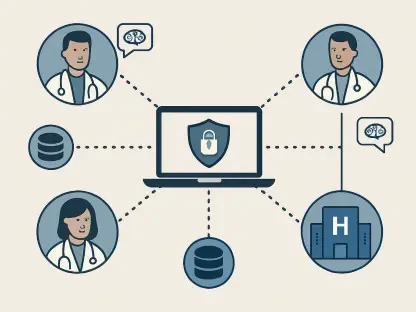
The mantra that “cyber safety is patient safety” is something we can no longer afford to ignore, especially as AI becomes more embedded in clinical decision-making and supply chains. This new 87-page guide specifically addresses adversarial threats and the integrity of the AI supply chain, which are the new frontlines for modern healthcare organizations, vendors, and suppliers. When we talk about mitigating unintended cybersecurity risk, we are talking about preventing someone from exploiting a technical flaw in an AI model to change a diagnosis or a medication dosage. It is a must-read because it provides the secure-by-design recommendations that help bridge the gap between a software developer’s desk and a patient’s bedside. Protecting the data is not just about privacy anymore; it is about ensuring the technology we rely on for life-saving decisions hasn’t been tampered with by an external actor, and this guide is the first major step in establishing that framework across the sector.
What is your forecast for the role of AI in patient-provider relationships over the next few years?
I forecast that we are entering an era of radical transparency where AI will act as the ultimate filter between the patient and the provider. We already see 39% of respondents using AI as a top digital influence when switching providers, and as partnerships like the one between Vida Health and Instacart show, AI will move beyond just “finding” a doctor to “implementing” their advice through category-specific grocery stipends. However, the biggest challenge will be the accuracy crisis; if 60% of people continue to encounter wrong information in AI summaries, the providers who win will be those who actively manage their digital presence to ensure these models reflect the truth. In the next few years, the relationship won’t start with a handshake but with an algorithm, and the success of a practice will depend on its ability to show up accurately, respond to reviews visibly, and earn those high ratings everywhere patients are searching. We will see a shift where the most successful clinicians are those who treat their digital reputation with the same clinical precision they use in the operating room.