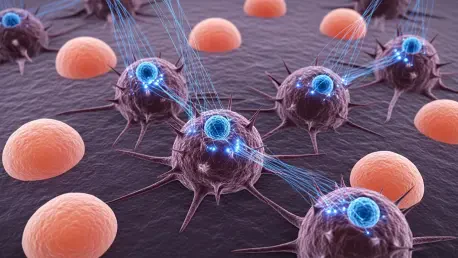

The persistent struggle against pancreatic ductal adenocarcinoma remains one of the most formidable challenges in modern oncology due to its silent progression and resistance to traditional therapies. As clinicians and researchers gather for the SNMMI 2026 Annual Meeting in Los Angeles, the focus has shifted toward transformative nuclear medicine solutions that offer hope where chemotherapy has historically failed. RadioMedix, celebrating twenty years of biotech innovation, is currently presenting pivotal clinical data that underscores its evolution from a regional Houston startup into a primary force in the global radiopharmaceutical landscape. This transition represents more than just corporate growth; it signifies a fundamental shift in how aggressive solid tumors are approached, moving away from systemic toxicity toward molecularly targeted strikes. By leveraging two decades of specialized research, the organization is now demonstrating how long-term scientific investment translates into tangible outcomes for patients with advanced pancreatic cancer who have few remaining options for survival.
Targeted Alpha Therapy: Scientific and Molecular Foundation
Harnessing the Physics: Lead-212 Isotopes
Targeted Alpha Therapy represents a significant departure from the beta-particle radiation treatments that defined the previous decade of nuclear oncology. By utilizing Lead-212 isotopes, medical professionals can now deliver high-energy alpha particles directly to the site of a malignancy with unprecedented energy density. Unlike beta particles, which are light and travel several millimeters through tissue, alpha particles are heavy and travel only a very short distance, typically the width of just a few cells. This extremely short path length ensures that the lethal energy is deposited almost entirely within the cancerous cells, causing irreparable double-strand DNA breaks that prevent further replication or repair. The physical properties of these particles allow for a targeted effect where neighboring tumor cells are eliminated without subjecting distant healthy organs to unnecessary radiation exposure. This precision is particularly vital for pancreatic tumors, which are often located near critical vascular structures.
Achieving Lethality: The Alpha Particle Advantage
The selection of Lead-212 as the preferred isotope is driven by its unique physical profile, often described by radiochemists as the “Goldilocks” half-life for clinical logistics and patient safety. With a half-life of approximately 10.6 hours, the isotope provides a sufficient window for the complex synthesis, purification, and distribution required in a medical setting without remaining in the patient’s system for an excessive duration. This timing is ideal for modern oncology workflows, allowing for centralized manufacturing and regional delivery while ensuring that the radioactive payload decays quickly after the therapeutic effect is achieved. Furthermore, Lead-212 serves as a potent generator for bismuth-212, which delivers the final alpha emission at the tumor site. This sophisticated decay chain is harnessed to maximize the therapeutic index, providing a robust solution for metastatic cases where cancer has spread beyond the primary organ and requires a systemic but highly localized intervention strategy.
Targeted Delivery: The LDLR Receptor Mechanism
Successful isotope delivery relies heavily on the accuracy of the ligand used to transport the radioactive atoms to the tumor, and the current drug candidate known as $^{212}$Pb-RMX-VH-PKM is a prime example of this technology. It specifically targets the low-density lipoprotein receptor that is frequently overexpressed on the surface of pancreatic ductal adenocarcinoma cells. Because these aggressive cancer cells require significant cholesterol and lipids for rapid growth, they over-regulate these receptors, effectively creating a biological “address” for the therapy to find. By exploiting this metabolic necessity, the treatment can distinguish between healthy pancreatic tissue and malignant growth with high specificity. Once the ligand binds to the receptor, the entire complex is often internalized into the cell, ensuring that the Lead-212 remains trapped within the target environment. This internalization process significantly increases the probability of a successful hit on the nucleus, where the alpha particles can perform their work.
Molecular Precision: Overcoming Tumor Resistance
The clinical development of these receptor-based therapies is a direct response to the limitations of traditional chemotherapy, which often fails to penetrate the dense, fibrous stroma surrounding pancreatic tumors. The small size and high affinity of the RMX-VH-PKM molecule allow it to navigate this challenging microenvironment more effectively than larger monoclonal antibodies or bulkier drug delivery systems. This enhanced penetration ensures that even the core of the tumor, which is frequently hypoxic and resistant to standard treatments, receives a therapeutic dose of radiation. As research progresses through the 2026-2028 clinical cycle, the data suggest that this receptor-targeting strategy could be adapted for other difficult-to-treat solid tumors that share similar receptor profiles. This versatility positions Targeted Alpha Therapy not just as a specialized tool for pancreatic cancer, but as a foundational platform for a new era of molecular oncology that prioritizes biological signatures over broad, non-specific approaches.
Industrial Infrastructure and Market Evolution
Vertical Integration: The SPICA Center Facility
To facilitate the widespread adoption of these advanced isotopes, the establishment of a robust and localized manufacturing infrastructure has become a primary objective for the industry. The SPICA Center, a state-of-the-art 27,000-square-foot facility located just north of Houston, serves as the operational heart for these efforts. This facility was designed from the ground up to handle the unique challenges of short-lived isotopes, featuring specialized cleanrooms and radiation shielding that meet rigorous cGMP safety and quality standards. By maintaining centralized control over the production process, the organization can ensure that every dose of Lead-212 is synthesized with consistent purity and potency. This level of vertical integration is rare in the biotech sector and provides a critical safeguard against the supply chain disruptions that have historically hampered the availability of radiopharmaceuticals. The center also houses advanced research labs where next-generation ligands are screened, creating a seamless pipeline from discovery to clinical distribution.
Production Efficiency: The Raha-100 Automated Synthesizer
Automation plays a central role in overcoming the logistical hurdles associated with Lead-212 production, particularly through the use of the Raha-100 automated synthesizer. This sophisticated equipment streamlines the radiolabeling process, reducing the risk of human error and minimizing radiation exposure for laboratory personnel. By automating the complex chemistry required to bind Lead-212 to its targeting ligands, the system allows for the rapid production of multiple patient doses in a single cycle. This efficiency is necessary to meet the growing demand from clinical trial sites across the country, where timing is a critical factor in patient care. Furthermore, the integration of such advanced technology ensures that the manufacturing process is scalable, allowing the organization to transition smoothly from small-scale clinical trials to large-scale commercial distribution as regulatory approvals are secured. This focus on technological excellence in manufacturing addresses the physical reality of radioactive decay while maintaining the highest safety standards.
Global Market Trends: The Rise of Alpha Therapies
The rise of modern radiopharmaceuticals is a testament to the vision of early pioneers who recognized the potential of nuclear medicine long before it became a multi-billion-dollar industry. Founded in 2006 by Dr. Ebrahim S. Delpassand, RadioMedix has consistently pushed the boundaries of what is possible in the field of molecular imaging and therapy. Dr. Delpassand’s early contributions to Lutetium-177-based treatments provided the scientific and commercial framework that many current blockbuster therapies now follow. Market analysts currently project that the targeted alpha therapy segment will experience a growth rate exceeding 40% annually throughout the 2026-2029 period. This explosive expansion is driven by an increasing number of successful clinical outcomes and a growing consensus among oncologists that molecularly targeted radiation is a viable alternative to systemic chemotherapy. Large pharmaceutical firms are increasingly looking toward partnerships with established biotech innovators to gain a foothold in this rapidly evolving sector.
Strategic Perspectives: Advancing the Standard of Care
The advancements presented during the annual meeting established a clear pathway for the future of pancreatic cancer management through the deployment of Lead-212 therapies. Researchers concluded that the integration of automated manufacturing was essential for maintaining a consistent supply of these short-lived isotopes to clinical centers worldwide. Stakeholders recognized that securing strategic partnerships with healthcare providers would be the next critical step in expanding access to these life-saving treatments for diverse patient populations. It was determined that future clinical trials should focus on combining Targeted Alpha Therapy with existing immunotherapies to potentially enhance the overall immune response against metastatic lesions. The industry moved toward a more standardized approach to dosimetry, ensuring that every patient received an optimized dose based on their specific tumor biology and metabolic profile. These developments provided a comprehensive framework for moving molecularly targeted radiation into the standard of care for oncology.