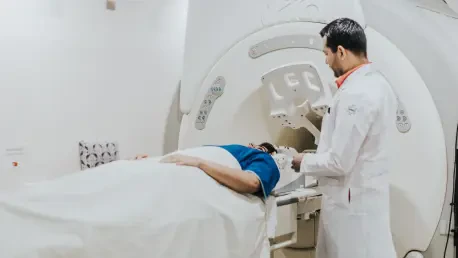

The modern healthcare landscape has been fundamentally altered by the emergence of high-tech wellness services that allow asymptomatic individuals to bypass traditional gatekeepers and purchase comprehensive internal snapshots of their own biology. For a price often exceeding several thousand dollars, companies like Prenuvo and Ezra offer elective whole-body MRI scans marketed as the ultimate proactive tool for early disease detection and total “peace of mind.” This booming direct-to-consumer market has successfully leveraged high-profile celebrity endorsements and significant venture capital backing to normalize the idea that more data always leads to better health outcomes. However, as these diagnostic services gain mainstream traction, they are encountering intense pushback from the established radiology community, which argues that these screenings often lack the clinical validation required for such broad implementation. The tension between the consumer desire for health sovereignty and the rigorous standards of evidence-based medicine has created a profound divide, leaving patients to navigate a complex terrain of conflicting advice, potential overdiagnosis, and significant out-of-pocket expenses.
This expansion of the elective imaging market has occurred largely outside the traditional insurance-based healthcare model, creating a parallel system where diagnostic priority is determined by financial capacity rather than medical necessity. By 2026, the industry has already processed over 100,000 patients who are eager to secure a granular view of their internal health, frequently motivated by the fear of undiagnosed conditions that conventional physical exams might miss. Proponents of these scans argue that the traditional medical system is too reactive, waiting for symptoms to appear before initiating diagnostic investigations that might come too late. This “proactive” philosophy appeals to a generation of health-conscious consumers who view their medical data as a personal asset that should be monitored with the same frequency and detail as a financial portfolio. Despite this enthusiasm, a critical regulatory loophole remains: because these scans are classified as diagnostic services rather than pharmaceutical products, they are not required to undergo the same multi-year clinical trials to prove they actually extend life or improve overall public health before being marketed to the public.
Mathematical Fallacies: The Scientific Skepticism of Screening
Prominent academic radiologists and biostatisticians maintain that the intuitive appeal of early detection is frequently undermined by complex mathematical realities when applied to otherwise healthy populations. One of the primary concerns centers on the high prevalence of “incidentalomas,” which are benign physiological variations or abnormalities that would never have caused a health problem during a patient’s natural lifetime. In a symptomatic patient, an MRI is a targeted tool used to confirm or rule out a specific hypothesis, but when used as a broad dragnet for a healthy individual, the likelihood of finding something irrelevant increases dramatically. Experts argue that the human body is rarely a perfect biological specimen; it is naturally filled with cysts, nodules, and shadows that are clinically insignificant but appear alarming on a high-resolution scan. This creates a psychological burden for the patient, as the discovery of an anatomical “anomaly” often triggers a cycle of persistent medical anxiety and the perceived need for continuous monitoring of a condition that was never a threat.
Beyond the psychological impact, the academic community points to a lack of empirical evidence demonstrating that elective whole-body MRIs lead to better long-term survival rates for the general population. Critics highlight the absence of large-scale, independent clinical trials that compare the outcomes of scanned individuals against those who follow traditional screening guidelines. There is a legitimate concern that the companies providing these services have a financial disincentive to fund such rigorous research, as a study failing to show a mortality benefit would jeopardize their high-margin business models. Furthermore, if a study were to prove a significant benefit, it would likely lead to calls for insurance coverage, which would inevitably involve stricter pricing regulations and more traditional clinical oversight. For now, the industry operates in a space where marketing claims about “saving lives” often outpace the peer-reviewed data necessary to support them, leaving the scientific community to worry that the pursuit of early detection is actually creating a new class of “worried well” patients who are over-diagnosed but not necessarily healthier.
The Cascade of Care: From Imaging to Intervention
The most significant physical risk associated with elective whole-body MRI scans is not the imaging procedure itself, which involves no ionizing radiation, but rather the “cascade of care” that follows an ambiguous result. Once a scan identifies a suspicious spot on an organ like the kidney or liver, the standard medical protocol often demands further investigation, which frequently escalates to invasive procedures. This trajectory can move rapidly from a voluntary, non-invasive scan to blood tests, follow-up CT scans, and eventually painful biopsies or even exploratory surgeries to ensure that a low-grade finding is not malignant. For many patients, the path from a wellness-oriented “peace of mind” scan to an operating table is surprisingly short, exposing them to physical risks that they did not anticipate when they initially sought out the screening. The potential for surgical complications, infections, and the physical trauma of unnecessary interventions represents a tangible downside to the aggressive pursuit of early detection in healthy individuals.
Historical precedents in mass screening programs provide a cautionary framework for understanding these risks, such as the surge in thyroid cancer diagnoses observed in South Korea over the previous decade. In that instance, the introduction of widespread, low-cost ultrasound screenings led to a massive spike in the detection of small papillary thyroid cancers that were unlikely to ever become life-threatening. While the number of diagnoses skyrocketed, the mortality rate for thyroid cancer remained virtually unchanged, indicating that thousands of patients underwent unnecessary surgeries and lifelong hormone replacement therapy for a disease that would have remained dormant. Similarly, large-scale studies on ovarian cancer screening have shown that aggressive diagnostic follow-ups on false positives often lead to higher rates of surgical complications without providing a corresponding decrease in overall mortality. These examples underscore the danger of a medical philosophy that prioritizes finding every possible abnormality without considering the inherent risks of the subsequent interventions that those findings inevitably trigger.
Societal Impact: Resource Allocation and Financial Ripples
The growth of the elective MRI industry raises significant questions about the equitable distribution of diagnostic resources within the broader healthcare ecosystem. As wealthy individuals fill scanning slots at private facilities or specialized centers, they may inadvertently contribute to longer wait times for symptomatic patients who have an urgent medical need for imaging. While these elective companies often operate their own dedicated hardware, they still draw from a finite pool of subspecialty-trained radiologists and technicians whose expertise is also required in hospitals and trauma centers. This competition for human capital and technical resources can exacerbate existing bottlenecks in the medical system, prioritizing those who can pay for elective screenings over those who require diagnostic imaging for the treatment of active illness. The diversion of specialized medical labor toward the “worried well” represents a systemic inefficiency that many healthcare administrators view with growing concern as the demand for private scanning continues to rise.
Furthermore, there is a complex financial dynamic at play regarding the downstream costs of elective screenings, which are often shifted from the individual to the traditional insurance pool. While the initial MRI is typically a luxury purchase paid for out-of-pocket, the subsequent diagnostic workups, biopsies, and follow-up consultations triggered by incidental findings are almost always billed to private insurance or public health programs. This means that a “private” health decision made by an affluent individual can create a significant financial ripple effect that impacts the premiums and resources available to the general public. Critics argue that this represents a form of healthcare inequality where the pursuit of personal data by the wealthy is effectively subsidized by the collective insurance system through the funding of medically unnecessary follow-up care. This systemic burden challenges the notion that elective scans are a harmless personal choice, suggesting instead that they have far-reaching economic implications for the sustainability of modern healthcare delivery.
Technological Evolution: The Industry Defense and AI Integration
In response to the mounting criticism from the traditional medical establishment, industry leaders argue that whole-body MRIs provide value that extends far beyond the mere detection of early-stage cancer. They emphasize the ability of these scans to identify silent but life-threatening conditions such as brain aneurysms, advanced metabolic diseases, and structural abnormalities that can be managed proactively once discovered. According to these companies, the academic critique is often based on an outdated or overly narrow interpretation of how imaging data is utilized in a modern clinical setting. They contend that by providing a comprehensive baseline of a patient’s internal anatomy, they are empowering individuals to take an active role in their health longevity rather than waiting for a crisis to occur. From this perspective, elective imaging is not a source of “frivolous” data but a foundational element of a new paradigm in personalized medicine that prioritizes prevention over late-stage intervention.
To address concerns regarding overdiagnosis and false positives, the elective imaging industry is increasingly integrating sophisticated artificial intelligence and machine learning algorithms into its diagnostic workflows. These AI tools are designed to assist radiologists in distinguishing between clinically significant pathologies and benign incidental findings, theoretically reducing the number of unnecessary follow-up recommendations. By training these models on vast datasets of whole-body images, companies hope to refine their diagnostic accuracy to a level that satisfies even the most skeptical members of the radiology community. Proponents often compare the current era of elective MRI to the early days of mammography or colonoscopy, noting that many standard screening tools were initially met with professional resistance before their life-saving potential was fully recognized through iterative technological improvement. They argue that the absence of a completed thirty-year mortality trial does not negate the immediate, tangible benefits that many patients experience when a silent but treatable condition is identified during a routine scan.
Regulatory Evolution: Path to Clinical Legitimacy
The trajectory of the elective MRI industry appeared to be moving toward a period of necessary standardization as the mid-2020s progressed. Regulatory bodies began to consider new frameworks that would require these companies to report the long-term outcomes of their patients, effectively creating a massive, real-world data set to supplement traditional clinical trials. This shift was aimed at bridging the gap between direct-to-consumer marketing and the rigorous demands of evidence-based medicine, ensuring that the promise of early detection was backed by verifiable statistics on survival and quality of life. For patients, this meant a move toward more transparent “risk-benefit” disclosures before undergoing a scan, allowing them to make more informed decisions about the potential for incidental findings and the subsequent medical interventions they might face. The industry responded by forming professional associations dedicated to establishing best practices for whole-body imaging, signaling a willingness to integrate more deeply with the traditional medical system.
By 2026, the conversation had shifted from whether elective scans should exist to how they could be responsibly integrated into a holistic health management strategy. Medical schools and residency programs started to include specific training on how to handle incidentalomas found on elective scans, recognizing that the “cascade of care” was a challenge that required a specialized clinical approach. The development of standardized “actionable finding” protocols helped to reduce the number of unnecessary surgeries by providing clear guidelines on which shadows required immediate follow-up and which could be safely monitored over time. This evolution suggested that the future of elective imaging would rely on a partnership between high-tech screening companies and the traditional healthcare infrastructure. As the industry matured, the focus remained on refining the balance between the pursuit of early detection and the preservation of patient well-being, ensuring that the “peace of mind” sold to consumers was grounded in scientific reality rather than just technological capability.