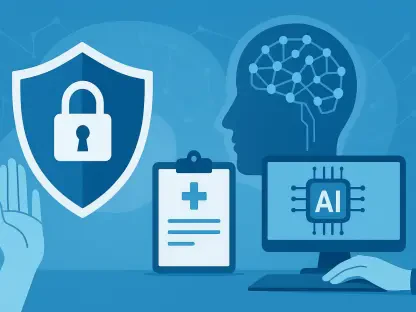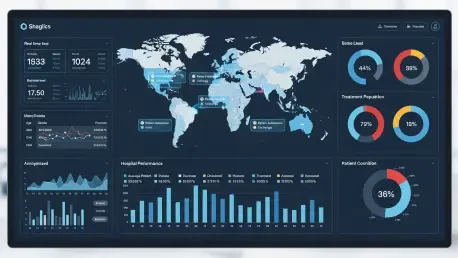

Modern healthcare leadership is increasingly defined by the ability to transition from passive data collection to immediate, decisive action that directly impacts patient outcomes and organizational sustainability. The persistence of manual data processing often creates a dangerous lag where strategic windows close before clinical or administrative teams even realize an opportunity was present. This bottleneck is particularly evident in large-scale health systems where fragmented information silos prevent a unified view of operational health. Modern software must bridge these gaps, moving beyond the simple storage of electronic health records to create a dynamic environment where financial and clinical data inform each other. As the industry navigates a period of heightened volatility, the capacity to visualize real-time payment trends and patient care trajectories is no longer a luxury but a fundamental requirement for survival. Failure to connect these disparate datasets results in payment leakage and stalled initiatives that can compromise the very foundation of a healthcare organization’s mission and future growth. By centering analytics as a core operational competency, teams are finally able to handle data that was never originally designed to work together, transforming a liability into a strategic asset.
The Strategic Context Of Modern Healthcare Analytics
Within the current environment, healthcare organizations are compelled to look beneath the surface of basic reporting to identify hidden financial and clinical risks that could undermine their long-term stability. Revenue integrity teams have shifted their focus toward ensuring every service provided is documented with surgical precision to avoid the billing variances that lead to systemic financial erosion. Data visibility serves as the primary defense against this kind of leakage, allowing leaders to monitor discrepancies as they occur rather than months after the fact during a retrospective audit. When these insights are delayed, the cumulative effect of minor documentation errors can result in millions of dollars in lost revenue that could have otherwise funded critical patient care programs or facility upgrades. This shift toward proactive monitoring requires a technological infrastructure that can handle massive volumes of transactional data while flagging anomalies that warrant human intervention. Organizations that fail to prioritize this level of transparency often find themselves struggling to maintain margins in an increasingly competitive and scrutinized financial landscape.
Beyond the financial ledger, care management groups are utilizing advanced analytics to break down the silos that traditionally isolated clinical records from population health insights. These teams are tasked with identifying vulnerable patient populations and deploying targeted interventions before chronic conditions escalate into acute medical crises. When data is trapped in separate systems, the holistic view of a patient’s medical journey remains fragmented, leading to missed opportunities for preventative care and less effective treatment plans. Software that acts as a bridge between these clinical datasets allows for a unified view, enabling care coordinators to see exactly where a patient stands in their care continuum. This integration is vital for the success of value-based care models, where the quality of intervention is directly tied to the availability of comprehensive and accurate data. Consequently, the ability to surface actionable signals from a sea of raw information has become the benchmark for any high-performing analytics platform. Moving forward, the emphasis remains on using these insights to drive specific behaviors that lead to better clinical outcomes and reduced readmission rates across the entire health system.
Standards For Evaluating High Performance Software
To distinguish truly effective platforms from the vast sea of available options, a rigorous evaluation framework must be applied, focusing on core dimensions that determine long-term success. Comprehensive data coverage remains the baseline requirement, as any platform that fails to aggregate clinical, claims, and operational metrics into a single environment is inherently limited in its utility. This unified view prevents administrative teams from wasting hundreds of hours manually reconstructing context for every new project or strategic inquiry. Furthermore, the interpretability of this data is arguably more important than the total volume of information a system can process or store at any given time. If a department manager must spend more time deciphering complex charts than implementing actual improvements, the software has failed in its primary mission to support efficient decision-making. High-quality tools translate raw numbers into clear, defensible strategies that can be understood by non-technical stakeholders across the entire organization. This clarity is what allows for the rapid scaling of successful programs and the immediate correction of failing ones.
Another critical pillar of high-performance software is the integration of role-specific workflows that acknowledge the distinct mental models of clinical, financial, and operational leaders. A generic, one-size-fits-all interface rarely meets the nuanced needs of a revenue cycle manager or a head of nursing, often resulting in low adoption rates and frustrated staff. The best solutions offer tailored experiences that align with the specific daily tasks and objectives of different departments while maintaining a consistent logical foundation. This consistency ensures that even as the organization scales—adding new facilities or service lines—the core metrics remain accurate and definitions do not erode over time. Trust-based governance acts as the final safeguard, enforcing uniform data permissions and definitions to eliminate the shadow reporting that often plagues large institutions. When every executive and manager trusts that the number they see is the single source of truth, the organization can move with a level of confidence and speed that was previously impossible. This alignment between technology and human workflow is the ultimate driver of a successful data strategy in the modern healthcare sector.
Top Solutions For Financial And Payment Integrity
Cotiviti Medical Intelligence has solidified its position as a premier solution for healthcare organizations that prioritize absolute precision in their payment accuracy and financial recovery efforts. The platform is engineered to look past surface-level trends and identify the root causes of financial waste, such as complex billing variances and documentation discrepancies. By uncovering these hidden patterns, it allows revenue integrity teams to reclaim funds that would otherwise be lost to the intricate web of modern claims processing. A particularly notable feature is the prospective risk view, which enables organizations to move away from purely retrospective analysis and begin predicting future financial challenges. This forward-looking capability allows for more strategic plan designs and the implementation of wellness programs that address risks before they manifest in high-cost clinical events. While the system typically operates on a month-end cadence, its depth of analysis makes it an indispensable tool for long-term strategic oversight and financial stabilization. It provides a level of detail that is essential for maintaining the financial health of large-scale payor and provider networks.
In the realm of compliance and provider verification, LexisNexis MarketView provides a foundation of verified data that is essential for mitigating legal and financial risks in highly regulated environments. This platform offers an exhaustive view of practitioner details, including ownership structures and historical claims data, which is vital for screening providers during the onboarding process. The precision querying capabilities allow legal and finance teams to pull highly filtered results that are both traceable and defensible under statutory scrutiny. This level of granularity is necessary to avoid the manual errors that frequently lead to costly penalties or reputational damage for healthcare institutions. Although the referential database model is more rigid than some open-ended exploration tools, its reliability as a source of truth for provider intelligence is unmatched. By automating the verification process, LexisNexis allows compliance teams to focus on high-level risk assessment rather than the tedious task of manual data entry and cross-referencing. This structured approach to data ensures that organizational growth is built on a foundation of legitimate and verified partnerships.
Strategic Growth And Market Intelligence Leaders
Intellimed has emerged as the definitive strategic anchor for health systems that need to navigate the complexities of market share and patient referral patterns with empirical certainty. The platform is specifically designed to track referral leakage, providing leaders with the insights needed to understand why patients are migrating to competitors and how to incentivize them to stay within the network. This ability to pull service-line-specific insights without extensive technical assistance empowers internal strategy teams to work with a level of efficiency that was previously unattainable. Its robust data warehousing capabilities ensure that every growth strategy is grounded in hard facts, allowing hospitals to identify which provider groups are contributing the most value to their overall mission. While the platform presents a steep learning curve due to the sheer volume of geographical and payor data, it becomes an intuitive and indispensable part of the strategic toolkit once mastered by a dedicated analyst team. By focusing on the defensibility of its data, Intellimed allows executives to make high-stakes investments with a much higher degree of confidence.
For commercial teams seeking to penetrate the complex landscape of provider networks, Definitive Healthcare offers a comprehensive view of the market that would be nearly impossible to replicate through manual research. The platform consolidates disparate information, including hospital financial statements, staffed bed counts, and executive affiliation hierarchies, into a single, accessible dashboard. Sales and growth leaders use this intelligence to prioritize their outreach efforts based on actual patient flow and care delivery patterns rather than vague marketing estimates. Reviewers have consistently noted that the tool significantly reduces the time required for pre-meeting research, allowing representatives to enter high-stakes discussions with a complete understanding of a facility’s operational needs. Although high personnel turnover in the industry can occasionally result in outdated executive contact information, the overall depth of the database remains superior for commercial intelligence. It provides the necessary transparency to bridge the gap between healthcare suppliers and the providers who rely on their specialized products and services, fostering a more informed and efficient marketplace.
Enhancing Clinical Quality And Enterprise Oversight
Vizient serves as a vital membership-supported ecosystem that allows hospitals to benchmark their clinical performance against a massive national database of patient safety indicators and outcomes. This capability is essential for quality improvement teams who need to ground their internal discussions in national standards rather than isolated local metrics. One of the most significant advantages of this platform is the Datalynx support model, which grants users direct access to subject matter experts who can assist with complex data management challenges. This level of expert guidance is particularly valuable when dealing with sensitive clinical results that require nuanced interpretation and precise reporting. While the technical process of configuring APIs for Vizient can be demanding for IT departments, the resulting access to peer-group data provides a competitive edge in standardizing care. For organizations committed to continuous clinical excellence, the platform remains a cornerstone for identifying gaps in care and implementing evidence-based solutions that improve patient safety across the board, ensuring that safety remains the primary organizational objective.
Oracle Enterprise Healthcare Analytics is built for the world’s most complex healthcare organizations that require a holistic, unified view of patient care, supply chain management, and financial operations. The system is a recognized leader in the application of machine learning and artificial intelligence to healthcare data, offering predictive models that can optimize everything from drug dosages to recovery timelines. This enterprise-wide environment eliminates the silos that often prevent large health systems from understanding the full impact of their operational decisions on patient outcomes. Analysts can leverage powerful built-in visualization tools to create sophisticated reports for stakeholders without the need for third-party software, streamlining the entire reporting lifecycle. Despite the inherent complexity of the software and the significant training required to navigate its many features, the depth of its predictive capabilities is currently unrivaled. It remains the preferred choice for data-heavy institutions that need to model complex population health scenarios and manage sprawling, multi-facility operations with a high degree of mathematical precision, ultimately driving efficiency at a massive scale.
Tools For Workforce Compliance And Wellness
Personify Health addresses the persistent challenge of low participation in enterprise wellness programs by utilizing a social, habit-based approach that encourages daily engagement among employees. Traditional wellness initiatives often suffer from a spike-and-fade usage pattern, but this platform uses gamification and team challenges to maintain long-term interest and motivation. By unifying physical, mental, and nutritional health into a single digital environment, the software reduces the friction that often comes with managing multiple disconnected health applications. It also syncs seamlessly with common consumer wearables, ensuring that activity data flows into the system automatically without requiring tedious manual logging by the user. While the platform can occasionally experience performance lags during periods of peak activity, its ability to drive sustained healthy behaviors makes it a valuable asset for organizations looking to improve employee well-being. This focus on long-term engagement helps to lower healthcare costs and improve overall workforce productivity by fostering a culture of health within the organization that extends far beyond a simple monthly fitness challenge.
HealthStream Checklist provides a specialized digital solution for the high-stakes task of documenting clinical staff competency and ensuring compliance with rapidly evolving healthcare standards. It effectively replaces the outdated paper binder methods that are still common in many hospitals, centralizing documentation in a way that is easily accessible for audits and internal reviews. This system allows clinical leaders to track exactly which staff members have completed their required training or acknowledged new hospital policies, ensuring that workflows are standardized across all shifts. During inspections by regulatory bodies such as the Joint Commission, the ability to quickly present digital evidence of compliance can significantly reduce administrative stress and improve audit outcomes. The platform’s ease of use has led to high adoption rates among frontline nursing and medical staff who are often too busy for overly complex administrative software. By focusing strictly on operational compliance and skill verification, HealthStream ensures that the workforce remains prepared to deliver high-quality care that meets all regulatory requirements, thereby reducing the risk of errors and improving overall safety.
Strategic Next Steps For Analytics Implementation
The path toward successful data integration required leadership teams to first identify the specific areas of clinical or financial risk that posed the greatest threat to their organizational stability. Rather than attempting a broad, poorly defined implementation, the most effective strategy involved matching specialized tools to clearly defined operational needs. This targeted approach allowed organizations to see immediate returns on their software investments, particularly in high-stakes areas like revenue integrity and market expansion. Decision-makers prioritized platforms that offered transparency and explainable logic, ensuring that any data-driven strategy could be defended in the face of executive or regulatory scrutiny. By focusing on the velocity of insight rather than just the volume of data, these teams moved closer to a state where every major decision was grounded in empirical evidence. The ultimate success of these initiatives rested on the ability to move away from manual reconciliation toward a single, automated source of truth that unified the entire organization’s strategic vision and care delivery model.
Moving forward, the focus shifted toward establishing a culture of data literacy that empowered staff at every level to utilize these advanced tools in their daily workflows. Organizations that successfully navigated this transition did so by investing in training programs that emphasized the practical application of analytics rather than just technical proficiency. This alignment between sophisticated technology and human expertise created a feedback loop where clinical and financial outcomes were continuously monitored and refined. Leaders also recognized that interoperability was not a final destination but a continuous process of refining data pipelines and governance standards. By maintaining a flexible yet disciplined approach to their analytics shortlist, healthcare systems were able to adapt to new regulatory requirements and market shifts with unprecedented agility. The integration of these tools ultimately served as the foundation for a more resilient, transparent, and patient-centered healthcare system that used every piece of available information to drive meaningful change across the entire continuum of care.