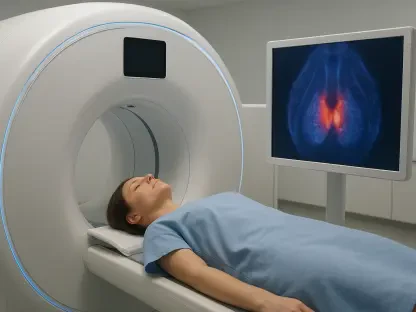

The financial sustainability of the organization is currently bolstered by non-dilutive government funding, including a substantial A$1.694 million research and development tax refund. This significant capital injection arrives at a vital moment as Optiscan Imaging Limited (ASX: OIL) moves beyond its research-heavy roots to become a global commercial contender in the medical technology field. The primary objective is now the widespread deployment of proprietary miniaturized confocal laser endomicroscopy technology, which provides clinicians with the ability to examine tissue at cellular resolution in real-time. This transition marks a pivotal point for the firm as it transfers its innovative hardware from laboratory settings into clinical and veterinary environments worldwide. By providing immediate visualization of microscopic structures, the technology seeks to bridge the gap between traditional pathology and modern surgical needs. This strategic shift is designed to transform the company into a revenue-generating leader.
Market Expansion: Strategic Foothold in the Veterinary Sector
In July 2026, the company achieved a major milestone with the formal launch of InSpecta, a specialized imaging device tailored for the complex needs of the veterinary market. Debuting at the American Veterinary Medical Association Convention, this platform represents a calculated move to generate early-stage revenue while establishing a footprint in a sector that demands high precision. The InSpecta system allows veterinarians to perform detailed cellular assessments without the immediate need for invasive tissue removal, mirroring the “optical biopsy” capabilities found in human-grade devices. This entry into the animal health sector provides more than just a new revenue stream; it offers a high-visibility stage to demonstrate the practical utility of confocal laser endomicroscopy. By targeting high-end veterinary clinics and surgical centers, the organization is positioning itself as a pioneer in advanced diagnostics for non-human patients, effectively diversifying its market risk.
This strategic focus on the veterinary industry serves as a critical testing ground to refine the underlying hardware and software before broader human medical adoption occurs. Because the regulatory pathway for animal health products is generally less intensive than that of human healthcare, it allows the company to gather significant real-world performance data in a shorter timeframe. This data is instrumental in identifying potential technical improvements and user interface enhancements that will eventually benefit the human health platforms. Furthermore, the commercial momentum generated in this sector helps build a foundation of trust among early adopters and key opinion leaders in the scientific community. As the company gathers feedback from veterinary surgeons, it can optimize its production and supply chain processes, ensuring that the organization is fully prepared for the larger-scale manufacturing demands required by the international medical market.
Human Health: Advancing Healthcare via Regulatory Pathways
The long-term valuation and clinical impact of the organization are heavily dependent on the successful rollout of its primary human health platforms, specifically the InVue and InForm systems. InVue is engineered for intraoperative precision, providing surgeons with the ability to identify cancer margins in real-time during complex operations. This capability is designed to reduce the frequency of follow-up surgeries, which are often necessary when microscopic traces of disease are left behind. Meanwhile, the InForm system focuses on rapid tissue assessment outside the body, offering a high-resolution alternative to traditional frozen section analysis. Together, these systems aim to redefine the standard of care in surgical oncology by making the invisible visible at the point of care. The technical sophistication of these devices represents years of intensive engineering, focused on miniaturizing heavy laboratory equipment into handheld tools that can be easily integrated into modern surgical workflows.
To secure a dominant position in the global market, the company has set an ambitious goal to submit 510(k) applications for both human health platforms to the U.S. Food and Drug Administration during the second half of 2026. Obtaining FDA clearance is widely regarded as the most significant hurdle and catalyst for growth, as it grants the company access to the largest medical device market in the world. This regulatory strategy is backed by comprehensive safety and efficacy data, meticulously compiled to meet the rigorous standards of American healthcare authorities. Success in this endeavor would not only allow for direct sales within the United States but would also serve as a gold-standard endorsement for other international regulatory bodies. The management team is currently focusing its internal resources on ensuring that these submissions are technically robust and clinically supported, recognizing that the transition from a development-stage firm to a global commercial entity hinges on these specific approvals.
Strategic Milestones: Financial Stability and Operational Integration
The management team successfully maintained a stable cash position of approximately A$14.35 million throughout the middle of the year, which provided a necessary buffer for operations. This period was characterized by disciplined capital allocation, where non-dilutive government incentives were utilized to protect shareholder value during intensive growth phases. The organization successfully established the groundwork for formal distribution partnerships in key regions like the United States and Europe, ensuring that the sales infrastructure was ready for immediate scaling. By focusing on high-margin revenue models, including recurring software subscriptions and specialized consumables, the firm built a resilient financial foundation. These actions allowed the company to transition from a research-focused entity into a commercially viable business with a clear path toward profitability. The strategic focus on maintaining a healthy balance sheet ensured that technical and regulatory milestones were met without compromise.
Moving forward, the primary focus shifted toward the deep integration of artificial intelligence into the imaging software to provide clinicians with automated diagnostic support. This technological evolution transformed the hardware from a simple visualization tool into a comprehensive decision-support system, which significantly increased adoption rates in specialized medical centers. Establishing localized clinical support teams across North America proved to be a vital step in addressing the logistical challenges of international expansion and ensuring user proficiency. These initiatives demonstrated that successful commercialization required not only advanced technology but also a robust support network and continuous software innovation. By prioritizing these actionable steps, the company ensured its confocal laser endomicroscopy technology became a standard component of modern surgical workflows. The journey toward global commercialization served as a blueprint for how medical technology firms can successfully bridge the gap between laboratory innovation and real-world clinical application.