
A physician standing at the bedside of a complex patient today faces a library of medical knowledge that expands faster than any human mind can possibly synthesize in a single shift. NYU Langone Health has stepped into this breach by embedding OpenEvidence’s generative AI directly into its clinical infrastructure, fundamentally changing how medical information is consumed. This shift moves artificial intelligence from a peripheral curiosity to a core component of the physician’s toolkit, ensuring that the latest peer-reviewed evidence is literally in the room for every patient encounter. By bridging the gap between millions of medical journals and the frantic pace of an emergency room, the institution is setting a new standard for modern healthcare delivery.
The partnership represents a significant milestone in the integration of generative medical intelligence into the standard of care within the American healthcare system. This initiative marks a system-wide deployment that reaches across NYU Langone’s expansive network, which includes thousands of clinicians. By prioritizing evidence-based summaries over general-purpose generative outputs, the system ensures that every clinical recommendation is grounded in the highest level of academic rigor and transparency.
A New ErPoint-of-Care Intelligence
The integration of advanced AI into the medical field has moved past the experimental phase and toward a model of continuous, real-time clinical support. At NYU Langone, the focus has shifted from merely having access to information to achieving high-speed synthesis that informs bedside decisions. This era of point-of-care intelligence allows doctors to query specialized databases without leaving their primary clinical focus, effectively turning the digital assistant into a collaborative partner in diagnostic and treatment processes.
This transformation is driven by the need for immediacy in a landscape where every second counts for patient outcomes. Rather than forcing a clinician to pause and research a rare condition or a new drug interaction on an external device, the intelligence is now woven into the fabric of the hospital’s operations. This methodology ensures that the most current protocols are applied consistently, reducing the variability that often plagues large-scale medical systems.
Addressing the Crisis: Information Overload in Modern Medicine
The volume of medical literature is expanding at a rate that far outpaces any human’s ability to keep up, creating a dangerous lag between clinical discovery and bedside application. For a massive network like NYU Langone—which handles over 12 million outpatient visits annually—the stakes for maintaining standardized, evidence-based care are incredibly high. The institution manages over 421,000 emergency department visits and hundreds of thousands of inpatient stays, making the cognitive load on its staff a primary concern for leadership.
By integrating AI into the digital workflow, the institution is tackling this cognitive load problem directly, providing a solution for clinicians who otherwise struggle to synthesize vast amounts of data while managing high patient volumes. The sheer density of modern medical research means that even the most dedicated specialists can find themselves overwhelmed by the weekly influx of new studies. This AI-driven approach acts as a filter, highlighting the most relevant peer-reviewed findings and presenting them in an actionable format that respects the clinician’s time.
Technical Architecture: System-Wide Deployment and EHR Integration
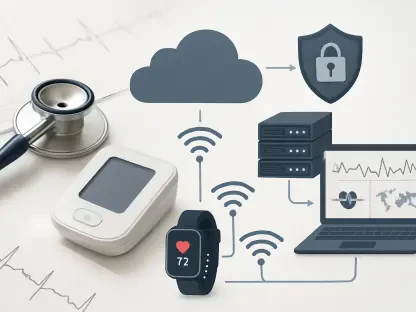
The technical backbone of this rollout centers on a deep integration with the Epic electronic health record system, which eliminates the need for disruptive app-switching. By residing directly within the existing workflow, the platform allows physicians to maintain their focus on the patient record while simultaneously accessing global medical findings. This “patient-aware” clinical intelligence moves beyond general search capabilities by synthesizing specific patient data points with the latest external evidence to provide contextually relevant insights.
The scope of this implementation is massive, covering seven inpatient locations and more than 400 outpatient facilities throughout the region. This widespread availability ensures that whether a patient is seen in a specialized Manhattan facility or a community-based family health center, the level of evidence-based support remains identical. Furthermore, the technology has been deployed at the NYU Grossman Schools of Medicine, ensuring that residents and fellows are trained in an environment where AI-assisted practice is the standard rather than the exception.
Evidence-Based Success: Insights From the JAMA Study and Expert Analysis
A recent study published in JAMA provided a compelling look at the rapid adoption of this technology among American medical professionals. Data from 2026 shows a surge to over 703,000 monthly active users, representing roughly two-thirds of all verified U.S. physicians. Perhaps most telling is the 90% physician retention rate, which suggests that once the tool is introduced into a doctor’s daily routine, it becomes indispensable. The study highlights that clinicians are not just using the tool for casual queries but are relying on it for high-stakes decision-making.
Clinical decision support constitutes the bulk of this engagement, with 51.9% of queries focused on specific treatment and management strategies. Specialists frequently utilize the AI as a safety net to navigate medical territories that lie just outside their primary expertise, such as an oncologist checking a cardiologist’s latest protocol for a comorbid condition. This cross-disciplinary utility has turned the platform into a regional hub for innovation, with New York City serving as the primary proving ground for enterprise-scale medical AI validation.
Strategies for Success: Institutional AI Adoption Frameworks
The transition from individual use to enterprise-wide adoption requires a shift toward hospital-sanctioned, secure platforms that protect patient privacy while providing high-level utility. NYU Langone’s strategy involved moving away from the “bring your own device” model of AI usage, which often lacked the necessary security and clinical rigor. By adopting a unified platform, the system can ensure that all clinicians are using the same verified evidence sources, which is critical for maintaining the integrity of the health system’s medical standards.
Natural language interaction has played a pivotal role in lowering the barrier for physician engagement, significantly reducing administrative friction. Unlike older databases that required complex search strings, the current chatbot interface allows for a conversational approach that fits naturally into the diagnostic process. The implementation of “agentic” AI, which prioritizes peer-reviewed sources over general-purpose models, ensures that the clinical rigor of the institution is never compromised.
The successful rollout at NYU Langone established a clear blueprint for other high-volume health systems looking to modernize their clinical workflows. This integration proved that when medical intelligence was combined with deep technical embedding, the chronic problem of information overload became manageable. The institution successfully moved the needle on patient care by ensuring that every physician had immediate access to a synthesized version of the world’s medical literature. These actions prepared the medical community for a future where data was no longer a burden but a refined tool for precision medicine. This strategic evolution ultimately reinforced the institution’s commitment to excellence and provided a sustainable path for scalable, evidence-based healthcare.