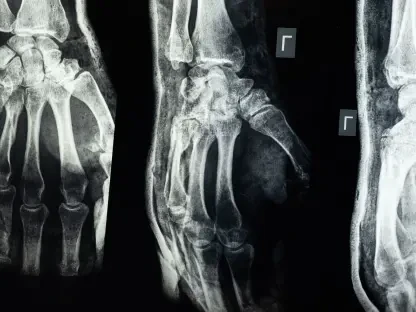

The contemporary healthcare landscape is currently grappling with a severe supply-demand imbalance in medical imaging that threatens the foundational speed and accuracy of diagnostic services nationwide. As the volume of complex scans continues to rise at an annual rate of five percent, the pipeline for new medical professionals in the radiology sector is only expanding by two percent, creating a widening gulf that manual processes can no longer bridge effectively. This demographic crunch is further exacerbated by a significant increase in professional attrition, which has surged by approximately fifty percent since the beginning of the decade, leaving many hospitals and private practices in a precarious position. Into this volatile environment, companies like Natoe AI are introducing a paradigm shift known as the AI-native workflow. By centering the entire diagnostic process around sophisticated machine learning models, the Florida-based firm aims to mitigate the effects of this persistent shortage while ensuring that every medical image receives the scrutiny it requires from a board-certified professional. This approach is designed not just to process more cases, but to redefine how clinicians interact with data.
Addressing the Radiologist Scarcity Crisis
The Persistence: Systemic Shortages in Medical Imaging
Current projections from the Harvey L. Neiman Health Policy Institute suggest that the deficit of qualified radiologists will not be resolved until at least 2055, indicating a long-term structural issue. This timeline highlights a critical failure in the traditional recruitment and training models used within the medical education system, which have struggled to keep pace with the technological explosion of advanced imaging techniques. As computed tomography and magnetic resonance imaging become standard in nearly every emergency department protocol, the sheer quantity of images generated per patient study has multiplied. Consequently, the time required to interpret a single case has grown, even as the number of available experts has dwindled. This persistent gap necessitates a fundamental change in how teleradiology providers manage their caseloads. Rather than simply hiring more people, the industry must find ways to make the existing pool of specialists significantly more productive through smarter task management and the elimination of historical bottlenecks.
The Human Toll: Clinical Burnout and Attrition
Beyond the statistical shortage of new residents entering the field, the industry is fighting a secondary battle against the profound burnout of those currently in practice. The pressure to maintain rapid turnaround times for life-critical diagnoses, such as strokes or traumatic injuries, has led to a work environment where radiologists are often overwhelmed by sheer volume. This high-stress atmosphere contributes to the fifty percent spike in attrition observed in recent years, as seasoned professionals seek early retirement or transition into non-clinical roles. By implementing a teleradiology model that prioritizes mental bandwidth over administrative drudgery, organizations can theoretically stabilize their workforce. The goal is to strip away the repetitive components of the job, such as manual data entry and basic pattern recognition, allowing the radiologist to focus exclusively on the nuanced clinical judgments that require years of medical training. Reducing this cognitive load is essential for retaining talent in a market where the loss of a single subspecialist can significantly delay care for hundreds of patients.
Integrating Intelligence into Clinical Workflows
The Shift: Transitioning From Manual to Automated Reporting
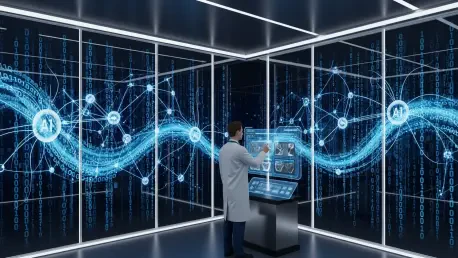
Conventional teleradiology has historically relied on a linear process where a physician opens a blank digital report and manually dictates every finding, a method that is both time-consuming and prone to clerical errors. In contrast, an AI-native workflow utilizes FDA-cleared algorithms to analyze incoming imaging studies the moment they arrive in the system, automatically flagging potential abnormalities before a human even views the scan. These preliminary findings are then used to populate a structured pre-read report, providing the radiologist with a comprehensive draft that outlines key measurements and suspected pathologies. This shift from writing to editing transforms the diagnostic process, as the physician is no longer starting from a blank screen. Instead, the clinician acts as a high-level verifier, reviewing the AI’s suggestions and applying their expertise to confirm or adjust the findings. Such a workflow can drastically reduce the time spent on every study, allowing for a much higher throughput without sacrificing the detailed attention required for accurate medical reporting.
Quality Control: Maintaining Human Oversight Through Subspecialty Routing
While the integration of artificial intelligence is central to this new strategy, the preservation of human clinical expertise remains the non-negotiable anchor of the entire diagnostic chain. Every study processed through the platform is automatically routed to the most appropriate subspecialty-trained, board-certified radiologist based on the modality of the scan and the complexity of the clinical question. For instance, a musculoskeletal specialist will review orthopedic cases while a neuroradiologist focuses on brain imaging, ensuring that the highest level of expertise is applied to every final sign-off. The system is designed so that no report reaches an ordering physician without the explicit validation and electronic signature of a human doctor. This hybrid model ensures that while AI handles the heavy lifting of data organization and initial detection, the ultimate responsibility for patient care remains with a licensed medical professional. By combining the speed of machine learning with the nuanced intuition of a human expert, the platform provides a layer of safety and precision that neither could achieve in isolation.
Scaling Remote Diagnostic Capabilities
Systems Architecture: Technical Integration and PACS Compatibility
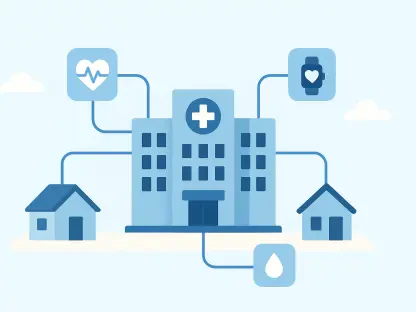
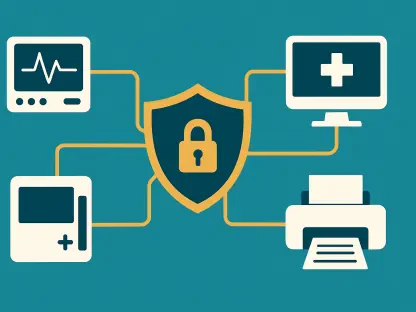
For healthcare facilities to adopt these advanced solutions, the technology must be able to interface seamlessly with existing hospital infrastructure without requiring a total digital overhaul. The platform developed by the Clearwater firm is engineered to integrate directly with established Picture Archiving and Communication Systems (PACS), allowing for a smooth exchange of data between the remote reading site and the local hospital. This interoperability is crucial for maintaining the speed of care, as it eliminates the need for manual file transfers or the use of disparate, incompatible software modules. Hospitals and imaging centers can therefore leverage high-end AI tools and a national network of subspecialists without disrupting their internal daily operations. This technical flexibility ensures that even smaller, rural facilities can access the same level of diagnostic support as major urban medical centers. By lowering the barrier to entry for advanced teleradiology, the system democratizes access to high-quality care, ensuring that a patient’s geographical location does not dictate the quality or speed of their medical diagnosis.
Practical Evolution: Future Directions for AI-Native Medicine
The successful deployment of this AI-native strategy demonstrated that the path forward for medical imaging required a synthesis of machine efficiency and human judgment. As the industry looked toward the end of the decade, the focus shifted toward the proactive integration of these tools into standard residency training and clinical practice. Healthcare administrators who prioritized these automated workflows managed to significantly reduce patient wait times and stabilize their diagnostic departments. It became clear that the most effective solution to the radiologist shortage involved optimizing the productivity of the current workforce rather than waiting for a distant increase in medical school graduates. Future considerations necessitated a focus on continuous algorithmic updates to ensure that diagnostic accuracy kept pace with evolving clinical research. Medical professionals were encouraged to embrace these assistive technologies as a means to reclaim their time for complex patient interactions. By moving away from manual, legacy systems, the healthcare sector established a more resilient and scalable foundation for the future of radiology.