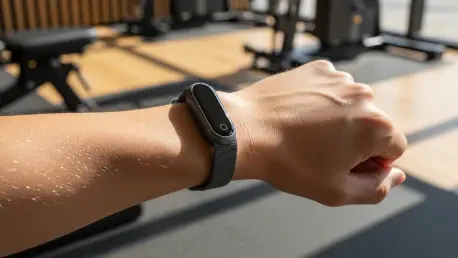

The arrival of the Fitbit Air marks a pivotal moment for those seeking to escape the constant interruptions of digital notifications without sacrificing the deep health insights provided by modern technology. In a marketplace saturated with wrist-worn computers that demand constant attention, this new entry pivots toward a minimalist philosophy that values silence and subtlety over flashy visuals. By stripping away the traditional display and focusing on a pure biometric data stream, the device addresses a growing demographic of users who feel overwhelmed by the notification fatigue of the digital age. Priced at a competitive ninety-nine dollars and ninety-nine cents, it positions itself as a direct challenger to subscription-heavy competitors like Whoop. This move by Google signals a shift in strategy, aiming to capture the mid-range segment while leveraging an expansive ecosystem of health metrics. The result is a tracker that disappears into the background of daily life, yet remains vigilant in its primary mission of monitoring wellness.
Design Philosophy: Prioritizing Comfort and Seamless Integration
The physical presence of the Fitbit Air is defined by its extreme lightness, weighing in at a mere twelve grams including the soft-touch band. This featherweight construction is achieved through the elimination of heavy glass panels and complex internal hardware required for high-resolution displays. Unlike more rigid wearables that can become uncomfortable during intense workouts or while sleeping, the Air utilizes a straightforward velcro strap system that provides a customizable, secure fit for any wrist size. This design choice simplifies the user experience by removing the need for intricate clasps or buckle adjustments that often fail to accommodate fluctuations in skin temperature and swelling. The barely there sensation is not merely a marketing claim but a functional necessity for consistent twenty-four-seven monitoring. When a device is this unobtrusive, the wearer is less likely to remove it, leading to a more complete and accurate historical record of physiological data throughout the weeks.
To achieve such a streamlined form factor, engineers intentionally omitted several features that have become standard in the smartwatch category, including onboard GPS and NFC for contactless payments. Rather than viewing these as shortcomings, the device is marketed as a specialized tool within a broader hardware strategy, frequently serving as a comfortable nighttime companion to the more robust Pixel Watch. This integration allows for a seamless handover of data within the Google Health ecosystem, ensuring that active periods and recovery phases are captured with equal precision. Users benefit from the lack of a screen because it significantly extends battery life and reduces the cognitive load associated with managing another interactive interface. The tracker relies entirely on a connected smartphone for data visualization and configuration, reinforcing its role as a passive observer rather than an active distraction. This trade-off appeals to athletes and professionals who require high-fidelity biometrics without the baggage.
Intelligence and Insight: The Role of Generative Analytics
The true innovation of the Fitbit Air lies beneath its simple exterior, specifically in its deep integration with Google’s Gemini AI to interpret complex health patterns. Traditional fitness trackers often provide raw numbers or generic status updates that can feel disconnected from the reality of a user’s life, but this system utilizes large language models to provide context-aware guidance. For example, if the device detects a significant drop in sleep quality alongside elevated heart rate variability, the Gemini-powered coach does not simply demand a more intense workout. Instead, it engages in a nuanced analysis that considers factors like work-related stress or the demands of new parenthood, offering suggestions for active recovery rather than rigid adherence to a schedule. This evolution from data reporting to empathetic interaction represents a major step forward in making wearable technology feel more human and supportive. The AI acts as a digital health partner that understands that wellness is not a linear path but a series of adjustments.
The launch of the Fitbit Air successfully shifted the industry’s focus toward invisible technology that prioritized high-quality sensor data over flashy hardware gimmicks. By moving away from the constant lure of the screen, the developers created a space where health monitoring became a background process rather than a source of anxiety. Consumers found that the most effective way to improve long-term wellness was through consistent, low-friction tracking combined with intelligent, actionable feedback. Looking forward, individuals interested in optimizing their health should evaluate their current relationship with technology and consider whether a screenless approach aligns with their personal goals for mental and physical balance. Adopting such a minimalist tool provided a practical path toward reducing digital clutter while maintaining a high level of physiological awareness. The industry proved that less hardware often resulted in more meaningful insights, encouraging a future where technology supports human life without dominating the visual landscape.