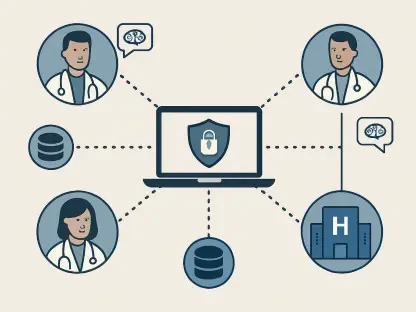

The rapid decentralization of the modern medical landscape has effectively dismantled the long-standing monopoly once held by massive hospital networks and centralized corporate entities over the delivery of digital care. While the high costs of regulatory compliance and the complexity of state-by-state licensure once acted as insurmountable barriers to entry for smaller players, a shift toward modular infrastructure is now enabling a new era of medical entrepreneurship. Bask Health operates as the critical backbone of this movement, providing the underlying technical and legal frameworks necessary for independent clinicians, private equity groups, and digital creators to launch their own customized healthcare brands. By abstracting away the logistical nightmares associated with pharmacy fulfillment and physician staffing, the platform allows founders to focus entirely on patient engagement and brand identity. This evolution suggests that the future of medicine is becoming increasingly personal, driven by agile operators who leverage institutional-grade tools to provide specialized care to niche populations without the overhead of traditional healthcare facilities.
Engineering the Backbone of Modern Telemedicine
Often described as the architectural equivalent of a leading e-commerce engine for the medical field, Bask Health provides a turnkey solution that fundamentally eliminates the friction associated with starting a digital health business. Instead of spending several years and millions of dollars building proprietary physician networks or navigating the labyrinthine complexities of diverse regulatory environments, founders can deploy a fully functional clinic using a plug-and-play system. This foundational support allows medical entrepreneurs to focus on their primary strengths, such as building a resonant brand and establishing meaningful connections with their patient base, while the platform quietly handles the high-stakes logistics of pharmacy fulfillment and ongoing medical oversight. By commoditizing the administrative burdens that once stalled innovation, this model empowers a new generation of healthcare providers to enter the market with unprecedented speed, effectively leveling the playing field between small startups and massive legacy systems that traditionally dominated the space.
One of the most significant technical advancements offered by this platform is its ability to resolve the persistent problem of brand dilution during the fulfillment process, often referred to as the orange bottle dilemma. In the past, many direct-to-consumer health brands suffered a loss of customer trust when their premium, high-end digital experiences were suddenly interrupted by the arrival of generic, unattractive pharmacy packaging. To combat this, Bask Health utilizes a sophisticated headless API that standardizes logistics across a wide variety of participating pharmacies, ensuring that every physical touchpoint remains consistent with the founder’s original aesthetic and professional vision. This level of brand sovereignty is crucial for maintaining a high-trust clinical relationship, as it reinforces the provider’s identity throughout the entire patient journey. By ensuring that the physical product matches the digital promise, the platform enables founders to build long-term loyalty and professional credibility in an industry where the patient experience is often secondary to bureaucratic convenience.
Scaling Operations: From Creators to Enterprises
The democratization of access to sophisticated medical infrastructure has significantly lowered the barrier to entry, catering to a diverse range of founders that includes everyone from solo social media creators to enterprise-level operators. Influencers who previously focused on selling unregulated supplements can now pivot toward offering clinically backed wellness treatments and legitimate prescription services with the confidence that they are operating within a legal framework. Simultaneously, established medical professionals who have spent years in brick-and-mortar practices are utilizing these tools to scale their expertise nationwide, reaching patients far beyond their local geography. This shift represents a fundamental change in how medical authority is distributed, as it allows individuals with specialized knowledge to build independent platforms that are not tethered to a specific hospital system or insurance network. The flexibility of the system ensures that whether a provider is seeing ten patients a month or ten thousand, the underlying technical infrastructure remains robust and compliant.
For larger organizations and private equity firms, the platform’s enterprise-grade API offers the necessary stability to manage massive order volumes and rapid expansion. These institutional users leverage the system to automate complex workflows, proving that the infrastructure is capable of handling the intense pressures of viral growth and large-scale public health needs. This technical resilience ensures that even the most ambitious healthcare projects have access to the same institutional-grade tools required to compete in a crowded and increasingly sophisticated digital marketplace. By providing a scalable cheat code for market entry, the platform serves as a high-growth tech incubator for both bootstrapped startups and massive healthcare conglomerates. This dual-purpose utility demonstrates that the future of healthcare delivery is not just about the size of the institution, but about the agility and reliability of the technical tracks on which the business runs, allowing for a seamless transition from a small pilot program to a national medical powerhouse.
Navigating the New Frontier of Consumer-Centric Care
The prevailing builder culture that defines this new era of healthcare sets it apart from traditional, slow-moving software providers that are often bogged down by excessive bureaucracy and outdated legacy code. By operating more like a high-growth technology incubator than a standard medical service provider, these modern platforms offer a level of technical agility that was previously unheard of in the clinical world. This shift allows for the rapid iteration of patient interfaces and the swift integration of new medical protocols, ensuring that clinics can adapt to emerging health trends and patient needs in real-time. This adaptability is vital in an industry where consumer expectations are increasingly shaped by their experiences in other high-tech sectors, such as fintech or specialized e-commerce. When the most difficult parts of the industry, such as compliance and logistics, are commoditized, marketing grit and the ability to forge a unique brand identity become the primary drivers of success, allowing the most creative and patient-focused operators to rise to the top of the industry.
The emergence of these modular platforms proved that the era of monolithic medical institutions was yielding to a more fragmented and competitive marketplace. This shift highlighted how essential it became for clinicians to prioritize digital patient experiences that mirrored the efficiency of modern e-commerce. To remain competitive in the years between 2026 and 2030, providers recognized the need to decouple their medical expertise from the burdens of administrative and technical management. Stakeholders who adopted modular platforms early discovered that they could iterate on treatment protocols far faster than their traditional counterparts. Future strategies must involve integrating advanced diagnostic tools directly into these headless architectures to further personalize the patient journey. By viewing healthcare as a service layer rather than a static destination, entrepreneurs found they could achieve better health outcomes while maintaining high margins. The lesson learned was that infrastructure investments were the true catalysts for medical innovation, allowing brand-focused leaders to dominate the market by delivering unmatched convenience and clinical excellence.