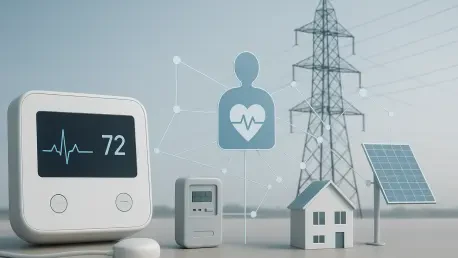

Short-range protocols like Bluetooth and Wi-Fi must be seamlessly bridged with wide-area networks to ensure continuous medical data transmission to clinical centers. This technical necessity currently defines the landscape of geriatric care in 2026, as European healthcare systems struggle under the weight of an aging population. By the late 2070s, the number of seniors will surpass children, making the traditional clinic-based model of medicine entirely unsustainable. To solve this, researchers are adapting the Smart Grid Architecture Model, which was once reserved for electricity management, to create a robust framework for home-based Internet of Things health monitoring. By integrating blood pressure monitors, ECG sensors, and glucose meters into a single ecosystem, the industry can shift from reactive emergency responses to proactive, continuous health management. This transformation allows elderly patients to remain in their homes while receiving medical-grade oversight through an interoperable and energy-efficient network.
Structural Framework and Layered Interoperability
Part 1: Defining the Conceptual Blueprint for Health Data
The application of the Smart Grid Architecture Model to the healthcare sector utilizes a multi-layered approach to ensure that diverse medical technologies function as a single unit. The business and function layers are the primary drivers of this framework, establishing high-level goals such as cost reduction and improved patient outcomes. These layers are essential for maintaining compliance with strict European medical regulations, including the latest standards for data protection and medical device safety. By clearly defining the services provided, such as automated vital-sign collection and data synchronization, the framework ensures that every technological intervention serves a specific clinical purpose. This structured methodology allows healthcare providers to move away from fragmented device usage toward a holistic system that supports independent living, ensuring that the patient’s domestic environment becomes a legitimate extension of the clinical care facility through standardized industrial protocols.
Part 2: Managing Information and Communication Standards
At the core of this innovative healthcare framework are the information and communication layers, which dictate how sensitive medical data is formatted, encrypted, and transmitted. These layers ensure that heart rate readings or glucose levels are not just sent, but are interpreted correctly by hospital software, regardless of which manufacturer produced the device. By creating a reliable path from the patient’s bedside to the physician’s terminal, the model eliminates the technical silos that often prevent effective remote monitoring. The gateway serves as a critical bridge, aggregating data from low-power sensors and securely pushing it to cloud-based systems for deep analysis. This integration relies on semantic interoperability, where the meaning of the data is preserved across different platforms, allowing for a seamless flow of information that is both secure and actionable. Such a robust communication architecture is vital for preventing data loss and ensuring that life-saving alerts reach medical staff in real time.
Economic Viability and Long-Term Savings
Part 1: Assessing the Cost of Home Monitoring Systems
The financial implementation of an Internet of Things health suite involves a clear understanding of both initial capital expenditures and long-term operating costs. Analysis of a standard five-device kit, which includes a blood pressure monitor, an ECG, a thermometer, a glucose meter, and a pulse oximeter, shows a manageable total cost of ownership over a five-year lifecycle. These costs encompass the physical hardware, which has become significantly more affordable in 2026, as well as the necessary ongoing maintenance. Maintenance is a critical factor, as medical-grade sensors require regular calibration and battery replacements to ensure the accuracy of the readings. By projecting these expenses over several years, healthcare administrators can see that the per-user cost is relatively low compared to the soaring prices of inpatient care. This economic transparency allows for better budgeting at the national level, making it easier to justify the widespread rollout of remote monitoring technologies for chronic disease management.
Part 2: Calculating the Return on Healthcare Investment
The financial benefits of integrating healthcare into the smart grid model are substantial, with research indicating a high return on investment for every euro spent on the system. These savings are primarily generated by a significant reduction in the frequency of specialist referrals and the prevention of unnecessary emergency hospitalizations. When patients are monitored continuously at home, clinicians can identify minor health deteriorations before they become acute crises, thereby avoiding the most expensive types of medical intervention. Furthermore, the model reduces the indirect costs associated with healthcare, such as the travel expenses and time lost by both patients and their caregivers. Even when subjected to conservative economic stress tests, the benefit-cost ratio remains positive, demonstrating that digital health integration is a sustainable and profitable strategy. This economic resilience makes the model an attractive option for fragmented healthcare systems looking to stabilize their budgets while improving the quality of care provided to their oldest citizens.
Energy Efficiency and Smart Home Synergy
Part 1: Evaluating Power Consumption in Medical IoT
One of the most persistent concerns regarding the expansion of smart home devices is the potential for an increased energy drain on the national electrical grid. However, detailed power assessments of medical Internet of Things devices reveal that their cumulative energy consumption is remarkably low. A full suite of five monitoring devices typically consumes less than 0.12 kilowatt-hours per month, an amount that is practically negligible when compared to standard household appliances. This minimal power draw ensures that the system does not impose a financial burden on the user through high utility bills, which is particularly important for seniors living on fixed incomes. From a grid management perspective, the low energy footprint means that millions of these devices can be deployed simultaneously without requiring significant upgrades to the existing power infrastructure. This makes the healthcare-integrated smart grid a “green” solution that aligns clinical needs with environmental sustainability goals, proving that high-tech care does not have to be energy-intensive.
Part 2: Treating Medical Devices as Smart Grid Citizens
By incorporating medical monitors into the smart grid framework, these devices are treated as intelligent “citizens” within the home ecosystem. This status allows the system to perform energy-aware tasks, such as scheduling heavy data processing or large file uploads during off-peak hours when electricity is cheaper or renewable energy is more abundant. For instance, a smart gateway might wait for a surge in solar power production before transmitting a high-resolution ECG file to the cloud. This synergy transforms a standalone medical tool into a coordinated component of the broader smart home, creating a dynamic relationship between health management and energy efficiency. Such an approach not only optimizes the operation of the devices but also fosters a more resilient grid by reducing demand during peak periods. Ultimately, this integration demonstrates how modern technology can harmonize various aspects of daily life, ensuring that the pursuit of better health outcomes also contributes to the more efficient management of domestic and national energy resources.
Implementation Challenges and Strategic Outlook
Part 1: Navigating Security Risks and the Digital Divide
Despite the undeniable advantages of this integrated model, the transition toward a smart-grid-based healthcare system must address significant hurdles related to data privacy and accessibility. Protecting sensitive medical information from the rising threat of cyberattacks is a paramount concern in 2026, requiring the implementation of advanced encryption and edge computing strategies. Furthermore, the “digital divide” remains a critical barrier, as many elderly individuals may lack the digital literacy required to interact with complex monitoring hardware. Ensuring that these systems are user-friendly and require minimal technical intervention is essential for their adoption among the senior population. Success depends on creating “low-friction” interfaces that provide value without overwhelming the user. Addressing these security and social challenges is just as important as the underlying technical architecture, as the system must be trusted by both the patients who use it and the medical professionals who rely on the data for clinical decision-making.
Part 2: Actionable Pathways: Future Clinical Implementation
The investigation of the smart grid healthcare model established that industrial frameworks can be successfully adapted to meet the needs of a modern medical system. Researchers determined that while the conceptual foundation was robust, the transition to real-world application required a shift toward longitudinal clinical trials and cross-border policy alignment. The study identified that the fragmented nature of European healthcare reimbursement made a universal strategy difficult, yet the positive financial indicators suggested that national customizations were well worth the effort. It was discovered that the integration of energy-aware protocols did not compromise medical data integrity, but rather enhanced the overall utility of the smart home. Moving forward, the industry took steps to involve actual geriatric participants in the design process to refine the user experience. By merging the unglamorous technical standards of the energy sector with the compassionate goals of healthcare, the project demonstrated a scalable solution for supporting independent living and managing the demographic shift of the twenty-first century.