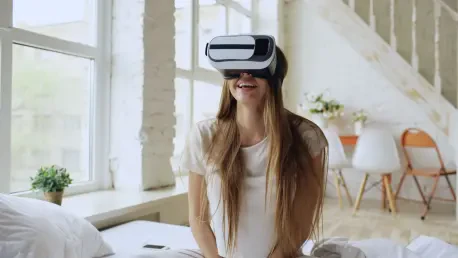

While virtual reality is not a replacement for psychiatric care, it serves as a powerful preventative tool for building emotional resilience in young populations. As the academic and social pressures of the current decade intensify, traditional methods of stress management often fall short of engaging a generation raised on digital interactivity. To address this gap, a multidisciplinary research team led by scholars from Kangwon National University and partner institutions has recently investigated a novel intersection of ancient cultural traditions and sophisticated technology. Their comprehensive analysis, focused on the “immersive music experience,” suggests that 360-degree virtual environments do more than just provide a temporary escape from reality. Instead, these experiences act as a medium for profound psychological shifts, allowing teenagers aged 10 to 18 to explore their emotions in a controlled and safe digital space. By moving away from passive consumption and toward active cognitive engagement, this approach provides a scalable solution for early intervention in schools and community centers.
Understanding the Mechanisms: How Immersion Drives Change
Psychological Mediators: The Path to Internal Rewiring
The effectiveness of virtual reality interventions is not a byproduct of simple entertainment or the high-resolution novelty of the equipment. According to the research findings, the perceived relief of anxiety is directly tied to a process of internal rewiring facilitated by three specific psychological mediators: cognitive restructuring, self-acceptance, and self-efficacy. Cognitive restructuring is perhaps the most critical component, as it involves the adolescent’s ability to identify, challenge, and ultimately alter negative thought patterns that contribute to chronic stress. Within the immersive environment, users are prompted to view their daily challenges from fresh perspectives, effectively training the brain to break away from ruminative loops. This process is reinforced by the sensory depth of the VR experience, which captures the user’s full attention and makes the cognitive exercises feel more immediate and impactful than traditional talk therapy might for a younger demographic.
Beyond the restructuring of thought patterns, the immersive music experience fosters a deeper sense of self-acceptance among participants. The virtual space serves as a non-judgmental sanctuary where adolescents can observe their emotions and physiological responses without the fear of social scrutiny or academic evaluation. By pairing calming visuals with traditional melodies, the technology encourages a compassionate relationship with the self, which is often eroded by the competitive nature of modern schooling. This acceptance acts as a protective buffer, allowing the student to process anxiety rather than suppressing it, which typically leads to long-term emotional stability. The synergy between these psychological resources creates a robust foundation for mental health, suggesting that the “magic” of VR lies in its capacity to make abstract psychological concepts feel tangible and manageable through a carefully curated digital narrative.
Self-Efficacy: Empowering the Adolescent Mind
One of the most significant revelations of the 2026 study is the dominant role of self-efficacy in determining the success of the intervention. Self-efficacy refers to an individual’s belief in their own capacity to execute the behaviors necessary to manage stressful situations. The research demonstrated that the immersive music sessions functioned as a training ground where teenagers could successfully achieve a state of relaxation. When a student sees that they can actively lower their perceived stress levels within a 30-minute session, it provides a sense of mastery that carries over into the real world. This “win” is crucial for adolescents who often feel overwhelmed by factors beyond their control, such as global events or academic benchmarks. By mastering the virtual environment, they build the confidence needed to apply these same self-regulation techniques when faced with actual stressors in their daily lives.
The data further suggests that the immersive nature of the technology is what makes this boost in self-efficacy possible. Unlike audio-only meditation, which requires a high level of intrinsic focus that many anxious teenagers struggle to maintain, VR provides the focus for them. By removing external distractions and surrounding the user with synchronized sights and sounds, the technology ensures a high probability of a successful meditative experience. This high success rate is vital for building confidence; if the intervention were too difficult to engage with, it might inadvertently lower the user’s sense of efficacy. Instead, the accessibility of the VR music experience ensures that even those with severe attention issues can achieve a moment of calm, reinforcing the belief that they have the internal tools necessary to combat anxiety, thereby creating a positive feedback loop of emotional resilience and personal agency.
The Technological and Cultural Framework: A Multi-Sensory Approach
Technical Infrastructure: Hardware and Program Protocol
The research was built upon a rigorous six-week protocol that utilized the PICO Neo 3 Pro standalone VR headset, a device chosen specifically for its technical precision. With a 90 Hz refresh rate and a wide field of view, this hardware was instrumental in minimizing “cybersickness,” a common hurdle that can detract from the therapeutic benefits of immersive tech. Each session lasted between 30 and 40 minutes and followed a precise five-part structure designed to transition the student from a state of high-alert stress to a period of deep, focused reflection. This structure included an initial orientation, an attentional settling phase involving guided breathing, the 25-minute core immersive experience, a guided reflection period, and a final closing transition back to the real world. This standardized approach ensured that the technology was used as a consistent tool rather than a random distraction, maximizing the potential for long-term behavioral change.
The core of the experience was developed using the Unity engine, allowing for high-fidelity 360-degree environments that were dynamically linked to the musical input. These visual landscapes, ranging from tranquil natural scenes to fluid abstract patterns, were programmed to respond to the tempo and rhythm of the music, creating a multisensory harmony that is difficult to replicate through other media. This level of synchronization is what researchers call “presence,” the feeling of actually being inside the digital world. By achieving high levels of presence, the VR software effectively “tricks” the nervous system into a state of relaxation, bypassing the skeptical or defensive parts of the teenage mind. The investment in high-quality hardware and sophisticated software design proves that the efficacy of digital therapeutics is largely dependent on the quality of the immersion, which requires a seamless integration of visual and auditory stimuli.
Cultural Synergy: The Role of Traditional Music
A distinctive feature of this 2026 analysis was its emphasis on “music cultural psychology,” specifically the use of traditional Chinese instruments like the guqin, erhu, and bamboo flute. The researchers hypothesized that for the target demographic, these sounds carry deep-seated cultural meanings that facilitate a unique form of relaxation. The music was primarily composed using the pentatonic scale, a sequence of five notes per octave that is often perceived as inherently stable, flowing, and free of the tension found in more complex chromatic compositions. This stability makes the music an ideal companion for meditative VR experiences, as it provides a predictable and soothing auditory backdrop that encourages the user to let go of external worries. The use of culturally familiar sounds ensured that the participants did not feel alienated by the technology, but rather felt a sense of comfort and connection.
The selection process for the music was just as rigorous as the technical development of the VR software. Before the primary study, a pilot group of 32 adolescents vetted various tracks to ensure they were perceived as calming and appropriate for the immersive medium. This cultural tailoring is a vital takeaway for the future of digital health; it suggests that “one-size-fits-all” content may be less effective than experiences designed with a specific user’s heritage and psychological background in mind. When the music resonates on a cultural and emotional level, it lowers the user’s resistance to the psychological prompts embedded in the program. This synergy between ancient musical wisdom and modern digital delivery represents a sophisticated evolution in mental health care, where technology acts as a bridge between tradition and the contemporary needs of a stressed-out youth population.
Evaluating Results and Future Applications: From Data to Deployment
Statistical Foundations: Proving the Efficacy of VR
To validate the impact of the immersive music experience, the research team employed structural equation modeling to analyze data from 457 adolescent participants. The statistical results provided a robust empirical foundation for the program’s success, showing an “excellent fit” across several technical indices, including a CMIN/DF of 1.526 and a Comparative Fit Index of 0.984. These numbers indicate that the researchers’ model—which links the VR experience to anxiety relief through the mediators of restructuring, acceptance, and efficacy—is an accurate reflection of the participants’ real-world experiences. Furthermore, a bootstrapping procedure with 1,000 resamples confirmed that these psychological pathways were statistically significant, meaning the results were not likely the product of chance or external variables unrelated to the VR sessions themselves.
The integrity of the study was further protected by rigorous testing to rule out common method bias, ensuring that the self-reported data was a true reflection of the adolescents’ feelings rather than a desire to provide “correct” answers to the researchers. The findings showed that the direct path from the VR experience to cognitive restructuring was particularly strong, suggesting that the visual and auditory prompts were highly effective at prompting students to re-evaluate their mental states. By providing this level of statistical rigor, the study moves the conversation about VR in mental health away from anecdotal evidence and toward data-driven clinical reality. These results provide a compelling argument for school boards and health organizations to consider immersive technology as a legitimate component of their student well-being strategies, backed by a clear understanding of how these digital tools interact with the human psyche.
Implementation Strategy: Navigating Barriers and Scalability
Despite the clear psychological benefits, the widespread adoption of VR-based music therapy faces several practical and institutional hurdles that must be addressed in the coming years. High-quality hardware remains a significant investment, and many public schools currently lack the budget for both the initial purchase and the ongoing maintenance of VR headsets. Furthermore, there is a pressing need for specialized staff training; facilitators must be comfortable with the technology and understand how to guide students through the sessions effectively. There is also the reality of physical limitations, as a small percentage of the population will always be prone to visual fatigue or motion sickness when using head-mounted displays. These barriers mean that while VR is a powerful tool, it must be implemented as part of a diverse array of options rather than a singular solution.
However, the study highlights that when these barriers are overcome, the scalability of VR-based interventions is one of their greatest strengths. Unlike traditional therapy, which requires a one-to-one ratio of professionals to students, a single trained facilitator can oversee a room of students engaged in individual VR sessions. This makes it an ideal “low-threshold” entry point for mental health support, providing immediate relief to a large number of students simultaneously. As we look toward the 2027 to 2030 period, the goal will be to integrate these sessions into the standard school curriculum, much like physical education or art. By normalizing the use of immersive technology for emotional self-regulation, schools can provide students with a sustainable toolkit for managing the pressures of modern life, effectively shifting the focus of mental health care from reactive treatment to proactive prevention.
Strategic Advancements: The Path Toward Long-Term Solutions
The synthesis of the findings from Kangwon National University and its partners concluded that the integration of immersive technology and traditional music represents a viable frontier for adolescent anxiety management. The study successfully demonstrated that the strategic use of 360-degree environments fostered significant gains in cognitive restructuring and self-efficacy, which in turn provided a perceived reduction in anxiety symptoms. By focusing on the internal resources of the user rather than just providing a digital distraction, the program offered a more sustainable form of relief than typical screen-based entertainment. The researchers noted that the most successful outcomes occurred when the technology was used as a vessel for culturally resonant content, highlighting the need for future developers to prioritize cultural congruence in their software designs to maximize engagement and emotional impact.
Moving forward, the next logical steps for this field involve the transition from cross-sectional observations to longitudinal studies that track the long-term emotional development of participants over several years. Future iterations of these programs should also aim to incorporate physiological data, such as real-time heart rate variability and cortisol monitoring, to provide an objective biological counterpart to the self-reported psychological surveys. As the hardware becomes more affordable and the software more sophisticated, the focus must remain on the human element of the experience, ensuring that the technology serves the psychological needs of the student rather than the other way around. The conclusion reached by the research team was that while the headset provides the view, the music and the psychological strategies provide the cure, creating a balanced approach to wellness that is well-suited for the complex challenges of the 2020s and beyond.