
Privacy controls such as physical shutters and software-defined privacy zones are essential features for maintaining a respectful and non-intrusive monitoring setup. As the global population continues to age into 2026, the strategic implementation of elderly monitoring systems has transformed from a luxury into a vital tool for families who seek to support the independent living of their relatives. These systems bridge the significant gap between high-level safety and personal autonomy, providing a necessary layer of protection for those who live alone while ensuring that remote family members remain informed about daily activities. The core objective of such modern technology is not to replace human interaction or professional medical care, but rather to offer a sophisticated, supplementary safety net that strictly respects the user’s dignity. By integrating wearable technology with smart sensors and video monitoring, families can now create a comprehensive environment that mitigates risks without imposing a restrictive atmosphere on the individual. This approach is particularly relevant for those who want to remain in their own homes for as long as possible, maintaining a sense of self-sufficiency while acknowledging the physical or cognitive vulnerabilities that often accompany the aging process.
Evolutionary Shifts in Assistive Technology for Seniors
The fundamental philosophy behind elderly monitoring has evolved significantly, shifting from reactive emergency buttons to proactive, data-driven frameworks that emphasize prevention. At its core, an elderly monitoring system is a multi-layered technological structure consisting of wearable alarms, environmental sensors, and intelligent cameras that work in tandem to detect deviations from established daily routines. These components provide a holistic view of the home environment, identifying potential emergencies like falls or wandering while facilitating instant communication between the senior and their support network. The sophistication of these systems in 2026 allows for a nuanced understanding of well-being, where technology acts as a silent observer that only intervenes when specific thresholds are met. This paradigm shift ensures that the individual does not feel constantly watched, but rather feels supported by a system designed to recognize their unique patterns of movement and behavior. Success in this area is rooted in three essential pillars: a comprehensive risk assessment, the explicit consent of the elderly person, and a clearly defined response plan that dictates exactly what happens when an alert is triggered.
Technology serves as a tool for awareness rather than a substitute for the essential presence of physical caregivers or professional healthcare interventions. The consensus among geriatric specialists is that the best monitoring strategy is one that complements the existing care structure, filling in the gaps during times when a relative or professional carer cannot be physically present. This is especially critical in the current landscape where geographical distance often separates families, making real-time digital insights a necessity for peace of mind. These systems are designed to distinguish between normal activity and potential distress by analyzing environmental data such as door contact, room temperature, and motion patterns. For instance, if a kitchen door remains closed at a time when breakfast is usually prepared, the system can flag this anomaly to a family member’s smartphone. This allows for a gentle check-in rather than an invasive emergency response, preserving the senior’s dignity while ensuring that minor health declines are caught before they escalate into major crises. The integration of these various technologies results in a resilient safety net that adapts to the changing needs of the individual over time.
Integrating Wearable Alarms and Passive Environmental Sensors
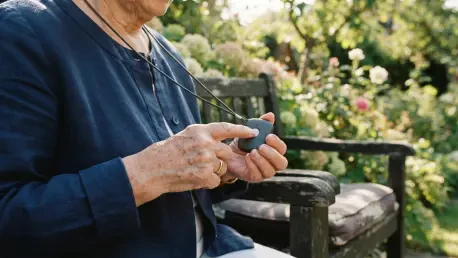
Wearable personal alarms and pendants represent the first line of defense for active seniors who spend time both inside and outside the home. These devices, which are commonly worn as necklaces or wristbands, empower the user to manually trigger an alert during a crisis, such as a sudden fall or a feeling of lightheadedness. Advanced models available in 2026 incorporate sophisticated automatic fall detection algorithms and GPS tracking, which are vital for individuals who may become disoriented or lose consciousness. These wearables provide a sense of security that follows the individual, allowing them to maintain an active lifestyle with the knowledge that help is just a button press away. However, the efficacy of these devices is entirely dependent on the user’s consistency in wearing and charging them. For individuals dealing with early-stage dementia or significant memory impairment, manual wearables are often insufficient on their own because the user might forget to put them on or may not remember how to use them during a moment of high stress or confusion. In such cases, these devices must be paired with passive, non-wearable technologies to ensure a comprehensive safety profile.
In-home smart sensors and activity monitors offer a more privacy-conscious and hands-off alternative to cameras, tracking the “rhythm” of a home without visual surveillance. By monitoring motion, door activity, and environmental conditions such as water leaks or extreme temperatures, families can gain deep insights into a relative’s well-being. This activity-based data answers critical questions regarding whether a person has moved around in the morning, if they have left the house at an unusual hour, or if the home environment has become dangerously cold during the winter months. This data-driven approach is exceptionally effective at detecting subtle changes in behavior that might indicate a decline in health, such as increased bathroom trips at night or a decrease in movement during typical active hours. Because these sensors do not record video or audio, they are often the most easily accepted form of monitoring by seniors who are sensitive about their privacy. This layer of the system provides the context necessary to understand the daily life of the senior, allowing for an intervention that is informed by long-term trends rather than just isolated incidents.
Video Surveillance as a Reassurance Framework
Video monitoring provides a level of visual confirmation that sensors alone cannot offer, serving as a powerful tool for what many families call “reassurance checks.” These cameras are most effective when placed in high-traffic, non-private areas such as hallways, kitchens, or living rooms, where they can capture the majority of the senior’s daily activity. Key features that have become standard in 2026 include two-way audio, which allows a family member to speak directly to the senior through the camera’s speaker to provide immediate comfort or instructions during a stressful situation. High-definition resolution and wide-angle lenses ensure that a single device can cover a large area, reducing the number of cameras needed within the home. The ability to pan and tilt the camera remotely through a mobile application further enhances this coverage, allowing a caregiver to look around a room if a senior has moved out of the initial field of view. This visual access is often the fastest way to verify if a triggered alarm is a false positive or a genuine emergency, potentially saving the senior from the stress of an unnecessary ambulance call-out.
Outdoor cameras provide a specific security function that is distinct from indoor monitoring, primarily focusing on the perimeter of the property and the primary entrances. These devices are essential for monitoring who is approaching the door, confirming the arrival of scheduled carers, and ensuring that a senior has not wandered off the property if they suffer from cognitive disorientation. Modern outdoor units utilize specialized detection technology, such as radar and passive infrared sensors, to minimize false alerts caused by animals or wind-blown debris while ensuring that human movement is accurately documented. This is particularly important for managing “doorstep risks,” where seniors might be targeted by scammers or may simply forget to lock their doors. High-resolution 4K video and advanced night vision allow for clear identification of visitors even in low-light conditions, providing a comprehensive record of everyone who enters or exits the home. By securing the exterior, families can extend the safety net beyond the four walls of the house, creating a secure environment that protects the senior from both internal accidents and external threats.
Strategic Planning and Decision-Making Factors
The successful implementation of any monitoring technology must begin with a comprehensive assessment of the senior’s specific living situation and health status. Families must evaluate risk factors such as a history of falls, which remains a leading cause of injury among those over 65, alongside factors like medication adherence and cognitive clarity. The physical layout of the home also plays a critical role; a multi-story house presents different challenges than a single-level apartment, necessitating a more complex arrangement of sensors and cameras. Furthermore, the geographical distance of the family members significantly influences the level of automation and professional monitoring required. If the primary responders live hours away or have demanding work schedules, a DIY system that only sends alerts to a smartphone may not be sufficient. In these scenarios, integrating a professional 24/7 monitoring service is the most responsible choice, as it ensures that a trained dispatcher can evaluate the situation and send emergency services if the family cannot be reached.
A monitoring system is only as effective as the response plan it triggers, meaning that families must establish clear protocols for different types of alerts. This involves designating who will receive the primary notifications and what specific actions they should take depending on the severity of the alert. For example, a motion sensor alert in the middle of the night might trigger a phone call to the senior, whereas a fall detection alert from a wearable device might necessitate an immediate dispatch of emergency services. Having a tiered response strategy prevents panic and ensures that help is provided in the most appropriate manner. It is also important to consider the technical infrastructure of the home, such as the stability of the Wi-Fi connection and the availability of power outlets for various devices. In 2026, many systems also offer cellular backup and battery-powered options to ensure that the monitoring remains active even during power outages or internet disruptions. A well-thought-out plan transforms a collection of gadgets into a cohesive life-saving system that provides genuine peace of mind for everyone involved.
Ethical Considerations and Technical Specifications
The ethics of home monitoring are a central theme in the adoption of these technologies, as surveillance should never be a “secret” operation conducted without the senior’s knowledge. Open dialogue is required to explain the benefits of the system and to gain explicit, informed consent from the person being monitored. This conversation should focus on the goal of maintaining independence rather than on the limitations of the senior, framing the technology as a tool for empowerment. To maintain a respectful and non-intrusive environment, certain areas of the home, such as bedrooms and bathrooms, are strictly off-limits for video cameras to preserve the individual’s fundamental privacy and dignity. Access to the system’s data and live feeds should also be restricted to a small circle of trusted family members or caregivers to prevent the feeling of being “watched” by too many people. Continuous review of the system’s necessity is also vital; as a senior’s health or cognitive status changes, the level of monitoring should be adjusted to ensure it remains appropriate for their current needs.
When evaluating hardware, technical specifications like resolution, storage, and communication tools are paramount to the system’s long-term utility. High-definition video, specifically 2K or 4K resolution, is necessary to provide the clarity needed for accurate identification and assessment of a senior’s condition from a distance. Families must also decide between cloud-based storage, which often requires a monthly subscription fee for video history, and local storage via SD cards or home hubs, which offers a one-off cost model and enhanced data privacy. Connectivity is another critical factor; while most modern systems rely on Wi-Fi, some traditional telecare solutions still use landlines or cellular signals, which may be more reliable in areas with poor internet infrastructure. The inclusion of physical privacy shutters on indoor cameras is a feature that has gained widespread popularity by 2026, as it provides a visual confirmation that the camera is not recording when the senior wants total privacy. These technical choices should be guided by a balance of functionality, cost-effectiveness, and the senior’s comfort with the hardware’s presence in their living space.
Implementation of Specialized Hardware for Home Coverage
Different areas of the home demand specific types of hardware to provide maximum safety without overwhelming the environment with unnecessary gadgets. For wide living areas where a senior spends a significant portion of their day, advanced indoor cameras with dual-lens systems and 360-degree coverage are the preferred choice. These devices, such as the eufy Indoor Cam S350, allow for high-resolution zooming and tracking, enabling a caregiver to check on specific areas like a favorite armchair or a medication station with a single device. The ability to monitor multiple points of interest from a fixed location reduces the need for several cameras, making the system less conspicuous. In contrast, simpler and more cost-effective models are perfectly suited for transition areas like hallways or kitchens, where the primary goal is simply to verify movement and presence. These strategic hardware choices ensure that every critical zone of the home is accounted for while keeping the installation as streamlined and unobtrusive as possible for the resident.
The perimeter of the home requires a different set of technical capabilities, primarily focusing on weather resistance and high-precision motion detection. Outdoor cameras like the eufyCam S4 utilize advanced radar technology to distinguish between the movement of a car, a neighborhood pet, and a human being, which significantly reduces the frequency of annoying false alerts on a caregiver’s phone. This precision is essential for maintaining the effectiveness of the monitoring system; if a caregiver receives too many false alarms, they may begin to ignore notifications, potentially missing a real emergency. High-resolution outdoor imaging also plays a role in managing the security of the senior, allowing family members to see exactly who is ringing the doorbell and providing a record of any unauthorized visitors. By documenting the arrival and departure times of professional caregivers, these outdoor systems also offer a layer of accountability and ensure that the scheduled care is being delivered as expected. This combination of indoor and outdoor technology creates a holistic safety net that covers all potential points of failure in a senior’s daily routine.
Defining the Threshold for Professional Care Intervention
The final stage of a monitoring strategy involved recognizing when technology reached its functional limits and human intervention became the only viable path forward. Smart systems provided incredible benefits, but they were ultimately tools for identification rather than a replacement for hands-on assistance. There were clear behavioral indicators, captured by these systems over time, that suggested a transition to professional medical or social care was necessary. These included frequent and unexplained falls, a persistent state of confusion recorded during two-way audio interactions, or a visible neglect of personal hygiene and household management. In many cases, the data collected by these monitoring systems served as a crucial diagnostic tool for doctors and social workers, providing documented evidence that a senior’s cognitive or physical health was declining. This allowed families to make informed, evidence-based decisions about moving a loved one into an assisted living facility or hiring a full-time in-home nurse, rather than relying solely on subjective observations or occasional visits.
The transition from independent living to a more managed care environment was often facilitated by the very systems that were originally designed to maintain autonomy. By the time 2026 arrived, the narrative around monitoring had shifted from surveillance to support, allowing seniors to age in place for much longer than was previously possible. These systems recorded the gradual changes in activity levels and helped families recognize the precise moment when the “threshold of intervention” was crossed. The data provided a clear picture of the senior’s needs, ensuring that when the time for more significant care arrived, the decision was made with a full understanding of the situation. Ultimately, the best monitoring setup remained a silent guardian throughout the senior’s daily routine, becoming highly responsive only when an anomaly occurred. This holistic approach, grounded in ethical consent and technical precision, ensured that elderly individuals lived with the security they required while maintaining the dignity they deserved until a higher level of care became a physical necessity.