
The sheer volume of medical research published every hour creates a formidable barrier for physicians who must balance rigorous patient care with the need to stay current on the latest scientific breakthroughs. Cedars-Sinai has addressed this critical friction point by implementing the OpenEvidence Enterprise platform, a sophisticated artificial intelligence tool designed to transform how clinical teams interact with medical literature. Rather than viewing AI as a peripheral experimental project, the health system has repositioned the technology as a core “system of action” that integrates directly into the daily workflows of its medical staff. This deployment serves as a definitive bridge across the widening gap between the exponential growth of peer-reviewed data and the finite time available for healthcare professionals to apply these findings. By providing access to synthesized evidence, the initiative empowers care teams to make informed decisions at the point of care.
Bridging the Information Gap: Clinical Decision Support Tools
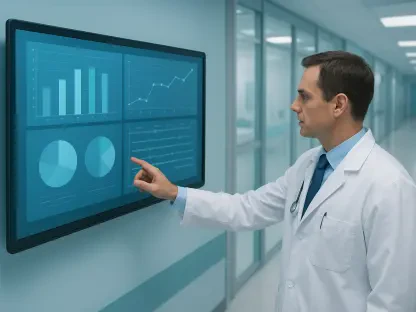
Modern medicine is currently grappling with an information crisis where the rate of new clinical guidelines and peer-reviewed studies far exceeds the cognitive bandwidth of even the most dedicated specialists. Traditional search engines and medical databases often return hundreds of generic citations that require manual filtering, a process that is both time-consuming and prone to human error when performed under pressure. The OpenEvidence platform solves this by distilling vast repositories of information into concise, evidence-based summaries that are ready for immediate clinical application. This transition from raw data to actionable intelligence allows physicians to spend less time acting as librarians and more time focusing on the nuances of patient interaction. Furthermore, the integration of this tool directly into the Electronic Health Record ensures that information retrieval becomes a seamless part of the documentation process rather than a disruptive task.
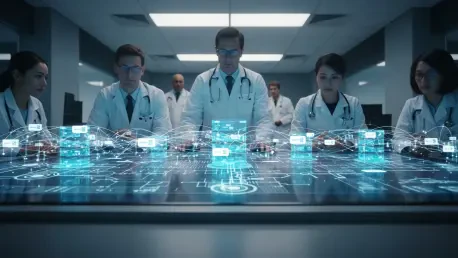
The deployment at Cedars-Sinai represents a fundamental shift from using technology as a passive repository toward utilizing it as a proactive assistant that enhances human expertise at the point of care. Historically, medical records functioned primarily as systems of record, focused on storage and billing, but this new AI-driven approach introduces a dynamic layer of intelligence that actively supports decision-making. By synthesizing complex data points in real-time, the platform helps clinicians navigate the intricacies of rare conditions or rapidly evolving treatment protocols that might not yet be common knowledge across the medical community. This collaborative model between human intuition and machine processing ensures that every patient benefits from the collective global knowledge base. Consequently, health systems are moving toward a framework where the most recent medical discoveries are immediately available to inform and optimize bedside strategies.
Personalized Precision: Contextualized Evidence and Advanced Coordination
One of the most significant advantages of this AI implementation is its ability to provide insights that are strictly tailored to the specific medical history and current status of an individual patient. Generic medical advice often fails to account for the unique variables of a person’s health profile, such as existing comorbidities, genetic markers, or complex drug interactions that complicate standard treatment plans. The platform overcomes this limitation by analyzing the active patient view within the medical record, including longitudinal data that spans years of clinical encounters and laboratory results. This contextual awareness allows the AI to highlight relevant studies or guidelines that specifically apply to the patient’s current diagnosis and medication regimen, filtering out extraneous information that does not fit the clinical scenario. As a result, the evidence provided to the healthcare provider is highly personalized, reducing the risk of adverse reactions.
In complex cases where patients present with multi-system failures, the systemwide rollout of these tools functions as part of a larger machine learning ecosystem. Beyond clinical decision support, the health system successfully investigates applications designed to alleviate the administrative burdens placed on nursing staff through automated documentation. Advanced algorithms are also implemented to assist in the interpretation of complex echocardiograms and the selection of optimal chemotherapy regimens for high-stakes cancer cases. This diversified strategy ensures that artificial intelligence is not treated as a standalone utility but as a versatile suite of tools capable of enhancing diagnostic accuracy across various specialties. By leveraging predictive data analytics, care teams are able to move toward a more proactive model of intervention, reducing the time spent on manual record interpretation. This integration reinforces the institution’s commitment to precision medicine and clinical excellence.
Institutional Oversight: Governance and Future System Development
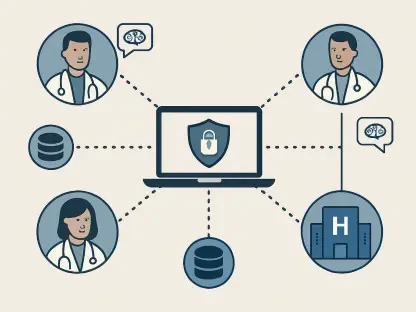
To ensure that the AI remains an asset rather than a source of confusion, Cedars-Sinai has integrated its own proprietary care pathways and localized safety protocols into the platform’s underlying logic. This strategic customization is vital because it prevents clinical drift, a phenomenon where global medical findings might inadvertently contradict the specific established best practices or regulatory requirements of the individual hospital. By grounding the AI’s suggestions in the institution’s own rigorous standards, the health system ensures that every recommendation aligns with the high-quality benchmarks set by its internal leadership. This local oversight provides clinicians with the confidence that the information they are receiving is not only scientifically sound but also practically applicable within the specific operational framework of their facility. Furthermore, this localized approach allows the organization to update its internal protocols instantly for all staff.
Leaders in the healthcare sector recognized that the successful integration of these technologies required a proactive commitment to continuous education and the iterative refinement of digital workflows. To maximize the long-term benefits of this AI deployment, organizations established robust feedback loops that allowed front-line clinicians to contribute to the ongoing optimization of the decision-support tools. They also prioritized the development of clear institutional policies regarding the ethical use of machine learning, ensuring that human oversight remained the final authority in every treatment plan. Looking forward, the emphasis shifted toward expanding these capabilities to include more predictive modeling for patient readmission risks and population health management on a larger scale. By treating the AI as an evolving partner rather than a static product, the medical community successfully paved the way for a more resilient and responsive infrastructure.