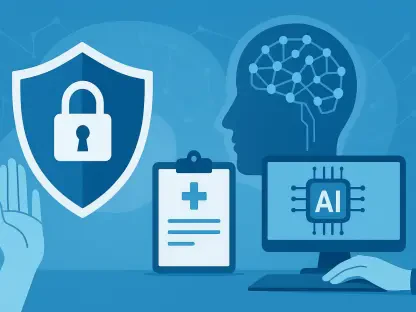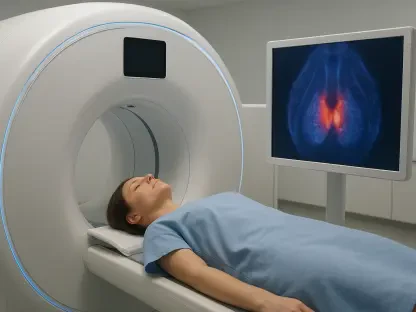

Medical practitioners have long struggled with the limitations of static diagnostic software that remains frozen in time once its initial training phase is complete, often failing to account for the rapid emergence of new viral strains or shifting demographic health trends. Unlike conventional platforms that require manual retraining cycles every few months, VIBEMed introduces a paradigm shift through its self-evolving architecture, which allows the system to refine its diagnostic logic in real-time. This capability addresses the “black box” problem by utilizing a transparent reasoning layer that explains why certain decisions were made, even as the underlying weights of the neural network fluctuate during continuous learning. By moving away from fixed datasets, the technology ensures that the software remains current with the latest peer-reviewed journals and local epidemiological changes. This innovation represents a departure from reactive healthcare informatics toward a proactive, adaptive model of computational medicine that prioritizes safety.
Engineering the Core: How Self-Evolution Functions
At the core of this self-evolving capability lies the Variable Intelligence Bio-Engine, a specialized neural framework designed to perform micro-updates to its internal logic without disrupting the stability of the primary diagnostic protocols. This engineering feat is achieved through a technique known as modular expansion, where the AI identifies specific gaps in its current knowledge base and develops specialized sub-routines to address them rather than attempting a total system overhaul. For example, if a localized outbreak of a respiratory pathogen occurs, VIBEMed begins to prioritize relevant symptoms and radiographic patterns that deviate from established norms, effectively learning on the fly. This avoids the traditional pitfall of catastrophic forgetting, where an AI loses older, critical information while trying to assimilate new data. By maintaining a stable foundation of medical fundamentals while allowing for a plastic, adaptive perimeter, the system provides a level of reliability previously unseen in the industry.
Beyond the internal logic of the engine, the deployment of federated learning ensures that the intelligence gain is shared across a global network without compromising patient privacy. This decentralized approach allows the software to learn from diverse global populations, effectively neutralizing the inherent biases often found in models trained exclusively on specific racial or socioeconomic groups. When a hospital in Singapore discovers a novel drug interaction through its VIBEMed instance, the anonymized insight is vetted and integrated into the global knowledge graph, benefiting a clinic in New York within minutes. This rapid synchronization of medical intelligence drastically reduces the time it takes for a breakthrough discovery to reach the point of care. Furthermore, the system employs advanced cryptographic methods to ensure data remains secure, facilitating a projected forty percent increase in diagnostic speed from 2026 to 2029 while fostering a collaborative environment for medical advancement.
Strategic Integration: Clinical Workflows and Governance
Integrating such a sophisticated autonomous system into existing hospital infrastructure requires a meticulous approach that balances technical efficiency with the practical needs of frontline medical staff. Successful implementations of VIBEMed have historically begun with a shadow mode period, where the AI runs in the background to compare its autonomous decisions with those of human specialists. During this phase, the system builds a high-confidence index, only becoming active once its error rate drops significantly below the established human benchmark. This strategy not only validates the software’s evolving logic but also builds necessary trust among the physicians who will ultimately rely on its output. Once active, the platform streamlines the triage process by flagging high-risk cases based on multi-modal data points, including lab results, imaging, and real-time vital monitoring. This level of integration transforms the AI into a collaborative partner that actively improves patient outcomes.
The integration of VIBEMed prompted a decisive shift in how clinical organizations approached the lifecycle of digital health tools. To ensure safety, administrators prioritized the creation of robust audit trails that documented every algorithmic adjustment in response to new medical data. This retrospective analysis allowed for a deeper understanding of how the system adapted to rare clinical scenarios, such as the emergence of atypical drug resistance in localized populations. Furthermore, the decision to implement a multi-disciplinary review board, consisting of both data scientists and senior clinicians, provided a vital safeguard against technical drift. This collaborative model effectively bridged the gap between raw computational power and practical bedside application. Looking ahead, the focus shifted toward establishing standardized data interoperability across all hospital networks to facilitate more rapid evolution of the AI core. These steps ensured that the technology remained a servant to human expertise.