
James Maitland sits at the intersection of surgical robotics and the Internet of Things, bringing a unique perspective on how data flows through the modern operating room. With years spent observing the friction between clinical precision and administrative bureaucracy, he offers a deep look into the recent alliance between Oracle Health and Theator. This conversation explores the shift from memory-based documentation to real-time AI analytics, the financial implications of closing coding gaps, and the broader transformation of Oracle’s clinical ecosystem.
The discussion revolves around the evolution of operative reporting, moving away from retrospective manual entries toward a structured, video-verified record. It examines how this integration impacts surgeon workflow, hospital revenue cycles, and the overarching goal of standardizing surgical care across global institutions.
How does the transition from memory-based operative reports to AI-driven documentation fundamentally alter the reliability of a patient’s medical history?
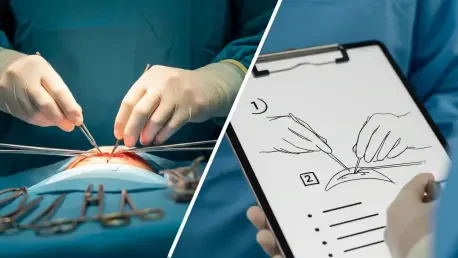
For decades, the operating room has been a sort of “black box” where documentation relies almost entirely on a surgeon’s memory hours or even days after they have stepped away from the table. Peer-reviewed research highlights the fragility of this method, showing that operative reports written from memory are only about 72.8% accurate, which leaves a massive margin for error in a patient’s permanent record. By using AI to capture surgical video footage and then cross-referencing it with electronic health record data, we are finally bringing structural integrity to that missing 27.2% gap. It feels like moving from a blurry, hand-drawn sketch to a high-definition photograph; the surgeon no longer has to struggle with the cognitive burden of recalling every minute detail of a complex procedure after a long shift. This shift ensures that every stitch and critical decision is recorded with clinical precision, creating a more honest and reliable narrative for the patient’s long-term care journey.
In what ways does the integration of surgical intelligence into the Oracle Health platform impact the financial health and administrative efficiency of a hospital system?
When you connect real-time surgical intelligence directly into the revenue cycle infrastructure, you solve one of the most persistent headaches in hospital management: revenue leakage. By systematically capturing what actually happens during surgery, the system can automatically flag coding gaps that occur when manual reports fail to reflect the true complexity of a case. This means the financial record finally matches the clinical reality, allowing for much more precise billing and reduced administrative friction across the entire department. I have seen administrators breathe a sigh of relief when they realize they no longer have to chase down busy surgeons for dictations that might be missing critical data points or specific procedural nuances. It transforms the operative report from a mere post-operative chore into a strategic asset that supports quality improvement and safeguards the institution’s bottom line through more accurate documentation.
Oracle has recently made significant moves, including a workforce reduction of 21,000 employees, to pivot toward AI—what does this signal about the future of clinical patient management systems?
This massive restructuring, which saw Oracle shed nearly 13% of its workforce in the past fiscal year, is a clear signal that the company is betting its entire future on cloud-based AI services and the next generation of the Cerner platform. They are moving away from the old, clunky “computer-centric” models and toward a completely new AI version of patient management that aims to let doctors focus back on the human element of medicine rather than data entry. By fiscal year 2027, Oracle leadership expects this business to grow by double digits, driven by the belief that AI will revolutionize everything from molecular design for drugs to the speed of clinical trials. The goal is to create a seamless ecosystem where AI doesn’t just record data but actually understands the nuances of specialized clinical settings like the operating room. It is a high-stakes evolution that promises to make healthcare better and more accessible by stripping away the legacy inefficiencies that have plagued the industry since the 2022 acquisition of Cerner.
How does the “inflection point” mentioned by industry leaders change the way different medical institutions compare and standardize their surgical care?
The real magic happens when surgical data flows into the health record with the same structure and reliability as a routine blood test or a physical exam. For the first time, we are looking at the possibility of system-wide quality benchmarking, where institutions can compare surgical outcomes and techniques using standardized, objective data rather than subjective, free-form narratives. This allows a hospital in one city to learn from the safety intelligence of a top-tier research center across the country, effectively democratizing surgical excellence through shared insights. When you have an AI that understands the actual flow of a procedure, you can identify best practices and “near-misses” that were previously invisible to anyone who wasn’t physically in the room. It is about building a scalable foundation where the operative report is just the starting line for a much larger conversation about global patient safety and procedural optimization.
What is your forecast for AI-powered surgical documentation?
I believe we are approaching a future where the “manual report” becomes a relic of the past, much like the paper chart or the handwritten prescription. Within the next five years, I expect AI-driven documentation to be a standard requirement for surgical accreditation, as the demand for transparency and data-backed safety grows among both regulators and patients. We will see these systems evolve from simply recording what happened to providing real-time “safety intelligence” that can alert a team to potential risks before they lead to complications. Ultimately, this will bridge the gap between the surgical suite and the broader digital health ecosystem, making the entire healthcare journey more connected, intelligent, and human-centric than ever before.