
A new diagnostic system called CF SWIFT utilizes flexible skin stickers and a smartphone camera to measure chloride levels for approximately one dollar per test. This breakthrough represents a significant shift in medical accessibility, particularly for patients in underserved regions where traditional laboratory facilities are scarce or entirely non-existent. For decades, the primary barrier to managing cystic fibrosis has been the sheer cost and complexity of the initial diagnosis, which typically requires specialized equipment and highly trained medical personnel found only in major metropolitan hospitals. By streamlining this process into a simple, wearable format, the technology addresses a critical gap in global healthcare equity. The current problem remains that standard sweat testing is often prohibitive for rural populations, leading to a high rate of undiagnosed cases that result in poor clinical outcomes. This innovative approach aims to replace expensive, rigid laboratory instruments with a portable solution that can be deployed by community health workers in various environments.
1. The Step-by-Step Testing Process
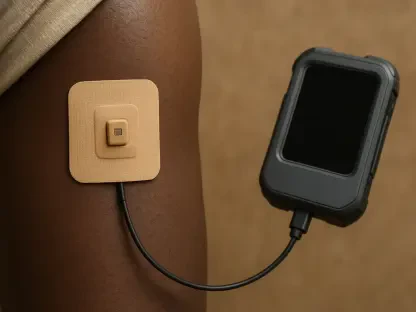
The clinical implementation begins with a methodical approach to sample collection that prioritizes patient comfort and procedural simplicity. Initially, medical practitioners or local health caregivers prepare the surface of the patient’s skin by cleaning it thoroughly before applying the first flexible patch, which serves as the foundation for the sweat induction phase. This specific component is engineered to interface seamlessly with a small, lightweight button battery and a specialized chemical agent designed to safely trigger perspiration at the application site. Unlike conventional methods that might use bulky iontophoresis machines, this compact setup provides a localized and controlled stimulus that is virtually painless for the patient. The use of a simple electrical circuit to drive the chemical agent into the skin ensures that even in remote settings without a reliable power grid, the diagnostic process remains entirely functional. This initial stage is crucial for ensuring that a sufficient volume of sweat is produced for accurate measurement.
Once the induction phase is complete, the focus shifts to gathering the specimen and performing the digital analysis that determines the chloride concentration. The first patch is carefully removed, and a second sticker is placed on the exact same spot to absorb the freshly produced sweat into its microfluidic channels. This sticker contains specific reagents that change color in direct response to the amount of chloride present in the perspiration, providing a visual representation of the patient’s biological data. To quantify these results, a smartphone camera is used to capture a high-resolution image of the patch, which is then processed by a dedicated application. The software interprets the color shifts with high precision, measuring chloride levels against a calibrated scale in a matter of seconds. This entire sequence provides a digital readout that can be immediately shared with specialists for further consultation, effectively turning any modern mobile device into a powerful diagnostic tool that operates independently of traditional labs.
2. Comparison of Diagnostic Methods and Study Results
When comparing the CF SWIFT method to traditional laboratory tests, the differences in both infrastructure and patient experience are profound and consequential. Standard diagnostic procedures typically require a stimulation unit and various specialized laboratory instruments that are not only expensive to purchase but also require regular maintenance and calibration by expert staff. Furthermore, these tests necessitate the presence of a trained technician to oversee every step of the collection process, which often involves using rigid tubes to collect sweat. Such equipment can be particularly difficult to use on infants, as their small limbs and delicate skin do not always accommodate the stiff collection devices used in modern hospitals. In contrast, the flexible sticker approach is entirely self-contained and portable, making it far more adaptable to the varying physical needs of younger patients. The stickers are disposable, which significantly lowers the risk of spreading infections in clinical environments.
Current research and recent trial results have provided strong evidence for the efficacy of this colorimetric approach in real-world clinical settings. A comprehensive study involving 55 participants, ranging from infants to young adults, demonstrated that the sticker results closely matched those obtained through traditional laboratory-grade chloride measurements. Researchers observed a high correlation between the visual readings captured by the smartphone app and the data produced by high-end diagnostic machines, suggesting that the stickers do not sacrifice accuracy for the sake of portability. This validation is a critical milestone, as it confirms that the low-cost materials used in the stickers can perform reliably across a diverse demographic of patients. However, the data also highlighted specific validation needs that must be addressed to ensure universal applicability. For instance, further studies are required to prove the test works reliably on newborns during their first few weeks of life, as these infants often produce very little sweat for the system to collect effectively.
3. Regulatory Milestones and Clinical Validation
The transition from a successful prototype to a widely available clinical tool requires a rigorous regulatory roadmap and expanded testing protocols. To build a robust dataset that satisfies international health standards, developers are initiating multicenter trials that specifically focus on very young infants and diverse ethnic populations. These trials are essential for refining the sensitivity of the stickers, ensuring that even the smallest samples of sweat can provide a definitive diagnosis without the need for repeat testing. The current objective is to gather extensive longitudinal data that demonstrates the system’s performance across different environmental conditions, such as high humidity or extreme temperatures, which are common in many regions targeted by this technology. By involving multiple clinical sites, the research team can identify any potential variances in sticker performance and adjust the software algorithms to maintain a high level of diagnostic confidence regardless of the testing location or the operator’s level of technical experience.
Securing regulatory clearance from the Food and Drug Administration remains a primary goal for the year 2026 as the technology moves toward market availability. This formal approval process involves a detailed review of the safety and efficacy data collected during the clinical trials, ensuring that the CF SWIFT system meets the stringent requirements for medical diagnostic devices. Once this clearance is obtained, the technology can be licensed for large-scale commercial production, allowing healthcare providers to place clinical orders for the stickers and the associated software licenses. Market availability will likely begin with partnerships between non-governmental organizations and local health ministries to facilitate distribution in areas with the greatest need. The scalable nature of the manufacturing process ensures that the one-dollar price point can be maintained even as production volumes increase. This economic feasibility is what will eventually allow the system to become a standard component of newborn screening programs in countries that currently lack the budget for more expensive lab-based infrastructure.
4. Global Healthcare Equity and Future Therapeutic Integration
Understanding why this technology matters requires a look at the broader landscape of cystic fibrosis treatment and the critical role of early intervention. In many parts of the world, a lack of resources means that an estimated 50% of people living with the disease currently go undiagnosed, leading to premature mortality and unnecessary suffering. Early diagnosis is the most significant factor in improving clinical outcomes, as it can potentially increase life expectancy from under five years in some regions to over 60 years in others. By bridging the diagnostic gap, the CF SWIFT system allows patients to access life-saving medications that target the underlying genetic causes of the condition rather than just treating the symptoms. The ability to identify the disease within the first few months of life enables the immediate start of nutritional support and pulmonary therapies that prevent irreversible lung damage. This shift from reactive treatment to proactive management is essential for improving the quality of life for thousands of individuals who were previously overlooked by the medical system.
The implementation of this affordable diagnostic tool established a new paradigm for managing chronic genetic conditions in low-resource settings. Public health authorities recognized the value of integrating flexible sensors into routine screening, which facilitated the identification of patients who previously lacked access to specialized care. By the time the system reached global distribution, it had already demonstrated that high-tech medical solutions did not always require high-cost infrastructure. The next steps involved expanding the platform to detect other biomarkers in sweat, such as glucose or electrolyte imbalances, further increasing the utility of the stickers for broader health monitoring. Research teams coordinated with international agencies to ensure that the digital data captured by smartphones was securely integrated into national health registries to track patient progress over time. These collective efforts ensured that the diagnostic stickers became a cornerstone of a more inclusive healthcare strategy. The focus shifted toward training local health workers to utilize the technology effectively, ensuring that the benefits of early detection reached everyone.