
The sophisticated piece of technology strapped to your wrist is no longer just a step counter or a sleep tracker; it is evolving into a powerful health monitor capable of collecting complex physiological data that once required a visit to a doctor’s office. This rapid technological advancement has created a significant gray area, blurring the once-clear line between a consumer wellness gadget and a regulated medical device. The recent and public conflict between the wearables company Whoop and the U.S. Food and Drug Administration (FDA) serves as a potent case study for this industry-wide dilemma. Whoop’s decision to launch a blood pressure estimation feature without regulatory clearance, and the FDA’s subsequent warning letter, has become a cautionary tale, offering critical lessons on regulatory strategy, market awareness, and the growing necessity of clinical validation in a competitive landscape.
The Whoop Case a Regulatory Wake Up Call
The Feature the Warning and the Pushback
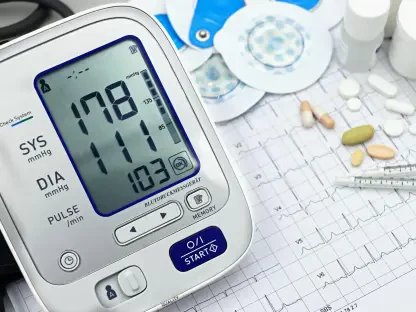
The controversy began when Whoop introduced its “Blood Pressure Insights” feature, an ambitious software addition to its premium membership. The technology purports to estimate a user’s systolic and diastolic blood pressure ranges upon waking by analyzing a suite of physiological data points collected during sleep, including heart rate, heart rate variability, and nuanced patterns in blood flow. While this represented a significant leap forward in passive health monitoring from a technological perspective, it simultaneously stepped over a critical regulatory boundary. In response, the FDA issued a formal warning letter, definitively classifying the feature as an unapproved medical device. The agency’s position was unambiguous: any product, hardware or software, that claims to measure or estimate blood pressure is inherently linked to the diagnosis and management of serious medical conditions such as hypertension, placing it squarely within the FDA’s regulatory jurisdiction. This action signaled that the agency is closely monitoring the claims made by wearable technology companies and is prepared to enforce its mandate to protect public health.
In a move that caught many industry observers by surprise, Whoop’s initial reaction was not one of immediate compliance or quiet retreat. Instead, the company opted for a public and defiant defense of its product. Through official corporate statements and a prominent television appearance by its CEO, Will Ahmed, Whoop firmly contested the FDA’s classification. The company’s central argument rested on the assertion that the feature was intended solely for general wellness purposes and, therefore, did not meet the definition of a regulated medical device. Whoop went so far as to claim that the FDA was acting outside of its statutory authority and boldly declared its intention to continue offering the feature to its subscribers. This confrontational stance set the stage for a high-stakes disagreement with one of the most powerful regulatory bodies in the country. However, more recently, Ahmed has indicated a shift in tone, describing ongoing conversations with the FDA as more “constructive.” This suggests a potential strategic pivot toward finding a mutually agreeable resolution, even as the fundamental disagreement over the product’s classification remains a point of contention.
The Inevitability of Regulation
Despite Whoop’s initial show of resistance, the overwhelming consensus among legal and regulatory experts is that the FDA’s position is legally sound and that the company’s challenge is ultimately unsustainable. Mark Gardner, a seasoned legal expert in the medtech space, stated unequivocally that the FDA is “not going away” and predicted that Whoop would likely lose its fight. His assessment reflects a deep understanding of the agency’s history and its mandate to regulate products that make medical claims, whether explicitly or implicitly. The very act of providing blood pressure estimates, regardless of disclaimers about “wellness,” ties the product to a specific medical parameter used to diagnose and manage a life-threatening condition. An FDA warning letter is a formal notice that allows a company to voluntarily correct a violation before more severe actions are taken. While a company has the right to contest the agency’s findings, the FDA typically builds a robust case before issuing such a letter, making successful challenges rare. The expert view is that Whoop’s argument fundamentally misinterprets the breadth of the FDA’s authority in the digital health sphere.
The legal and business risks associated with defying an FDA warning letter are substantial, underscoring the gravity of Whoop’s position. Should a company fail to achieve voluntary compliance, the FDA possesses a range of escalating enforcement tools to compel adherence to regulations. The agency can collaborate with the Department of Justice to obtain a search warrant, which could lead to the seizure of all non-compliant products, effectively halting their distribution. An even more severe measure is the imposition of a consent decree, a legally binding agreement negotiated under court supervision that forces the company into a strict compliance regimen. Consent decrees often involve significant financial penalties, ongoing government oversight of operations, and mandatory reporting, which can be incredibly burdensome and costly for a company. This enforcement framework illustrates that the initial warning letter is not a mere suggestion but the first step in a process with serious consequences. The potential for such disruptive actions explains why most companies choose to work collaboratively with the FDA to resolve compliance issues rather than engage in a prolonged and risky public confrontation.
Broader Implications for the Wearables Industry
The Competitive and Clinical Landscape
Whoop’s assertion that its blood pressure feature is a simple wellness product is significantly undermined by the strategic actions of its direct competitors, who are actively pursuing and obtaining formal FDA authorization for similar technologies. This industry trend not only establishes a clear regulatory precedent but also creates an imbalanced market that the FDA is historically compelled to rectify. For example, shortly before Whoop received its warning, the company Aktiia secured de novo authorization from the FDA for its over-the-counter, wearable blood pressure monitor. Although Aktiia’s device requires daily calibration with a traditional cuff, its formal authorization carves out a clear regulatory pathway for this class of device. More consequentially, tech giant Apple received FDA clearance for a hypertension notifications feature on its Apple Watch. Apple’s feature, which analyzes sensor data over time to alert users to the possibility of hypertension, was deliberately submitted for FDA review. This move is seen by experts as a potential “nail in the coffin” for Whoop’s argument, as it demonstrates that a market leader views regulatory oversight as a necessary step for any feature related to hypertension diagnosis, thereby setting a powerful industry standard.
The actions of competitors often trigger a more aggressive enforcement posture from the FDA, whose mission includes ensuring a “level playing field” for all market participants. The agency works to prevent companies that bypass regulations from gaining an unfair advantage over those that invest the significant time and resources required for compliance. This principle has been demonstrated in the past, such as when the FDA issued a safety alert warning consumers about unauthorized, non-invasive blood glucose monitors just as authorized products from established medical device companies like Dexcom and Abbott were entering the market. This pattern appears to be repeating in the blood pressure space. The FDA issued a broad safety alert in September specifically cautioning against the use of unauthorized blood pressure measurement devices. The timing of this alert, coming as cleared products from Apple and Aktiia gained market traction, was likely no coincidence. It serves as a clear signal to the entire industry that the FDA considers this technology area to be within its regulatory purview and that it will act to protect both consumers and compliant companies.
The perspective of the medical community adds another critical layer to the discussion, reinforcing the absolute necessity of rigorous regulatory oversight. Cardiologists interviewed on the matter expressed a strong and clear preference for devices that have undergone scientific validation and have been thoroughly vetted by the FDA. Dr. Vivek Bhalla, director of the Stanford Hypertension Center, stated that he specifically directs his patients to use devices listed on the American Medical Association’s validated device list, a list that currently includes no cuffless monitors. He emphasized that blood pressure is a critical health metric that “should be treated with a high level of scientific rigor,” citing the serious negative health outcomes that can result from inaccurate measurements. Similarly, Dr. Michael Curren, a cardiologist at the University of Pittsburgh School of Medicine, noted that while data from wearables is becoming more integrated into clinical practice, hypertension presents a unique challenge. Unlike heart rate or rhythm, which can be measured more directly by sensors, cuffless blood pressure measurement relies on complex, proprietary algorithms to interpret sensor data. This indirect method makes independent validation and regulatory scrutiny essential to ensure accuracy and reliability. His conclusion, that any device “claiming to lead toward a diagnosis that hasn’t gone through FDA approval” should be treated with suspicion, highlights a fundamental truth: for a wearable to be medically useful, it must first earn the trust of the clinicians who are expected to interpret its data and make treatment decisions based on it.
The Path Forward
The public dispute between Whoop and the FDA ultimately served as an indispensable learning moment for the entire digital health and wearables sector. It highlighted that a proactive and early regulatory strategy is no longer optional but a foundational component of product development. The incident demonstrated that making assumptions about a product’s classification as a “wellness” device can lead to disastrous miscalculations regarding launch timelines, capital requirements, and investor confidence. The saga underscored the critical need for innovators to engage with legal and regulatory experts at the earliest stages of ideation to determine the correct pathway to market. Furthermore, the actions of competitors like Apple and Aktiia revealed how quickly the market can establish new regulatory precedents. Their successful FDA submissions effectively raised the bar for the entire industry, signaling that features related to chronic disease management are now considered medical devices. This environmental awareness became essential for making informed strategic decisions. In the end, the conflict illuminated a pivotal shift in the market: FDA clearance had evolved from a perceived regulatory burden into a significant competitive advantage. This formal validation built a “moat” of trust with both consumers and clinicians, separating serious, medical-grade products from recreational gadgets and unlocking new opportunities for partnerships and broader clinical adoption.