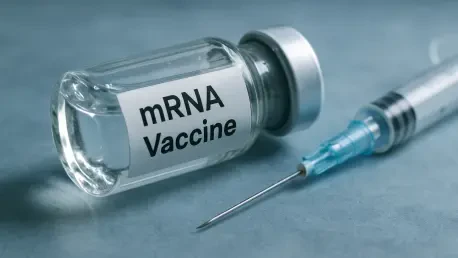

The transition from traditional egg-based manufacturing to synthetic genetic platforms represents the most significant shift in vaccine production since the mid-twentieth century. For decades, the pharmaceutical industry relied on the cumbersome process of incubating viruses in millions of chicken eggs, a method that is not only slow but also prone to structural changes in the virus that can render the final vaccine less effective. The advent of messenger RNA (mRNA) technology has rewritten this script, offering a way to bypass biological intermediaries entirely. By utilizing a synthetic code that instructs the human body to produce its own viral proteins, researchers have unlocked a level of agility that was previously unthinkable. This review examines the current state of mRNA influenza vaccines, focusing on their technical superiority, recent regulatory setbacks, and the complex political environment that currently defines their path to market.
Introduction to mRNA Vaccine Technology
The fundamental shift brought about by mRNA platforms lies in the move from biological to digital vaccinology. Traditional vaccines require the physical cultivation of the pathogen, which introduces a high degree of variability and a long lead time for production. In contrast, mRNA vaccines are essentially biochemical software. Once the genetic sequence of a circulating influenza strain is identified, scientists can synthesize the corresponding mRNA instructions in a matter of days. This modularity is particularly critical for seasonal influenza, where the virus is in a constant state of antigenic drift, frequently mutating to evade the previous year’s immune defenses.
Beyond the speed of development, the technology offers a precision that traditional methods struggle to match. Because mRNA vaccines do not require the virus to be adapted to grow in eggs or cell cultures, the resulting protein produced by the body is an exact replica of the viral antigen found in nature. This avoids “egg-adaptive mutations,” a common phenomenon where the virus changes during the manufacturing process, leading to a mismatch between the vaccine and the actual circulating flu. Consequently, the mRNA platform provides a theoretical framework for significantly higher efficacy rates, potentially solving the long-standing problem of low protection seen in conventional seasonal flu shots.
Core Technical Components and Performance Metrics
Synthetic Antigen Design and mRNA Platforms
The cornerstone of the mRNA influenza vaccine is the synthetic sequence encoding the hemagglutinin (HA) protein, the primary target for neutralizing antibodies. Modern platforms utilize modified nucleosides to reduce the innate inflammatory response to the mRNA itself, ensuring that the body focuses its resources on recognizing the encoded viral protein. Performance is quantified through hemagglutination inhibition (HAI) titers and the activation of CD4+ and CD8+ T-cells. This dual-layered immune response is a significant upgrade over traditional vaccines, which primarily stimulate antibody production but often fail to generate a robust, long-lasting cellular defense.
The “plug-and-play” nature of these platforms allows for the inclusion of multiple mRNA sequences in a single injection. This capability is essential for creating quadrivalent or even hexavalent vaccines that cover a broader spectrum of influenza A and B lineages. By fine-tuning the ratio of different mRNA strands, manufacturers can optimize the immune response to ensure that no single strain dominates the others, a technical challenge known as immunodominance. This level of customization represents a leap forward in the ability to provide comprehensive protection across diverse populations.
Lipid Nanoparticle Delivery Systems
The delivery mechanism is just as vital as the genetic code it carries. Messenger RNA is highly fragile and would be destroyed by extracellular enzymes if injected directly into the bloodstream. To solve this, the mRNA is encapsulated in lipid nanoparticles (LNPs)—microscopic fatty bubbles that shield the genetic material and facilitate its entry into host cells. These LNPs are engineered to be pH-sensitive, remaining stable in the bloodstream but breaking down once they are engulfed by a cell. This ensures the mRNA is released directly into the cytoplasm, where the cellular machinery can begin translating it into viral proteins.
The performance of the LNP system is measured by its safety profile and its ability to act as a built-in adjuvant. While the lipids effectively deliver the payload, they also stimulate the local immune environment, which helps the body recognize the newly produced viral proteins as a threat. However, the technical complexity of LNP formulation presents a hurdle; the size, charge, and stability of these particles must be perfectly calibrated to avoid systemic side effects while maintaining a shelf life that allows for global distribution. Innovations in LNP chemistry are currently focused on improving thermostability, aiming to reduce the reliance on extreme cold-chain logistics.
Latest Developments and Industry Shifts
The landscape of 2026 reveals a significant departure from the rapid-response environment of the early 2020s. The industry has entered a phase of “maximum scrutiny,” where the initial successes of mRNA are being measured against a much higher evidentiary bar. We are seeing a move away from emergency authorizations toward a standard of care that demands longitudinal proof of superiority over existing high-dose and recombinant vaccines. This shift is not merely scientific; it is reflective of a broader institutional recalibration where regulators are demanding more rigorous clinical trial designs that reflect real-world healthcare complexities.
Furthermore, there is a clear trend toward the consolidation of respiratory immunizations. The goal has shifted from preventing a single illness to providing a “pan-respiratory” shield. This development is driven by the realization that healthcare systems are increasingly strained by overlapping seasonal surges of various viruses. By integrating influenza, COVID-19, and RSV protection into a single mRNA-based platform, companies are attempting to simplify public health delivery. However, this integration has met with unexpected resistance as regulators begin to question the cumulative effect of multi-antigen injections on long-term immune system homeostasis.
Real-World Applications and Sector Deployment
In the current market, the most visible deployment of this technology is found in large-scale Phase 3 trials for candidates like Moderna’s mRNA-1010. These trials are being conducted across multiple continents to test the vaccine’s performance in diverse genetic and environmental contexts. The primary application remains the seasonal influenza market, but the technology’s role is expanding into pandemic preparedness. Governments are increasingly viewing mRNA manufacturing facilities as critical infrastructure, capable of being “switched on” to produce millions of doses within weeks of a novel viral emergence, a capability that traditional egg-based facilities simply cannot match.
The healthcare sector is also exploring the use of these vaccines in high-risk populations, such as the elderly and the immunocompromised. Because mRNA vaccines can be engineered to produce a higher concentration of antigens without the risks associated with live-virus vaccines, they offer a safer and potentially more potent alternative for those with weakened immune systems. This targeted deployment is a key part of the move toward personalized medicine, where the vaccine profile can be adjusted based on the specific needs of a demographic rather than a one-size-fits-all approach.
Technical Hurdles and Regulatory Obstacles
Despite its promise, the mRNA influenza vaccine is currently navigating a period of intense regulatory volatility. A primary point of contention is the “comparator controversy.” The Food and Drug Administration (FDA) has recently taken a hard line on clinical trial design, insisting that new mRNA candidates be tested against the “best-available standard of care” rather than traditional, lower-efficacy vaccines. This demand led to the issuance of “refuse-to-file” letters for major developers, as the agency argued that previous trial protocols were no longer sufficient to prove clinical benefit. This procedural friction has created a bottleneck, slowing the commercialization of vaccines that had already shown strong immunological data.
The political climate has further complicated the situation. Under the leadership of the Department of Health and Human Services (HHS) by figures like Robert F. Kennedy Jr., there has been a documented shift toward skepticism regarding mRNA platforms. This has resulted in the termination of several high-profile government contracts and a move toward more stringent, perhaps even prohibitive, approval pathways. The lack of consistency between previously approved protocols and current regulatory demands has left many biotech firms in a state of financial and strategic uncertainty, as the “goalposts” for approval appear to be shifting mid-game.
Future Outlook and Long-Term Impact
The future of mRNA influenza vaccines depends heavily on the industry’s ability to restore a stable relationship with federal health agencies. While the technological foundation is sound, the economic viability of these products is at risk if regulatory delays continue to erode market confidence. We are likely to see a period of strategic retreat where companies reduce their late-stage clinical investments in favor of refining the underlying LNP technology and improving the cost-effectiveness of manufacturing. Long-term impact will be measured by whether mRNA can achieve the “financial break-even” point, moving from a specialized pandemic tool to a cost-competitive seasonal standard.
As we look toward the next few years, the push for multivalent and combination vaccines will likely persist, as these products offer the most compelling value proposition for public health officials. If the industry can successfully navigate the current “maximum pressure” environment, mRNA could eventually replace the century-old egg-based method entirely. This would lead to a more resilient global health infrastructure, capable of responding to the flu’s seasonal variations with unprecedented speed. However, the transition remains fraught, and the next decade will be defined by the tension between rapid innovation and the demand for absolute regulatory certainty.
Assessment and Summary of Findings
The review of mRNA influenza vaccine technology revealed a sophisticated platform currently caught between its vast technical potential and a restrictive regulatory environment. While the synthetic approach successfully eliminated the inefficiencies of egg-based production, the path to market was obstructed by methodological disputes over trial design and the choice of comparators. The findings indicated that the technology remained robust in eliciting immune responses, yet the clinical hurdles imposed by a more skeptical HHS leadership introduced significant financial risks for developers. These obstacles contributed to a reduction in research investment and a delay in the rollout of combination vaccines.
Ultimately, the analysis showed that the future of this technology was no longer just a question of biological success but of navigating political and procedural complexity. The transition to a more agile vaccination strategy required a level of regulatory consistency that was noticeably absent in recent years. This assessment suggested that while the long-term prospects for mRNA in the influenza market remained transformative, the immediate outlook was characterized by a state of clinical and financial limbo. The verdict was clear: the technology was ready, but the administrative framework for its integration had yet to be stabilized.