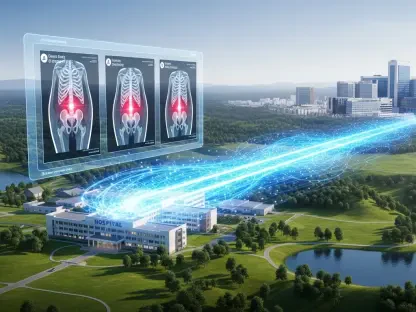

The quiet hum of advanced machinery is rapidly becoming the new heartbeat of modern medicine, signaling a seismic shift in how healthcare is delivered and experienced. A comprehensive analysis of the global medical electronics sector projects a significant expansion, with the market expected to achieve a valuation of US$14.01 billion by 2031. This growth trajectory is underpinned by a robust Compound Annual Growth Rate (CAGR) of 8.0%, forecast for the period between 2025 and 2031. At the core of this transformation is the profound digitalization of the healthcare industry, which is increasingly adopting sophisticated electronic technologies. These innovations are not merely incremental improvements; they represent a fundamental rethinking of diagnostics, patient monitoring, and therapeutic interventions, aiming to enhance quality, boost efficiency, and broaden the accessibility of care for populations worldwide. This evolution marks a pivotal moment where technology and patient well-being converge more closely than ever before.
The Digital Pulse of Modern Healthcare
The primary catalyst propelling the medical electronics market forward is the escalating demand for smart and connected medical devices, heralding a major transition away from traditional, episodic healthcare models. The new paradigm emphasizes a more continuous, personalized, and proactive approach to patient care, fundamentally altering the relationship between patients and providers. Central to this evolution is the integration of the Internet of Things (IoT), which facilitates seamless, real-time communication and data exchange among patients, their devices, and healthcare professionals. This intricate web of connectivity enables critical modern healthcare components such as remote patient monitoring, cloud-based data analytics, and the expansion of telemedicine. These services have become indispensable for managing patient health outside conventional clinical settings, offering convenience and constant oversight. Devices exemplifying this trend, including wearable ECG monitors, smart glucose meters, continuous blood pressure trackers, and portable pulse oximeters, empower both individuals and their doctors with uninterrupted access to vital health metrics, enabling timely interventions and more informed decision-making.
Fueling this digital transformation is a relentless wave of rapid technological advancements that are fundamentally reshaping the capabilities and applications of medical electronics. Key among these innovations are Artificial Intelligence (AI) and Machine Learning (ML), which are being embedded into diagnostic systems to enhance their precision and speed. In medical imaging, for instance, AI algorithms can now detect diseases like cancer at much earlier stages with an unprecedented degree of accuracy. Furthermore, AI-powered predictive analytics are being utilized to identify potential health risks in patients, allowing for preemptive interventions before conditions escalate. Simultaneously, the trend of miniaturization in electronic components has led to the proliferation of powerful, portable, and handheld medical devices. These smaller, more accessible gadgets offer greater convenience and cost-effectiveness, proving particularly beneficial for elderly populations and individuals with chronic conditions who require long-term, continuous monitoring without being tethered to a clinical environment. Advanced wireless communication technologies serve as the backbone, ensuring the reliable and secure transmission of vast volumes of patient data from remote devices to healthcare providers.
Another significant driver contributing to the market’s expansion is the rising global prevalence of chronic diseases. Conditions such as cardiovascular ailments, diabetes, and various respiratory disorders are becoming more common worldwide, creating a pressing need for ongoing management and diligent monitoring. Medical electronics provide the essential tools to meet this challenge, allowing for the real-time collection and analysis of health data that helps patients and physicians manage these long-term conditions more effectively. This proactive approach not only leads to demonstrably better patient outcomes but also contributes significantly to a reduction in hospital visits and overall healthcare expenditures. By empowering patients to take a more active role in managing their health and providing clinicians with a constant stream of actionable data, these technologies are helping to create a more sustainable and patient-centric healthcare system. This trend underscores the critical role of electronic devices in transitioning healthcare from a reactive to a proactive model.
A Global Landscape of Innovation and Adoption
The medical electronics market encompasses a remarkably diverse array of products, each designed for specific applications across a multitude of healthcare settings. This breadth reflects the complexity and multifaceted nature of modern medicine. The product landscape includes sophisticated patient monitoring systems that are the standard of care in intensive care units, advanced imaging equipment like MRI and CT scanners that provide detailed views inside the human body, and a rapidly growing segment of consumer-facing wearable health devices that track everything from heart rate to sleep patterns. The market also features a wide range of diagnostic instruments used in laboratories and clinics, as well as specialized therapeutic electronics such as pacemakers and defibrillators that actively intervene to manage health conditions. These technologies are no longer confined to traditional hospitals; they are now extensively deployed across standalone diagnostic centers, ambulatory surgical centers, and, with increasing frequency, in home healthcare environments, bringing advanced medical capabilities directly to the patient.
From a regional perspective, the global market landscape reveals distinct patterns of adoption, infrastructure development, and growth potential. North America currently dominates the market, holding the largest share due to its highly advanced healthcare infrastructure, the strong and innovative presence of major industry manufacturers, and a high rate of technology adoption among both healthcare providers and the general patient population. Following closely, Europe stands as the second-largest market. Its robust position is supported by favorable government initiatives aimed at promoting digital health, substantial and consistent spending on healthcare infrastructure, and a strong regulatory framework that encourages innovation. The Asia-Pacific region, however, is identified as the market with the fastest growth potential during the forecast period. This rapid expansion is being fueled by steadily improving healthcare infrastructure in developing nations, rising public awareness of health and wellness, and an increasing demand for affordable and accessible medical technologies in populous countries such as India, China, and Japan, which are rapidly modernizing their healthcare systems.
Navigating Hurdles on the Path to a Connected Future
Despite the promising forecast and the clear benefits of technological integration, the medical electronics market must navigate several significant challenges. The industry operates under the scrutiny of stringent regulatory requirements and complex approval processes, which can substantially delay product launches and increase development costs. The high initial capital investment associated with advanced medical devices, such as high-resolution imaging systems or robotic surgical units, can also act as a formidable barrier to adoption, particularly in emerging economies or for smaller healthcare facilities with limited budgets. Furthermore, the very connectivity that makes these devices so powerful introduces critical cybersecurity risks. The increasing flow of sensitive patient data between devices, networks, and cloud platforms makes the protection of this information a paramount concern, requiring robust security measures to prevent breaches and ensure patient privacy. In response to these multifaceted challenges, manufacturers are diligently focusing on developing solutions that are not only innovative and effective but also secure, fully compliant with international regulations, and economically viable for a broader range of healthcare providers.
The future of the medical electronics market was defined by a relentless pursuit of innovation centered on greater connectivity and highly personalized healthcare. The continued evolution of AI-driven diagnostics, the development of next-generation wearable technologies with more sophisticated sensors, and the refinement of remote monitoring systems were all expected to further strengthen the market landscape through 2031. As healthcare systems globally continued to prioritize patient-centric care models and wholeheartedly embrace digital transformation, the demand for intelligent, interconnected medical electronics was set to surge. This created significant new opportunities for manufacturers, healthcare institutions, and technology providers around the world, who were poised to collaborate and innovate in ways that would ultimately reshape the delivery of care and improve health outcomes for countless individuals.