
The landscape of modern medicine is undergoing a seismic shift, moving away from the traditional model of episodic, reactive care centered in clinics and hospitals toward a more integrated and continuous approach. At the heart of this transformation is the Internet of Things (IoT), a network of interconnected medical devices, from wearable sensors to smart monitors, that stream health data in real time. This technological evolution promises to replace periodic health “snapshots” with a comprehensive, live view of a patient’s well-being, raising a critical question about whether this marks the dawn of a true revolution in patient care. The potential to proactively manage health, rather than simply reacting to illness, suggests a fundamental redefinition of the relationship between patients, providers, and the very practice of medicine itself, making the implications of this digital transition profound and far-reaching for healthcare systems globally.
The Shift to a Proactive Care Paradigm
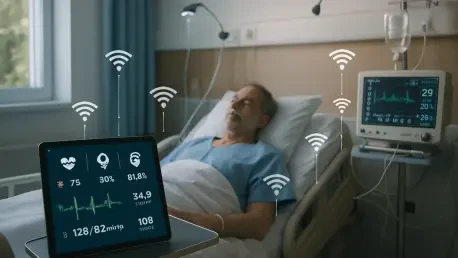
At its core, the integration of IoT into healthcare represents a fundamental pivot from a reactive to a proactive model of medical intervention. The conventional paradigm has long relied on patients reporting symptoms or attending scheduled appointments, a system that often captures data only after a health issue has already taken hold and progressed. IoT-enabled remote patient monitoring (RPM) dismantles this delayed approach by providing a constant, uninterrupted flow of physiological data. This allows clinicians to detect subtle, negative trends in a patient’s condition—such as a gradual increase in blood pressure or a minor change in breathing patterns—and intervene long before a minor problem can escalate into a full-blown health crisis requiring emergency intervention. This capability for early detection is not just an incremental improvement; it is a foundational change in how chronic and acute conditions are managed, prioritizing prevention and timely adjustments over costly and often invasive treatments.
This new data-driven paradigm creates a uniquely beneficial scenario for all stakeholders within the healthcare ecosystem. Patients experience the immediate advantages of comfort and convenience, as they can be monitored effectively from their own homes, which in turn fosters a greater sense of empowerment and engagement in managing their health. For clinicians, the continuous data stream offers a deeper, more nuanced understanding of a patient’s condition over time, enabling more personalized and timely treatment plans that are adjusted based on real-world evidence. On a systemic level, healthcare organizations can begin to optimize precious resources, reduce the significant strain on physical facilities, and lower the staggering costs associated with emergency department visits and lengthy, unplanned hospital stays. This comprehensive value proposition is what makes the shift toward IoT-powered proactive care not just an attractive option but an increasingly necessary evolution for a sustainable healthcare future.
Clinical Evidence and Real World Impact
The benefits of IoT-enabled monitoring are not merely theoretical; they are backed by a growing body of compelling clinical evidence. Recent research from the past year has demonstrated a direct and statistically significant correlation between the structured use of RPM and digital alert systems and tangible reductions in both hospitalizations and mortality rates for at-risk patient populations. For individuals managing complex chronic diseases such as heart failure, diabetes, or chronic obstructive pulmonary disease (COPD), this technology provides a vital and constant lifeline to their care teams. The data consistently shows that these programs lead to improved outcomes, better adherence to prescribed treatment plans, and a notable decrease in the frequency of acute episodes. This evidence validates the technology’s efficacy and underscores its role as a powerful tool in modern chronic disease management, moving it from the realm of experimental tech to a proven clinical strategy.
Beyond improving individual patient metrics, this technological shift is also transforming the very location where care is delivered, decentralizing it from institutional settings. By enabling continuous and reliable observation outside of a clinical environment, IoT is effectively moving the locus of care from the hospital to the patient’s own home. This transition significantly enhances the quality of life for those recovering from major surgery or managing long-term conditions, allowing them to heal in a familiar and less stressful environment. Moreover, this decentralization serves a critical strategic function for the broader health system by alleviating the immense and growing pressure on hospital infrastructure. By safely monitoring patients remotely, hospitals can free up essential beds and staff resources to focus on the most acute and complex cases, thereby improving overall system efficiency and capacity.
The Technology Backbone Architecture and Standards
A successful and scalable remote patient monitoring ecosystem is built upon a sophisticated and highly secure technology architecture. The protection of sensitive personal health information is non-negotiable, demanding robust, multi-layered security measures to ensure the confidentiality, integrity, and availability of patient data at all times. This includes implementing end-to-end data encryption both at rest and in transit, utilizing secure transmission protocols, and systematically hardening all platform components against potential cyber threats. These stringent security protocols are not just technical requirements; they form the essential foundation upon which patient and provider trust is built. Without absolute confidence in the security of the data being transmitted, widespread adoption of these powerful technologies would be impossible, making cybersecurity a central pillar of the entire RPM framework.
However, even with perfect security, one of the most significant technical barriers to widespread adoption remains the persistent lack of interoperability between systems. Many hospitals and clinics still rely on legacy electronic health record (EHR) systems that were designed decades ago and are not equipped to ingest and integrate the continuous, high-volume data streams generated by a diverse array of external IoT devices. This creates frustrating data silos, preventing a seamless flow of information and hindering the creation of a unified, comprehensive patient record. Overcoming this hurdle requires a unified and industry-wide commitment to universal communication standards. The adoption of protocols such as HL7 FHIR (Fast Healthcare Interoperability Resources) is critical to building a truly connected ecosystem where vital health data can flow seamlessly and securely from a patient’s home directly into their official medical record, making it immediately actionable for their care team.
Overcoming Hurdles on the Path to Widespread Adoption
Beyond the intricate technical challenges, integrating IoT into daily medical practice requires a profound and often difficult evolution of established clinical workflows. It is not enough to simply provide healthcare providers with a flood of new data; they must be equipped with the necessary tools, training, and processes to manage this information effectively and efficiently. This involves developing intelligent systems to triage incoming alerts, which is crucial for preventing the well-documented phenomenon of “alert fatigue,” where clinicians become desensitized to constant notifications, potentially missing critical warnings. Furthermore, successful implementation often necessitates the establishment of dedicated care management teams whose primary responsibility is to monitor incoming data, respond to emergent issues, and coordinate the appropriate patient care, representing a significant operational shift for many healthcare organizations.
Finally, for this technological revolution to be truly transformative and just, it must be equitable and accessible to all. The success of any remote patient monitoring program hinges on the availability of reliable underlying infrastructure, including stable high-speed internet access and accessible technical support for patients who may not be digitally native. In many rural, remote, and underserved communities, these basic prerequisites are not a given, creating a significant risk of a “digital divide” in healthcare. This gap could inadvertently worsen existing health disparities, leaving the most vulnerable populations behind. Addressing these infrastructure and accessibility challenges through public and private investment is therefore not just a logistical consideration but an ethical imperative to ensure that the powerful benefits of IoT medical devices are available to everyone, regardless of their geographic location or socioeconomic status.
The Path Forward to an Integrated Future
The adoption of IoT medical devices has fundamentally redefined the landscape of real-time patient monitoring. Over the past several years, the empirical evidence has overwhelmingly supported its capacity to improve health outcomes and optimize resource utilization by enabling a decisive shift toward continuous, proactive, and home-based care. The technology’s architecture, powered by an ecosystem of wearable sensors, secure cloud infrastructure, and advanced analytics, has created the potential for a seamless flow of clinically relevant information from patient to provider. However, realizing this potential on a global scale was dependent on a concerted and collaborative effort to overcome the substantial challenges related to data security, system interoperability, rigorous device validation, workflow integration, and foundational infrastructure readiness. Through continued innovation and evaluation, and with coordinated action from developers, healthcare institutions, regulatory bodies, and policymakers, IoT medical devices have made continuous, patient-centered monitoring an indispensable component of standard medical care worldwide.