
The traditional model of healthcare, characterized by periodic check-ups and reactive treatments, is undergoing a profound transformation driven by the quiet integration of interconnected devices into our daily lives. This evolution, powered by the Internet of Things (IoT), is shifting the focus from episodic care within clinical settings to continuous, real-time health management that extends into patients’ homes and communities. By creating a seamless communication network between patients, clinicians, and medical equipment, IoT is not merely an incremental upgrade but a fundamental re-engineering of the healthcare paradigm. It fosters a proactive, data-centric, and highly personalized approach, promising to improve patient outcomes, enhance operational efficiency, and make high-quality care more accessible than ever before. This connected ecosystem generates an unprecedented stream of health data, offering insights that were once unimaginable and paving the way for a more predictive and preventative future for medicine.
A Paradigm Shift for Patients and Providers
For patients, the rise of IoT marks a significant move toward empowerment and active participation in their own health journeys. Wearable technology, including smartwatches, fitness bands, and specialized medical devices like connected glucometers and blood pressure cuffs, serves as the frontline for this change. These devices diligently track a wide array of vital signs and lifestyle metrics, providing individuals with immediate, actionable feedback on their health status. This constant flow of information allows for a deeper understanding of how daily activities impact their well-being, fostering better self-management of chronic conditions. Moreover, this technological reach is instrumental in closing the care gap for those in remote or underserved regions. Through telehealth platforms and IoT-enabled remote monitoring, patients can receive expert medical consultations and continuous oversight without needing frequent travel, effectively democratizing access to specialized healthcare and ensuring that geography is no longer a primary barrier to receiving quality treatment.
This influx of real-time data is equally transformative for clinicians, providing them with a holistic and continuous view of a patient’s health that extends far beyond the limited scope of an office visit. By leveraging data from home monitoring equipment, doctors can track patient conditions and their responses to specific treatment regimens with an extraordinary level of detail. This rich, longitudinal dataset enables the timely adjustment of therapies and medications, ensuring that care plans are both dynamic and optimized for efficacy. On a broader scale, the aggregation and analysis of data from large patient populations through IoT applications help medical professionals identify best practices and refine evidence-based treatment protocols. This capability not only enhances the care for individual patients but also contributes to collective medical knowledge, driving innovation and improving standards of care for a wide spectrum of health conditions across the entire population.
Navigating the Challenges of a Connected Ecosystem
Despite its immense promise, the widespread integration of IoT into the healthcare landscape is accompanied by significant technical and logistical hurdles that demand careful consideration. One of the most pressing issues is scalability, as the exponential growth in connected medical devices generates a colossal volume of data that must be securely managed and processed. This data deluge requires a robust and highly scalable infrastructure, incorporating powerful cloud computing resources and sophisticated device lifecycle management systems to function without performance degradation. A closely related challenge is interoperability. The current healthcare IoT environment is highly fragmented, with a multitude of devices from different manufacturers often relying on proprietary communication protocols. This lack of universal standards creates a major barrier to seamless data exchange, making the integration of diverse devices with each other and with foundational hospital systems, such as Electronic Health Records (EHRs), a complex and often arduous task.
Compounding these technical difficulties are the paramount concerns of security and privacy, given the extreme sensitivity of patient health information. The vast network of interconnected IoT devices presents a broad attack surface, making these systems prime targets for cyber threats that can lead to devastating data breaches, unauthorized access to patient records, or ransomware attacks capable of crippling hospital operations. Implementing robust, end-to-end security measures to protect both data and the devices themselves is a critical and ongoing necessity. Simultaneously, all healthcare solutions must adhere to stringent data privacy regulations like the Health Insurance Portability and Accountability Act (HIPAA). This legal and ethical imperative requires strong data encryption, both when information is in transit across networks and at rest on servers, to prevent unauthorized access and ensure patient confidentiality is maintained at all times within this evolving digital ecosystem.
Forging the Path to Predictive Medicine
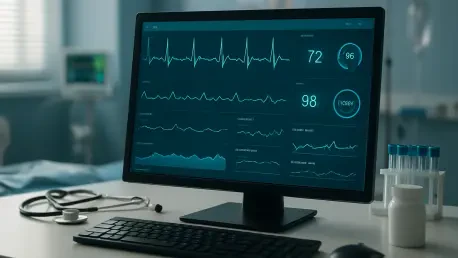
The practical applications of IoT are already making a tangible impact on patient care and are rapidly becoming standard practice in many areas of medicine. Remote Patient Monitoring (RPM) stands out as a flagship application, enabling the continuous tracking of individuals with chronic conditions like heart disease or diabetes from the comfort of their own homes, which can prevent complications and reduce hospital readmissions. Concurrently, the proliferation of Mobile Health (mHealth) has turned smartphones into central hubs for collecting, viewing, and transmitting health data, facilitating seamless communication between patients and their care teams. The innovation extends to highly specialized devices, including advanced continuous heart rate monitors, wearable sensors that track the severity of Parkinson’s disease symptoms, and even ingestible sensors that measure stomach pH levels, all of which feed real-time, high-fidelity data into the larger healthcare system.
The trajectory of healthcare IoT points toward an even more integrated and intelligent future, where its convergence with other groundbreaking technologies unlocks unprecedented capabilities. The fusion of Artificial Intelligence and IoT (AIoT) establishes the foundation for predictive analytics, creating systems that could forecast health events, such as an impending asthma attack or a cardiac episode, before they become critical. The development of “digital twins,” or dynamic virtual replicas of patients, provides a revolutionary platform for simulating treatments and optimizing complex hospital workflows without real-world risk. The continued rollout of advanced 5G networks delivers the ultra-low latency and high bandwidth required for sophisticated real-time telemedicine and even remote robotic surgeries, which were previously considered futuristic. This forward-looking synthesis of technologies redefines the boundaries of medicine and cements a new standard where healthcare is not only connected but also deeply predictive and profoundly personalized.