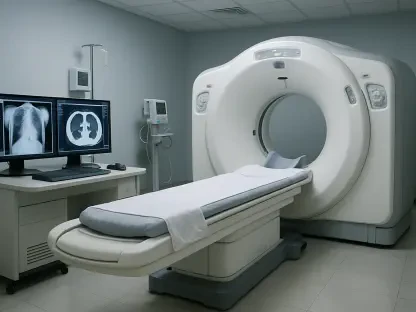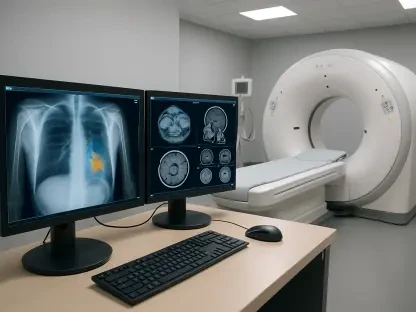

Imagine a world where diagnosing coronary artery disease, a condition impacting roughly 18 million adults in the United States alone, becomes not only faster but also far more precise, thanks to the marriage of artificial intelligence and medical imaging. This isn’t a distant dream but a reality unfolding with Siemens Healthineers’ latest innovation, introduced at the Radiological Society of North America (RSNA) annual meeting in Chicago. Their groundbreaking software, designed to work seamlessly with advanced CT scanners, aims to reshape how clinicians approach the evaluation and management of cardiovascular health challenges. By harnessing AI, this tool promises to enhance the role of coronary computed tomography angiography (CCTA) as a primary diagnostic method, offering hope for more tailored treatments and better patient outcomes. As healthcare continues to evolve with technology at its core, this development marks a pivotal moment in the fight against one of the most prevalent diseases globally.
Transforming Cardiovascular Care with Technology
Boosting Precision in CCTA Analysis
The introduction of this AI-driven software by Siemens Healthineers brings a new level of precision to the analysis of CCTA scans, fundamentally changing the way clinicians detect and assess coronary blockages. By automating the segmentation, labeling, and visualization of plaque buildup—known as atherosclerosis—this tool delivers detailed insights that were once labor-intensive to obtain. For doctors managing patients with suspected coronary artery disease (CAD), this means quicker access to critical data that can influence decisions on interventions like stent placement or lesion preparation during percutaneous coronary intervention (PCI). The impact is clear: enhanced accuracy reduces the guesswork, allowing for more personalized treatment plans. Moreover, as cardiovascular conditions remain a leading cause of mortality, such advancements could save countless lives by ensuring timely and appropriate care, setting a new standard in diagnostic excellence that aligns with the needs of modern medicine.
Beyond precision, the automation provided by this software addresses a pressing need for efficiency in busy clinical environments. Hospitals and imaging centers often grapple with high patient volumes, where every minute saved in analysis can translate to faster care delivery. This technology alleviates the burden on radiologists by streamlining the interpretation of complex scans, freeing them to focus on direct patient interaction and nuanced decision-making. Additionally, the potential to minimize diagnostic errors through consistent, AI-powered results cannot be understated. As healthcare systems strive to balance quality with cost, this tool offers a pathway to optimize resource use while maintaining high standards of care. The ripple effect could be profound, influencing everything from individual patient experiences to broader hospital operational models, ultimately fostering a more responsive and effective healthcare landscape.
Optimizing Clinical Efficiency
Efficiency in clinical workflows is another arena where this software shines, tackling one of the persistent pain points in managing CAD. By automating intricate imaging tasks, it significantly cuts down on the manual effort required to process CCTA data, allowing healthcare providers to redirect their attention to patient-centric care rather than getting bogged down in technical details. This shift can lead to shorter wait times for patients awaiting diagnosis and treatment plans, a critical factor for those with potentially life-threatening conditions. Furthermore, reducing the time spent on each scan without compromising accuracy means that more patients can be assessed in less time, directly addressing the backlog issues many facilities face. This efficiency isn’t just about speed; it’s about creating a smoother, more seamless experience for both clinicians and those they serve, redefining what’s possible in high-pressure medical settings.
Another compelling advantage lies in the software’s potential to curb unnecessary referrals to catheterization labs, a common and costly step in CAD management. By providing clearer, more actionable insights from CCTA scans, the tool helps clinicians determine when invasive procedures are truly needed, sparing patients from undue risks and discomfort while saving healthcare systems significant expenses. This aligns with a growing emphasis on value-based care, where outcomes matter as much as, if not more than, the volume of procedures performed. Hospitals could see a marked reduction in resource strain, allowing for better allocation of staff and equipment to cases that genuinely require advanced intervention. In essence, this innovation serves as a bridge between diagnostic caution and therapeutic necessity, ensuring that every step in the patient journey is justified and optimized for the best possible result.
Navigating Industry Shifts and Challenges
The Rising Tide of AI in Medical Diagnostics
The unveiling of this software dovetails with a broader surge of artificial intelligence applications in healthcare, a sector projected to reach a staggering $19 billion valuation by 2027. AI’s transformative power in medical diagnostics, particularly in cardiovascular imaging, is evident as companies like HeartFlow have already paved the way with similar technologies that quantify coronary plaque from CCTA images. Siemens Healthineers’ entry into this space reinforces an industry-wide conviction that AI can elevate precision and improve treatment planning in ways traditional methods cannot match. This trend isn’t merely about adopting new tools; it’s a fundamental rethinking of how data drives health decisions. As more providers embrace these solutions, patients stand to benefit from diagnoses that are not only faster but also grounded in deeper, more reliable insights, potentially shifting the entire paradigm of preventive and acute care.
However, the integration of AI into healthcare isn’t without its hurdles, and understanding these challenges is key to appreciating the significance of Siemens Healthineers’ latest offering. Regulatory scrutiny remains a formidable barrier, as ensuring patient safety and data accuracy demands rigorous validation processes that can delay market entry. Additionally, there’s the issue of interoperability—ensuring that AI tools work seamlessly across diverse systems and platforms in hospitals worldwide. While the industry races toward innovation, there’s a parallel need to build trust among clinicians who may be skeptical of over-reliance on automated systems. Siemens Healthineers’ focus on integrating their software with existing CT scanners shows an awareness of these concerns, aiming to create a solution that complements rather than disrupts current practices. This balance between cutting-edge tech and practical application will likely define the success of AI’s broader adoption in the coming years.
CCTA’s Emergence as a Diagnostic Standard
CCTA has increasingly emerged as a cornerstone in diagnosing CAD, supported by global clinical guidelines that highlight its effectiveness as a non-invasive alternative to traditional angiography. Research underscores its ability to reduce the need for invasive procedures by over 50%, offering substantial cost savings and shorter hospital stays for patients. Siemens Healthineers capitalizes on this momentum by enhancing CCTA’s utility through AI-driven insights, making it an even more compelling first-line tool. The shift toward non-invasive diagnostics reflects a larger movement in healthcare to prioritize patient comfort while maintaining diagnostic rigor. For clinicians, this means access to a method that not only detects issues early but also minimizes the physical and financial burden on those under their care, paving the way for a more sustainable approach to managing widespread conditions like CAD.
Moreover, the growing reliance on CCTA signifies a cultural shift within cardiology toward prevention and early intervention, areas where this software could play a pivotal role. By providing detailed visualizations of coronary plaque, it empowers doctors to address issues before they escalate into emergencies, aligning with the proactive ethos modern healthcare systems are striving to adopt. This isn’t just about replacing older methods; it’s about building a framework where technology and human expertise work in tandem to catch problems at their root. The broader acceptance of CCTA, amplified by tools like the one Siemens Healthineers has introduced, suggests a future where invasive diagnostics are the exception rather than the rule. As clinical practices evolve, this synergy between advanced imaging and AI will likely become a benchmark, encouraging other innovators to follow suit and further refine the tools available to fight cardiovascular disease.
Shaping the Future of Medtech Innovation
Merging Diagnostic and Therapeutic Expertise
Siemens Healthineers demonstrates a forward-thinking approach by blending diagnostic capabilities with therapeutic guidance in their new software, a strategy articulated by Philipp Fischer, head of computed tomography at the company. This dual focus ensures that clinicians don’t just identify CAD but also receive actionable insights to guide treatment decisions, whether that involves planning interventions or opting for conservative management. Such an integrated approach addresses a critical gap in current practices, where diagnosis and therapy can sometimes operate in silos, leading to fragmented care. By fostering a more holistic view of patient health, this tool supports better outcomes for a condition that remains a leading global health burden. It’s a testament to how technology can bridge disparate aspects of medicine, creating a unified pathway from detection to resolution that benefits both providers and patients alike.
This convergence of expertise also positions Siemens Healthineers as a leader in personalized medicine, where treatments are increasingly tailored to individual patient profiles. The software’s ability to detail specific plaque characteristics means doctors can customize interventions down to minute details like stent length or landing zones for PCI. This level of specificity wasn’t as accessible with earlier diagnostic methods, often leading to more generalized approaches that might not suit every case. Now, with AI sharpening the lens through which clinicians view coronary health, there’s potential for a significant leap in how effectively CAD is managed. Looking ahead, this trend toward integration could inspire similar innovations across other medical fields, encouraging a shift where technology doesn’t just inform but actively shapes therapeutic strategies in real time.
Balancing Innovation with Market Realities
At the RSNA annual meeting, Siemens Healthineers showcased their commitment to staying ahead in a competitive medtech landscape, standing shoulder to shoulder with advancements from other industry giants. However, the journey from innovation to widespread adoption isn’t without obstacles, as the pending FDA clearance for their software highlights. Regulatory approval is a crucial milestone that ensures safety and efficacy, but it can also slow the pace at which new tools reach clinicians. This delay underscores a broader tension in medtech: the need to innovate rapidly while navigating stringent oversight. For Siemens Healthineers, clearing this hurdle will be key to bringing their solution to market via the Syngo.via2 platform, potentially setting a precedent for how quickly future AI tools can move from concept to clinic in a field that’s evolving at breakneck speed.
Financially, Siemens Healthineers stands on solid ground, with earnings before interest and taxes nearing €3.9 billion for the fiscal year and projected revenue growth of 5%-6% in 2026. Yet, strategic shifts, such as the planned deconsolidation of certain business segments announced recently, introduce questions about how resources and focus might be realigned. These corporate maneuvers, expected to clarify further in the coming quarters, could influence the rollout and support for new technologies like this software. Despite these uncertainties, the company’s emphasis on pushing boundaries in medical imaging remains evident. As the medtech sector continues to heat up with competition, the ability to balance innovation with practical market considerations will likely determine which players shape the future of healthcare. For now, Siemens Healthineers’ latest offering stands as a bold step forward, poised to influence clinical practice once regulatory gates are passed.