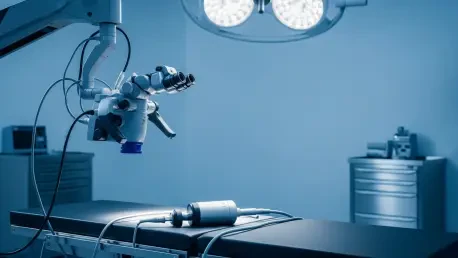

The landscape of pediatric surgery in Ukraine is undergoing a profound transformation as advanced medical technologies bridge the gap between emergency response and long-term clinical excellence. This shift is most visible through the recent delivery of high-tech surgical equipment worth approximately €1.2 million to the Kyiv Regional Children’s Hospital, an initiative made possible by the German government. As part of a larger €10 million financial assistance package dedicated to restoring and re-equipping pediatric facilities across the nation, this effort underscores a deep commitment to medical resilience. Since the start of the full-scale conflict, Germany’s total contribution to the Ukrainian healthcare sector has exceeded €40 million, reflecting a sustained humanitarian priority. The arrival of these specialized tools provides a critical lifeline for both regional centers and the Okhmatdyt National Children’s Hospital, ensuring that the most vulnerable patients receive care that meets modern global standards today.
Precision Instruments: Redefining Surgical Capabilities
The integration of state-of-the-art operating microscopes and ultrasonic aspirators marks a significant leap forward in the hospital’s ability to perform highly specialized interventions. These precision tools are specifically designed for neurosurgery and operative ophthalmology, where the margin for error is nearly nonexistent. By providing high-precision visualization, the new equipment allows surgical teams to navigate the delicate structures of the brain and eyes with unprecedented clarity. Such advancements are vital for treating complex conditions like brain tumors, congenital malformations, and hydrocephalus, which require meticulous accuracy. The introduction of advanced craniotomes further streamlines these procedures, reducing the time patients spend under anesthesia and improving the overall success rates of delicate operations. This modernization effort ensures that the medical facility can handle cases that previously might have required risky transfers to international clinics.
Beyond the specialized surgical tools, the upgrade includes essential systems designed to enhance intraoperative safety and diagnostic flexibility throughout the hospital. Electrosurgical systems and blood reinfusion devices have been implemented to control bleeding more effectively and minimize the reliance on donor blood components during major procedures. This focus on internal resource management is complemented by the introduction of portable X-ray units, which bring diagnostic imaging directly to the patient’s bedside. This mobility is particularly crucial for children in critical condition or those suffering from combined injuries who cannot be easily moved to a centralized imaging department. By decentralizing these diagnostic capabilities, the hospital can provide rapid assessments in emergency situations, ensuring that life-saving decisions are made within minutes. These technical improvements represent a holistic approach to patient care that prioritizes both the precision of the surgeon and the stability of the patient.
Professional Growth: Training and Global Collaboration
Technological hardware alone cannot transform medical outcomes without the corresponding expertise to operate it effectively and maintain its performance. To address this, the procurement and logistics managed by the Deutsche Gesellschaft für Internationale Zusammenarbeit (GIZ) included a comprehensive training component for the hospital staff. Prior to the formal commissioning of the new systems, medical professionals participated in rigorous specialized training sessions and practical exercises led by technical experts. This ensured that the surgeons, nurses, and technicians were fully prepared to utilize the equipment to its maximum potential from the very first day. The Special Program for Ukraine Support facilitated these educational workshops, creating a bridge between the manufacturers of the high-tech tools and the clinical reality on the ground. This emphasis on human capital ensures that the German investment translates into immediate and tangible improvements in pediatric care across the Kyiv region.
The modernization of the Kyiv Regional Children’s Hospital extends beyond physical equipment and into the realm of international clinical networking and exchange. Currently, the hospital is engaged in advanced discussions to establish a formal medical partnership with the Meyer Children’s Hospital located in Florence, Italy. This collaboration is intended to foster a long-term professional exchange where Ukrainian doctors can share their unique experiences while gaining insights into the latest European clinical protocols. By building these international bridges, the hospital is positioning itself as a hub for pediatric innovation rather than just a recipient of aid. Such partnerships facilitate ongoing research and the adoption of cutting-edge treatments for rare pediatric conditions, including ocular tumors and cataracts. This strategy creates a sustainable ecosystem where advanced technology is supported by a global community of experts, ensuring that the quality of care continues to evolve and improve for years to come.
Future Outlook: Building Sustainable Healthcare Systems
The successful integration of German medical aid into the Ukrainian pediatric system provided a clear roadmap for future infrastructure development. Stakeholders recognized that the combination of high-precision surgical tools and intensive staff training created a measurable increase in the hospital’s annual capacity for complex cases. These efforts resulted in hundreds of additional young patients receiving treatment for severe trauma and congenital issues that were once difficult to manage locally. The focus shifted toward creating a network of resilient medical centers that could operate independently of centralized diagnostic hubs. This decentralized model proved essential for maintaining a high standard of care during periods of logistical strain. Furthermore, the emphasis on blood reinfusion and portable diagnostics reduced the burden on the national supply chain, proving that technological self-sufficiency was as much a matter of security as it was a matter of clinical health.
Looking toward the coming years, the transition from emergency assistance to institutional modernization established a template for other regional facilities. Authorities and international partners identified the need to scale these specialized partnerships, ensuring that the lessons learned in Kyiv could be applied to smaller clinics throughout the country. The move toward establishing permanent medical residencies and exchange programs with European institutions secured a pipeline of highly skilled pediatric specialists. These professionals became the foundation of a modernized healthcare system that valued continuous education and data-driven surgical techniques. By prioritizing the procurement of versatile, high-mobility equipment, the healthcare sector demonstrated how targeted financial aid could be used to build a durable and flexible infrastructure. These actions effectively paved the way for a new era of Ukrainian medicine defined by international cooperation and technological sophistication.