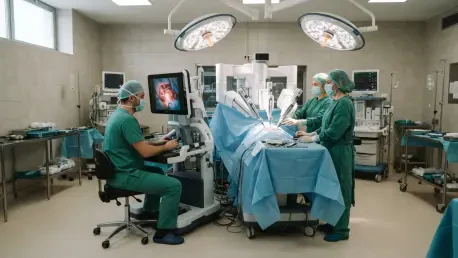

Positional cross-training allows console operators to understand the physical and cognitive demands placed on bedside assistants during complex robotic setups. This realization comes at a pivotal moment in 2026, as the rapid evolution of robotic-assisted surgery (RAS) has fundamentally altered the modern clinical environment. While the field was dominated for decades by a single technological standard, the current landscape is shifting toward a multi-platform reality. This transition introduces complex challenges for operating room teams, who must now navigate the nuances of various robotic architectures with precision and agility. A comprehensive perspective analysis titled “Helping teams adapt in the operating room” provides a critical examination of these challenges, focusing on the mechanical, cognitive, and organizational adjustments required for surgical teams to remain effective across diverse robotic systems. Robotic-assisted surgery was designed to bridge the gap between traditional open surgery and conventional laparoscopy by providing surgeons with enhanced precision, 3D visualization, and greater dexterity. These benefits include reduced blood loss, shorter hospital stays, and lower infection rates. For over twenty years, the da Vinci Surgical System was the nearly exclusive platform used worldwide, creating a standardized robotic routine that teams could master and replicate. However, this era of technological homogeneity ended with the arrival of competitors like Medtronic’s Hugo system and CMR Surgical’s Versius platform, forcing a complete reimagining of team dynamics.
Differences in Console Architecture and Communication
The legacy closed-console design, in which the surgeon sits with their head positioned in a viewing apparatus, creates a high-fidelity, immersive experience but physically isolates the operator from the rest of the room. In this environment, communication becomes almost entirely verbal, relying heavily on integrated microphones and speakers to bridge the physical gap between the surgeon and the surgical staff. Because the surgeon cannot see the bedside assistants’ gestures or the patient’s status directly, the team must use explicit verbal exchanges to ensure every action is coordinated. This eliminates subtle nonverbal cues—such as a glance, a nod, or a pointed finger—that are vital for maintaining safety in high-stakes environments.
The reliance on purely auditory information requires a high degree of linguistic precision, as any ambiguity in instruction can lead to delays or errors during critical phases of the procedure. Consequently, teams working with closed systems must develop a rigorous “readback” communication protocol, where every command is repeated and confirmed to prevent misunderstandings. While this structured approach helps mitigate the risks associated with the surgeon’s physical isolation, it places a heavy cognitive load on both the console operator and the bedside assistants, who must remain hypervigilant to verbal cues while managing the physical aspects of the surgery.
In contrast, newer systems often use an open console design in which the surgeon wears 3D glasses and looks at a freestanding monitor, significantly changing the social landscape of the operating room. This layout preserves a direct line of sight between the console operator and the bedside team, improving the surgeon’s ability to monitor the room peripherally and engage in nonverbal communication. However, it also introduces new adaptive triggers, such as increased susceptibility to room noise and visual distractions that the traditional console hood previously blocked out. The team must therefore adapt its focus based on which console style is in use, alternating between total immersion and a broader, open awareness of the surrounding environment. While the open design fosters a more collaborative atmosphere by allowing the surgeon to see the assistant’s movements, it also requires the team to manage environmental factors more strictly to prevent the surgeon from losing focus. This shift in architecture means that a team’s communication strategy cannot be static; it must be a dynamic process that adjusts to the specific hardware used for a given case. The transition between these two styles of interaction requires a conscious effort from all team members to modify their behaviors, ensuring that the benefits of an open system are maximized without compromising the concentration needed for complex maneuvers.
Mechanical Footprints and Docking Logistics
The physical arrangement of robotic arms presents another significant hurdle for teams operating in a multi-platform environment. Traditional systems typically feature a single, centralized patient cart where all arms are mounted, providing a relatively predictable footprint that many veterans of robotic surgery have come to rely upon. Conversely, newer systems utilize modular, individual arm units that can be moved and positioned independently. This shift requires a complete reimagining of the operating room layout for every procedure, as perioperative staff must transport, position, and dock each arm separately. Ensuring that trajectories do not overlap or collide becomes a complex geometric puzzle that varies based on the patient’s anatomy and the specific robotic system in use. Because different systems have varying bulk and volume, the available space around the operating table changes significantly, often leaving bedside assistants with limited room to maneuver. The modularity of newer robots offers increased flexibility for different types of surgeries, but it demands a much higher level of technical proficiency and spatial planning from the nursing and support staff. This transition from a “one-size-fits-all” cart to a customized modular setup represents a major change in workflow, requiring teams to be more deliberate in their preoperative planning to avoid physical conflicts between the robotic components and personnel.
These physical variations increase the risk of mechanical collisions between the robot and the bedside staff, making spatial awareness a top priority. Teams cannot rely on the muscle memory developed on one system when working on another, as the reach, swing, and joint articulation of a Hugo arm may differ drastically from those of a da Vinci or Versius component. They must adjust their physical movements and equipment positioning to accommodate the specific spatial demands of the machine currently in use, a task that becomes even more difficult when switching between systems on the same day. This requires a heightened level of spatial awareness and a departure from the automated routines used with older technology, as a misplaced step or a poorly positioned instrument cart could lead to a breach in the sterile field or damage to the robotic hardware. Furthermore, the increased footprint of some modular systems can create “dead zones” where the bedside assistant cannot easily reach the patient, necessitating a strategic reorganization of the surgical site. To manage these risks, teams must engage in active spatial scouting before surgery begins, identifying potential pinch points and ensuring that the robotic arms have a full range of motion without interference. This proactive approach to physical logistics is essential for maintaining a smooth workflow and ensuring that the mechanical advantages of the robot are not hindered by the physical limitations of the operating room environment.
Theoretical Framework of Team Adaptation
To understand how teams manage these changes, experts apply established human factors literature regarding team adaptation to the unique environment of the surgical suite. This process is defined as the behavioral, cognitive, and communicative changes made in response to adaptive triggers, which in this context are the specific technical requirements of a robotic platform. Adaptation is not just an individual skill possessed by a talented surgeon; it is a multi-tiered framework involving situational factors like equipment availability, individual factors like psychological resilience, and team factors such as shared mental models. When a team understands the “how” and “why” behind a specific robotic setup, its members are more likely to respond effectively when something unexpected occurs. Organizational factors, including the availability of training resources and hospital policy support, also play a critical role in how well a team can pivot between different technologies. This holistic view of adaptation suggests that performance is not just about technical mastery but about how well the various layers of the surgical environment interact. A breakdown in any one of these tiers—whether it is a lack of equipment or a failure in role clarity—can lead to a decrease in overall team effectiveness, highlighting the need for a comprehensive approach to institutional preparedness and support for all surgical personnel involved.
A team’s resilience—its ability to bounce back from a technical glitch or a confusing setup—emerges from the interaction of these four levels of adaptation. If a hospital provides the technology but fails to provide the necessary organizational training, the team’s ability to adapt will be compromised regardless of the surgeon’s individual technical skill or the assistant’s experience. Historically, research focused on the transition from manual surgery to the first robots, but the modern challenge is multisystem mastery, where the bottleneck is the team’s collective ability to coordinate around diverse hardware. This requires the development of a “metaskill” of adaptation, where teams are trained not just on how to use Robot A or Robot B, but on how to switch their mental and physical frameworks between them seamlessly. Developing this level of collective competence involves fostering a culture where questions are encouraged and roles are clearly defined yet flexible enough to handle the nuances of different machines. Resilience in this context means having the cognitive flexibility to recognize that the rules of engagement have changed because the hardware has changed. By focusing on the team as a single unit of performance rather than a collection of individuals, hospitals can create a more robust surgical program capable of handling the inherent complexities of a diverse technological portfolio without sacrificing safety or efficiency.
Institutionalizing Team Reflexivity
The first major recommendation for adaptation is the necessity of team reflexivity, which refers to the practice of teams explicitly discussing their goals and challenges before, during, and after a procedure. This involves a three-phase approach that starts with preoperative briefings to discuss specific system requirements and potential pitfalls associated with the robot chosen for the day. During surgery, in-action reflexivity allows the team to assess technical issues in real time, making adjustments to docking or instrument placement as needed without losing momentum. Finally, postoperative debriefings serve as a critical learning tool to evaluate performance and identify areas for improvement in future cases. These sessions ensure that everyone has a shared mental model of the procedure, which is especially important when using modular arms that might require nontraditional docking angles. By making these discussions a standard part of the surgical workflow, teams can reduce the cognitive load on individuals and ensure that collective knowledge is used to navigate the complexities of different robotic architectures. This culture of open communication helps demystify the technology and empowers every member of the team to contribute to the success of the operation, regardless of their specific role at the table or the console.
To ensure these insights are not lost over time, hospitals should maintain a departmental record book that acts as a living document of team experiences and technical preferences. This resource should store surgeon-specific preferences, unique docking configurations for each robotic platform, and notes on how to handle specific anatomical challenges encountered with different hardware. Such a record serves as a vital tool for rotating staff or novice teams who may not be as familiar with a specific system’s nuances, providing them with a roadmap for success based on the collective experience of their colleagues. It also helps standardize practices across the institution, reducing the variability that can lead to errors when different teams use the same equipment. By documenting what works and what does not for each specific robot, the hospital creates a repository of knowledge that enhances the resilience of the entire surgical department. This structured approach to information management bridges the gap between different robotic setups and reduces the likelihood of “reinventing the wheel” for every new procedure. Furthermore, it fosters a sense of continuity and professional growth, as staff can see how their feedback is used to refine processes and improve patient outcomes over the long term.
Comprehensive Team and Cross-Training
Traditional training models are often flawed because they train surgeons and nursing staff in isolation, ignoring the reality that robotic surgery is a team sport. Effective adaptation requires whole-team process training, where the entire surgical team practices coordination in a simulated environment without the pressure of a live patient. This type of training allows the team to work through the logistics of docking, instrument changes, and emergency undocking procedures as a cohesive unit. A key component of this is positional cross-training, where console surgeons and bedside assistants spend time observing and discussing each other’s roles to understand the physical and cognitive demands placed on their colleagues. For instance, a surgeon who understands the physical effort required to reposition a heavy modular robotic arm will be more thoughtful about requesting such changes mid-procedure. This mutual understanding reduces frustration and builds a stronger foundation for collaboration during high-stress moments. By simulating the entire life cycle of a robotic case—from setup to cleanup—teams can identify bottlenecks in their workflow and develop strategies to overcome them before they ever step into a real operating room with a patient.
When team members understand the limitations and requirements of their counterparts, they are better equipped to synchronize their actions across multiple robotic platforms. A surgeon who understands the bulky nature of a specific robot’s arms will be more cautious with remote movements to avoid striking the assistant, while an assistant who knows the surgeon’s visual field will be more proactive in clearing obstructions. This collaborative training fosters a culture of mutual support and situational awareness that is essential when operating multiple robotic platforms with varying designs. Moreover, simulation-based training provides a safe space to practice “what-if” scenarios, such as equipment failure or sudden patient instability, which require rapid and coordinated team responses. These drills build the collective muscle memory needed to handle the unique quirks of different robotic systems, ensuring that the team can pivot its strategy instantly if the situation demands it. This investment in collective competence pays dividends in the form of shorter operative times, fewer technical errors, and a more positive working environment for the entire surgical staff. Ultimately, the goal of whole-team training is to move beyond mere technical proficiency and achieve a state of fluid coordination that is independent of the specific hardware being used.
Organizational Support and Policy Management
Team adaptation cannot be left to chance; it must be managed at the institutional level through dedicated coordination roles that streamline the complexities of a multi-platform program. Hospitals should appoint a robotic surgical coordinator or a clinical nurse manager to facilitate briefings and ensure that the right equipment is ready for each specific robot used on a given day. This role acts as the glue for the program, ensuring that organizational and situational factors are aligned with the team’s needs and that no detail—such as a specific instrument or a proprietary cable—is overlooked. The coordinator also serves as a central point of contact for troubleshooting and can provide continuity when rotating staff members are brought into the robotic suite. By centralizing the management of robotic logistics, hospitals can reduce the administrative burden on surgeons and nurses, allowing them to focus more fully on patient care. This organizational support is particularly important in facilities that operate a “mixed fleet” of robots, where logistical requirements can vary significantly from one room to the next. Without this dedicated oversight, the risk of technical delays and equipment mismatches increases, potentially compromising the efficiency of the entire surgical department.
Furthermore, there is a call to involve human factors specialists to perform objective workflow assessments that can pinpoint areas of friction within the surgical process. These experts can identify ergonomic bottlenecks, communication breakdowns, or environmental distractions that the clinical team might miss because they are too close to the work. Longitudinal research is also necessary to understand how teams perform across different systems over months and years, allowing for the creation of truly evidence-based guidelines for multi-system environments. This research should focus on how teams develop mastery over time and which specific organizational interventions are most effective in supporting long-term adaptation. By treating the introduction of a new robotic platform as a research opportunity, hospitals can contribute to a broader understanding of how human-robot interaction evolves in a clinical setting. This data-driven approach allows for the refinement of training programs and hospital policies based on actual performance metrics rather than assumptions. In the long run, this commitment to continuous improvement and objective assessment ensures that the hospital remains at the forefront of surgical innovation while maintaining the highest standards of safety and efficiency for its patients.
Standardized Proficiency and Multi-System Credentialing
A critical policy recommendation for 2026 is the need for standardized credentialing to ensure safety and proficiency across various platforms, regardless of the manufacturer. Currently, how a surgeon or nurse is deemed proficient on a robotic system varies widely among institutions, creating a fragmented landscape where “proficiency” is often a subjective measure. Professional medical associations should create unified standards for multi-system credentialing, which might include achieving baseline proficiency on a primary system and completing a set number of supervised procedures on any new platform before being granted independent privileges. These standards should also include requirements for the entire surgical team, ensuring that nurses and assistants have also demonstrated competency in the specific nuances of the hardware they are supporting. Formalizing these requirements helps prevent the dangerous assumption that expertise on one robotic system automatically translates to another. It provides a clear framework for professional development and ensures that every member of the surgical team is held to the same high standard of technical and operational excellence. This institutional oversight is essential for building trust among patients and ensuring that the introduction of new technology does not lead to a decline in the quality of care.
Maintaining a minimum annual caseload on each system is also vital to prevent skill decay and ensure that teams remain sharp across all platforms. This ensures that a surgeon who is an expert on one system does not assume that their expertise automatically translates to another without consistent practice and exposure. Regular assessments and “refresher” simulations can help maintain this level of readiness, even for staff members who do not use a particular robot on a daily basis. By formalizing these standards, hospitals can ensure that technological diversity does not compromise patient safety or surgical outcomes through a slow erosion of technical skill. This approach also encourages staff to remain engaged with the latest developments in each system, fostering a culture of lifelong learning and professional curiosity. Credentialing should be viewed not as a one-time hurdle to be cleared, but as an ongoing process of quality assurance that evolves alongside the technology itself. When a hospital commits to a rigorous and standardized credentialing process, it sends a clear message that patient safety is the primary driver of its robotic program, regardless of which machine is being used in the operating room.
Future Directions: Transitioning to Resilient Systems
The field moved away from a narrow focus on individual technical mastery and embraced a broader view of team-based performance as the true metric of success. Hospitals recognized that the shift from a single robotic platform to multiple architectures was a permanent change that required new cognitive strategies and a commitment to collective resilience. By prioritizing the human element of surgery—communication, coordination, and mutual understanding—surgical departments turned potential technological disruptions into opportunities for institutional growth. The integration of reflexivity protocols and shared mental models ensured that the transition between different robotic setups was not a source of stress but a well-managed process. It was through this cultural shift that the operating room became a dynamic sociotechnical system where the robot served as an extension of a highly synchronized team. The industry successfully bridged the gap between different robotic designs by focusing on the underlying human factors that drive safety and efficiency in any complex environment.
Healthcare institutions implemented dedicated coordination roles and longitudinal research programs that provided the data needed to refine surgical workflows for years to come. These proactive steps allowed teams to navigate the physical and cognitive challenges of diverse robotic footprints without compromising the quality of patient care. The move toward standardized, multi-system credentialing provided a much-needed framework for ensuring that every member of the operative unit remained proficient as technology continued to advance. These strategic investments in training and organizational support proved that the most sophisticated robot is only as effective as the team that operates it. Looking back on the progress made, it was the emphasis on positional cross-training and institutional reflexivity that ultimately defined the era of multi-platform robotic surgery. The journey toward multi-system mastery demonstrated that while hardware may change, the core principles of effective teamwork remain the most critical component of surgical excellence. Institutions that adopted these holistic strategies found themselves better prepared for the next wave of innovation, ensuring a safer and more predictable environment for both staff and patients.