
The traditional study of human immunology has long been anchored by the analysis of static histological slides and fixed biomarkers, which effectively provided researchers with biological snapshots frozen in time while obscuring the fluid and chaotic nature of actual cellular behavior. While these methods were foundational for identifying the presence of specific proteins or the density of cell populations, they offered very little insight into the intricate choreography of a living immune response. Today, the transition from these limited photographic inferences to dynamic, real-time 3D imaging marks a profound paradigm shift in the biological sciences. This evolution allows for the observation of an immune response as a continuous narrative, revealing how individual cells navigate complex tissues, communicate with their peers, and mount defenses against pathogens. By moving beyond the limitations of the “frozen” image, modern researchers can now witness the life story of an immune event, providing a much deeper understanding of vaccine efficacy, disease progression, and the fundamental mechanics of human health in a way that was previously unimaginable.
Advanced Modalities for Microscopic and Systemic Exploration
Two-photon intravital microscopy has established itself as a critical high-resolution lens into the microscopic world, allowing for the direct observation of individual immune cells within the environment of a living organism. By utilizing genetically expressed fluorescent proteins and specialized probes, scientists can now watch the immune system in action without the distortions inherent in older, invasive sampling techniques. This technology has successfully dismantled long-standing misconceptions about cellular movement, such as the belief that immune cells wander aimlessly until they stumble upon a threat. Instead, real-time visualization has revealed that cells like neutrophils engage in highly organized “swarming” behaviors, moving with purpose toward sites of infection or tissue damage. Furthermore, the discovery that T cells navigate through lymph nodes along a specific stromal network—a cellular scaffold that ensures they meet antigen-presenting cells—demonstrates that immune encounters are not random accidents but rather engineered certainties within the body’s defensive architecture.
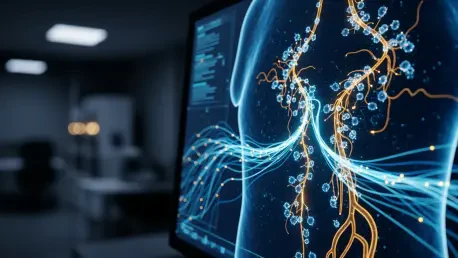
While microscopic tools provide granular details of cellular movement, the combination of Positron Emission Tomography and Computed Tomography offers a necessary macroscopic perspective on the immune system as a whole. This systems-level approach is essential for understanding the “systemness” of the immune network, which spans interconnected hubs like the bone marrow, spleen, and various lymph nodes across the body. By merging the functional data provided by PET with the precise anatomical context of CT imaging, clinicians can now quantify immune activation levels in real-time across the entire human frame. This dual-modality sensitivity allows for the detection of subtle inflammatory signals long before they manifest as physical symptoms or systemic illness. Consequently, this broad view enables a shift from reactive medicine to a more proactive model, where the total body immune state is monitored and managed as a cohesive, functioning circuit rather than a collection of isolated incidents.
Enhancing Clinical Precision in Autoimmunity and Oncology
The clinical application of these imaging technologies is particularly revolutionary in the management of autoimmune diseases, where the immune system incorrectly targets the body’s own healthy tissues. Because conditions such as rheumatoid arthritis, lupus, and inflammatory bowel disease often manifest in unpredictable and spatially diverse ways, having a real-time, whole-body view of the pathophysiological response is transformative. In the current medical landscape, immune PET imaging allows clinicians to see exactly where the biological conflict is occurring at any given moment, providing a level of spatial resolution that standard blood tests cannot offer. This capability is the cornerstone of modern personalized medicine, as it allows for the risk-stratification of patients based on their unique immune activity patterns. By observing how a specific individual’s immune system behaves, physicians can accurately predict which patients are likely to face aggressive disease progression and which will respond best to specific targeted therapies.
In the realm of oncology, real-time imaging functions as a vital safety mechanism for patients undergoing high-risk treatments like Chimeric Antigen Receptor T-cell therapy. Although these immunotherapies are remarkably effective at eliminating tumors, they carry the significant risk of triggering “immune exuberance,” which can lead to life-threatening cytokine storms if left unmonitored. By utilizing real-time PET/CT scans, medical teams can now identify the early biological markers of inflammatory toxicity before clinical symptoms become critical. This allows for the immediate adjustment of therapeutic dosages or the administration of neutralizing agents to maintain patient safety without compromising the efficacy of the cancer treatment. The ability to monitor the intensity and speed of an immune response in real-time has significantly reduced the mortality rates associated with these advanced therapies, making high-intensity immunotherapy a much safer option for a broader range of patients.
Targeted Control and the Rise of Optogenetics
The field of immunology is currently pushing beyond simple observation toward the active, localized control of immune cells through the innovative use of optogenetics. This technology involves engineering immune cells to respond to specific wavelengths of light, allowing researchers to “switch on” or “switch off” cellular activity with incredible temporal and spatial precision. For example, experimental systems are now being used to infuse CAR T cells in a dormant state, only activating them once they have reached the precise location of a tumor by applying a specific light source. This method offers a potential solution to one of the most persistent problems in immunotherapy: the unintended damage to healthy tissues caused by systemic immune activation. By ensuring that the most potent immune responses are confined only to the site of the malignancy, scientists can maximize the therapeutic impact while virtually eliminating the debilitating side effects that often accompany traditional cancer treatments.
While the current application of light-based control is primarily limited to surface-level conditions like melanoma due to the physics of light penetration, the development of laparoscopic and fiber-optic delivery systems is rapidly expanding these boundaries. New techniques involve the use of minimally invasive probes to deliver specific wavelengths of light to deep-seated organs, bringing the precision of optogenetics to internal malignancies and localized inflammations. This transition from external to internal application represents a major step forward in the quest for “programmable” medicine, where the immune system can be tuned like a radio frequency to meet the specific needs of a patient’s internal environment. As these delivery mechanisms become more sophisticated, the prospect of managing complex internal diseases through targeted light pulses is moving from the realm of experimental science into a viable clinical pathway for future surgical and oncological procedures.
Integrating Multiomic Data and Artificial Intelligence
One of the most significant technical hurdles currently being addressed is the challenge of multiplexing, or the ability to track multiple distinct immune signals and cell types simultaneously. Historically, imaging was limited by the number of fluorescent colors or radioactive tracers that could be distinguished at once, often leading to a simplified view of a much more complex interaction. To overcome this, researchers have pioneered the use of correlative microscopy, which merges the dynamic footage of live cell movements with post-preservation molecular staining. This two-stage process allows scientists to map detailed proteomic and transcriptomic profiles back onto the 3D tracks of living cells, providing the exact spatial context of how different immune players collaborate during a response. This high-plex approach is revealing the “molecular conversation” that occurs between cells, offering a far more nuanced understanding of the cooperative nature of the human defense system.
As these 3D spatiotemporal maps grow in complexity, the sheer volume of data generated has necessitated a move toward high-performance computing and the integration of Artificial Intelligence. These massive datasets, which combine real-time imaging with genomic and proteomic information, serve as the ideal training ground for sophisticated machine learning models designed to recognize patterns invisible to the human eye. The ultimate goal of this integration is the creation of predictive analytics that can forecast a patient’s immune response to a new vaccine or a specific pharmaceutical intervention before it is even administered. By training AI on a diverse range of immune narratives, the scientific community is building a foundation for a future where the efficacy of a treatment can be simulated and optimized with high precision. This marriage of spatial biology and multiomics is not merely an incremental improvement in data collection; it is the fundamental shift toward a truly predictive and preventive model of global healthcare.
The Strategic Shift Toward Predictive Immunology
The evolution of real-time imaging into a standard clinical and research tool represented a definitive departure from the reactive and static diagnostic models of the past decade. By successfully integrating dynamic visualization with high-throughput molecular data, the scientific community established a new framework for understanding the human body as a living, breathing network of interactions rather than a collection of separate parts. This transition was marked by the successful deployment of multi-modal systems that provided both the microscopic detail of cellular “swarming” and the macroscopic clarity of systemic activation. These technological advancements moved the needle from simple observation to active management, where the intensity of a treatment was adjusted in real-time based on the direct visualization of the patient’s internal response. This shift fundamentally altered the safety profile of the most aggressive medical interventions, allowing for a broader application of life-saving technologies across diverse patient populations.
The next steps for the industry involved the standardization of these imaging protocols to ensure that high-resolution immune mapping became accessible outside of specialized research institutions. The integration of artificial intelligence into the diagnostic pipeline has already begun to streamline the interpretation of complex 3D movies, turning terabytes of raw data into actionable medical insights within minutes. As these tools continue to be refined, the focus moved toward developing universal immune “signatures” that can be used to monitor general health and detect the very earliest stages of disease. The legacy of this technological revolution was the realization that the immune system is best understood as a narrative that must be watched as it unfolds. By prioritizing the ability to see the immune system work in real-time, medicine secured a future where treatments are more personalized, interventions are safer, and the fundamental mysteries of human biological defense are finally within our sight.