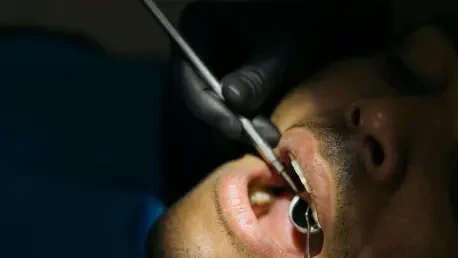

The immense challenge of accurately diagnosing oral cancer hinges on the precise and timely interpretation of clinical images, where even minor errors can lead to devastating consequences for patients, including delayed treatment and significantly lower survival rates. While advanced artificial intelligence models have demonstrated great potential in medical image analysis, many of the most powerful convolutional neural networks (CNNs) are computationally intensive. This high demand for processing power and energy creates a substantial barrier to their widespread adoption, rendering them impractical for a large number of clinical settings, particularly those in resource-limited regions that could benefit most from such technological support. This digital divide leaves many healthcare providers without access to tools that could revolutionize early detection and patient care.
A New Paradigm in Diagnostic Efficiency
A groundbreaking solution has emerged to address this critical gap: TriGWONet, a novel artificial intelligence model constructed upon a lightweight multibranch CNN architecture. This design represents a strategic move away from cumbersome, resource-heavy models. The “lightweight” nature of TriGWONet is its defining feature, signifying its capacity to operate with high efficiency on lower-specification devices without demanding extensive computational resources. This breakthrough is pivotal for democratizing advanced diagnostic technology, as it lowers the barrier to entry for clinics and hospitals worldwide. By making high-accuracy screening tools more accessible, healthcare practitioners in diverse environments can leverage this AI, potentially leading to a dramatic increase in the early detection of oral cancer, a factor universally acknowledged as crucial for improving treatment outcomes.
At the core of TriGWONet’s exceptional performance is the sophisticated integration of Gray Wolf Optimization (GWO), an advanced technique inspired by the hierarchical social dynamics and collaborative hunting strategies observed in gray wolf packs. Within the context of machine learning, the GWO algorithm artfully simulates this pack behavior to meticulously explore and exploit the solution space for the neural network’s parameters. This intricate process of fine-tuning is instrumental in simultaneously enhancing the model’s diagnostic accuracy and its operational efficiency. The result is a finely balanced system that not only processes images with remarkable speed but also delivers a superior degree of precision, a combination that is indispensable for fostering reliable clinical decision-making and building trust in AI-assisted diagnostics.
From Development to Clinical Application
The robustness and dependability of TriGWONet were rigorously established through a meticulous and comprehensive training phase. Researchers utilized a large and diverse dataset that contained thousands of oral cancer images, enabling the model to learn and recognize an extensive spectrum of cancerous and pre-cancerous features. This included everything from subtle, early-stage lesions that might be missed by the human eye to the more complex and advanced manifestations of the disease. The sheer diversity of this training data is a critical element, as it ensures the model’s ability to generalize its deep-learned knowledge to new, unseen images. This capability is vital for real-world application, where the model must account for the significant variations in how oral cancer presents across different patients, demographics, and populations.
The development of TriGWONet is a clear reflection of a broader, more significant trend within the field of medical AI: the decisive shift towards creating solutions that are not only powerful but also practical, accessible, and easily integrable into existing clinical workflows. The implications of deploying this technology are monumental. Healthcare professionals could utilize TriGWONet during routine examinations or specialized screenings to receive instantaneous, high-accuracy assessments of oral images. This acceleration of the diagnostic process allows clinicians to make quicker, more informed decisions regarding patient management, such as promptly ordering biopsies or initiating personalized treatment plans. Such a tool has the potential to create a paradigm shift in how oral cancer is monitored and managed, transitioning from a reactive approach to a more proactive model centered on early and decisive intervention.
Charting the Course for Responsible Innovation
Despite its immense potential, the deployment of advanced AI systems within the sensitive domain of healthcare is not without its inherent challenges and ethical considerations. It is crucial to address the need for robust mechanisms to protect patient data privacy, mitigate the potential for algorithmic bias that could inadvertently perpetuate existing health disparities, and establish clear, comprehensive regulatory frameworks to ensure the safety and efficacy of these powerful tools. A consensus is forming around the viewpoint that continuous and transparent collaboration among researchers, clinicians, policymakers, and ethicists is absolutely fundamental to navigating these complex challenges. Such a multi-stakeholder approach is essential for ensuring that artificial intelligence is implemented in a manner that is not only effective but also responsible and equitable for all.
Looking toward the future, the researchers behind this innovative model envision a significantly expanded role for the TriGWONet architecture. The model’s versatile and adaptable design holds the promising potential to be repurposed for the detection of other forms of malignancies simply by training it on different types of medical images, such as those from radiology or pathology. This ambition points toward the eventual development of a comprehensive, overarching AI platform designed for multi-cancer analysis, which could dramatically accelerate the pace of breakthroughs in cancer diagnosis across the board. Achieving such a visionary goal will undoubtedly depend on fostering robust interdisciplinary collaborations that synthesize deep expertise from a wide range of fields, including oncology, computer science, and bioinformatics, to drive the next wave of medical innovation.
A Foundational Leap for Medical AI
TriGWONet represented a significant and transformative advancement in the global fight against oral cancer. By masterfully combining a lightweight multibranch CNN with the sophisticated Gray Wolf Optimization technique, the model offered a powerful, accurate, and remarkably efficient solution for the complex task of oral cancer image classification. Its development not only promised a substantial improvement in diagnostic precision but also provided an accessible and practical tool that could democratize advanced healthcare, extending its reach far beyond well-resourced medical centers. TriGWONet exemplified the future of medical diagnostics, where cutting-edge technology and pressing clinical needs were harmonized to foster early detection, enhance patient care, and ultimately save lives. It stood as a powerful testament to the transformative potential of artificial intelligence when applied with innovation, scientific rigor, and deep compassion for human health.