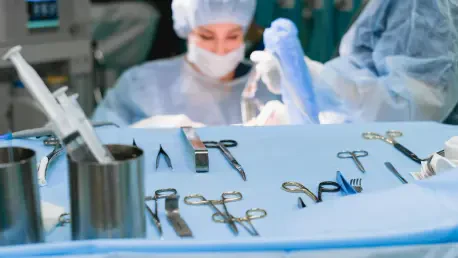

For the tens of thousands of individuals undergoing breast-conserving surgery each year, the profound relief of having a tumor removed is too often overshadowed by the daunting possibility of a second operation. The persistent challenge of ensuring every last cancerous cell is excised during the initial procedure means that a significant number of patients face the emotional and physical trauma of returning to the operating room. This clinical reality not only places a heavy burden on those navigating a cancer diagnosis but also strains the resources of the healthcare system. An innovative imaging technology developed by the Perth-based medical device company OncoRes Medical is now advancing through critical trials, offering a new level of surgical precision that could finally break this distressing cycle and redefine the standard of care for lumpectomy procedures. This system promises to provide surgeons with a real-time, intraoperative guide to achieve clear margins, potentially making the need for repeat surgeries a relic of the past.
A New Paradigm in Surgical Precision
At the forefront of this medical evolution is the Elora Quantitative Micro-Elastography (QME) Imaging System, a device engineered to equip surgeons with immediate and detailed feedback directly within the operating theater. Following the removal of the primary tumor specimen during a lumpectomy, a specialized probe is inserted into the resulting surgical cavity to meticulously scan the surrounding tissue. The system’s core technology is based on the biophysical principle that cancerous tissue often exhibits a higher degree of stiffness compared to healthy, benign tissue. By leveraging micro-elastography to measure these subtle variations in elasticity at a microscopic level, Elora generates high-resolution, three-dimensional maps of the surgical site. This sophisticated imaging allows surgeons to visualize and precisely identify residual cancer that may be too small to feel or see, providing a clear roadmap for a more complete and definitive initial surgery.
The ultimate clinical objective of the Elora system is to significantly improve a surgeon’s ability to achieve “clear margins,” the critical indicator that no cancerous cells have been left behind at the edge of the excised tissue. By providing an unprecedented level of intraoperative detail, the technology empowers surgeons to locate and remove any remaining pockets of disease during the primary procedure. This capability is designed to drastically lower the rate of positive margins, which is the leading cause of re-excision surgeries. By ensuring the complete removal of the tumor in a single session, the system aims to spare patients the anxiety and physical toll associated with follow-up operations. Currently in the research and development phase, the Elora system is undergoing rigorous testing to validate its potential to transform the surgical oncology landscape and improve outcomes for countless patients.
Addressing a Critical Clinical Need
The urgency for a solution like the Elora system is underscored by a stark reality in breast cancer treatment. According to OncoRes Medical’s CEO, Dr. Katharine Giles, approximately one in every five women who undergo breast-conserving surgery must return for a second operation because microscopic tumor cells were missed during the first procedure. These repeat surgeries are far more than a simple inconvenience; they introduce a higher risk of surgical complications, prolong recovery times, and inflict a significant psychological and physical burden on patients who are already coping with the immense stress of a cancer diagnosis. Furthermore, the necessity for re-operations creates a substantial financial strain not only on patients and their families but also on the broader healthcare system, contributing to increased costs and inefficient use of hospital resources. OncoRes Medical’s mission is centered on directly confronting and mitigating this pervasive clinical challenge.
Propelling this mission forward is a powerful injection of capital that signals strong investor confidence in the company’s vision and technology. OncoRes Medical recently closed a private funding round, securing an impressive AUD $27 million. This significant financial milestone, led by Brandon Capital Partners’ BB6 Fund with participation from Morgans and Radar Ventures, provides the necessary resources to accelerate the Elora system’s journey from development to commercial readiness. The funds are strategically allocated to support an ongoing Australian clinical trial program, facilitate continued product refinement, and finance the essential regulatory work and manufacturing preparations required for a future pivotal trial in the United States. This investment also enables the expansion of the OncoRes team and supports exploratory research into applying QME technology to other cancer types, with prostate cancer identified as a key area of interest.
Charting a Course to Market Approval
OncoRes is navigating a structured and rigorous pathway to validate the efficacy of the Elora system and secure regulatory clearance in major global markets. A crucial component of this strategy is a significant Australian clinical trial, now underway across six hospitals in Western Australia and Victoria. This study, which will enroll over 110 breast cancer patients, represents a landmark moment for the technology as it marks the first time the Elora device will be used interventionally during live surgical procedures. The data gathered from this trial will be instrumental in demonstrating the system’s safety and effectiveness in a real-world clinical setting, providing the foundational evidence needed to support future regulatory submissions and build confidence within the surgical community. This carefully designed trial is a critical step toward transforming a promising innovation into an accessible tool for surgeons.
The company’s path to the U.S. market was significantly bolstered when the Elora system received Breakthrough Device Designation from the U.S. Food and Drug Administration (FDA) in 2020. This important designation is reserved for medical technologies that have the potential to provide more effective treatment for life-threatening or debilitating conditions, and it serves to support and potentially expedite the technology’s development and review process. To navigate this next phase of growth, OncoRes strengthened its leadership by appointing Renee Ryan, a highly experienced global leader in the healthcare and medical device sectors, to its Board of Directors. Her expertise proved instrumental in guiding the company through its U.S. clinical milestones and preparing for a long-term commercial launch. The company’s innovative approach, which combined a novel technological solution with a robust clinical and regulatory strategy, underscored a focused effort to transform the standard of care.