
The landscape of cardiovascular intervention is undergoing a radical transformation as clinicians increasingly demand higher-resolution data to guide complex stenting and arterial repair procedures. Gentuity LLC and GE HealthCare have established a commercial agreement to bring High-Frequency Optical Coherence Tomography (HF-OCT) to the forefront of the American medical market. This collaboration integrates Gentuity’s Vis-Rx® PRIME Micro-Imaging Catheter into GE HealthCare’s vast interventional infrastructure. By providing a 1.8 French ultra-low-profile device, the partnership addresses the technical limitations often found in smaller or more calcified vessels. The initiative is not merely a supply chain arrangement but a concerted effort to redefine how Percutaneous Coronary Interventions (PCIs) are performed by ensuring that high-definition diagnostic tools are seamlessly available in every modern catheterization lab. This synergy aims to minimize procedural risks while maximizing the long-term success of cardiac treatments through superior intraprocedural visualization.
Technological Breakthroughs in Intravascular Imaging
Precision Through High-Frequency Optical Coherence Tomography
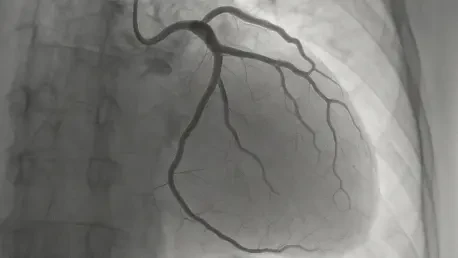
The advent of HF-OCT marks a significant departure from standard imaging modalities, offering a level of cross-sectional clarity that was previously difficult to achieve in real-time environments. Unlike traditional methods that may provide grainy or delayed feedback, this system delivers high-resolution imagery that allows physicians to visualize the intricate layers of the vessel wall and the exact composition of atherosclerotic plaques. This precision is vital when determining the appropriate stent size or assessing the stability of a lesion before intervention. By utilizing advanced light-based technology, the HF-OCT system captures data at a frequency that significantly reduces image noise, providing a crisp view of the arterial landscape. This clarity is especially critical in 2026, where the complexity of patient cases continues to rise, requiring tools that can distinguish between various tissue types with absolute certainty. Such detailed feedback ensures that every decision made during a procedure is grounded in high-fidelity evidence.
Complementing the imaging system is the Vis-Rx® PRIME Micro-Imaging Catheter, an engineering marvel that features an ultra-low-profile 1.8 French design, enabling it to reach depths of the coronary anatomy once thought inaccessible. The ability to image 100 mm of a vessel in a single second via a high-speed “pullback” mechanism represents a monumental shift in efficiency, allowing for a comprehensive assessment of long lesions without prolonged occlusion of blood flow. This rapid data acquisition is essential for maintaining patient safety while providing the clinician with a complete longitudinal view of the vessel in a matter of moments. Because the catheter is so thin, it navigates through tortuous paths and tight stenoses with minimal resistance, reducing the mechanical stress on the artery. This capability ensures that the most challenging anatomical structures can be mapped with the same level of accuracy as simpler cases, effectively standardizing the quality of care across a diverse patient population.
Bridging the Gap in Clinical Accessibility
A primary driver of this partnership is the goal of moving specialized imaging from a luxury within academic centers to a standard tool in community hospitals across the United States. GE HealthCare’s extensive distribution network provides the necessary logistics to place Gentuity’s advanced hardware into a much larger volume of cardiac catheterization labs. This expansion means that more patients, regardless of their geographic location, can benefit from the precision of HF-OCT guided interventions. The collaboration also involves a robust clinical support structure, where specialized teams provide hands-on training to ensure that medical staff can master the nuances of high-frequency imaging. By lowering the barriers to entry for this technology, the two companies are fostering an environment where data-driven cardiology is the norm. This democratization of high-tech diagnostics ensures that the latest advancements in vascular science are utilized to improve outcomes for the broadest possible demographic of cardiac patients.
By integrating these tools into a broader commercial portfolio, the partnership creates a unified point of access for healthcare systems looking to modernize their interventional suites. Hospitals can now procure both the imaging hardware and the broader interventional platforms through a single, streamlined channel, which simplifies the administrative and technical burden of upgrading medical equipment. This strategic alignment also ensures that technical support and software updates are handled with a high degree of coordination, minimizing downtime and maximizing the utility of the devices. As clinical adoption grows, the wealth of data generated by these systems will likely lead to new insights into coronary artery disease, further refining the treatment protocols used by cardiologists. This move toward a more accessible and integrated diagnostic landscape represents a significant step in the ongoing effort to reduce the global burden of cardiovascular disease through better technology and more informed clinical practice.
Clinical Integration and Strategic Market Trajectory
Enhancing Decision-Making and Workflow Efficiency
Integrating these sophisticated tools into the GE HealthCare ecosystem facilitates a more intuitive workflow, where diagnostic data is immediately actionable within the “intelligent” catheterization lab environment. The seamless connection between Gentuity’s hardware and GE’s interventional platforms means that clinicians no longer have to struggle with fragmented systems or manual data transfers that can disrupt the rhythm of a procedure. Instead, the high-definition images are processed and displayed in a manner that supports rapid, confident decision-making, which is crucial during the high-stakes moments of a cardiac intervention. This integration is designed to reduce the overall procedural time, which not only improves lab throughput but also lessens the duration of anesthesia and contrast exposure for the patient. By prioritizing a “connected” approach, the partnership ensures that the focus remains on the clinical outcome rather than the technical complexities of operating multiple disparate devices.
The impact of this collaboration extends beyond the hardware itself, fostering a culture of clinical confidence that is essential for tackling the most difficult cardiovascular pathologies. When physicians have access to real-time, full-vessel clarity, the planning phase of a PCI becomes significantly more meticulous, allowing for the precise placement of stents and the thorough evaluation of post-deployment results. This level of detail helps in identifying complications such as dissections or malapposed stents that might be missed by lower-resolution imaging, thus reducing the likelihood of future adverse events. The synergy between these companies empowers medical professionals to push the boundaries of what is possible in the cath lab, knowing they have the support of advanced diagnostics that are both reliable and easy to deploy. This confidence is a key driver in the adoption of new protocols that prioritize long-term vascular health, ensuring that patients receive treatments that are not only effective in the short term but also durable over many years.
Strategic Growth and Industry Standards
This commercial agreement serves as a blueprint for how established industry giants and specialized technology firms can collaborate to accelerate the deployment of life-saving innovations. By leveraging GE HealthCare’s massive commercial footprint, Gentuity can scale its technological reach far more rapidly than would be possible through independent efforts alone, bringing these tools to a broader array of medical centers across the United States. This expansion is supported by joint clinical training and technical support initiatives, ensuring that every facility adopting these systems is equipped with the knowledge to utilize them to their full potential. Furthermore, the partnership signals a shift in the market toward integrated solutions where the value is found in the interplay between high-performance hardware and sophisticated digital analytics. As other players in the industry observe this success, it is likely to spark further collaborations that prioritize interoperability and user-centric design, ultimately benefiting the entire healthcare sector.
The finalization of this partnership established a clear path forward for the routine integration of ultra-high-resolution imaging into every cardiac interventional procedure. Healthcare providers should now evaluate their current cath lab capabilities and consider the long-term clinical and economic benefits of transitioning to high-frequency OCT platforms. To stay competitive and provide the highest level of care, organizations must prioritize the adoption of tools that offer superior visualization and streamlined workflows. Looking ahead, the focus should remain on developing unified software environments that can synthesize imaging data with other physiological metrics, creating a truly holistic view of patient health. This proactive approach to technology integration will be essential for medical centers aiming to lead the industry in cardiovascular excellence. Leaders in the field have noted that the successful implementation of these systems provides a template for future innovations, where the goal is always to provide clinicians with the clearest possible view of the challenges they face inside the human heart.