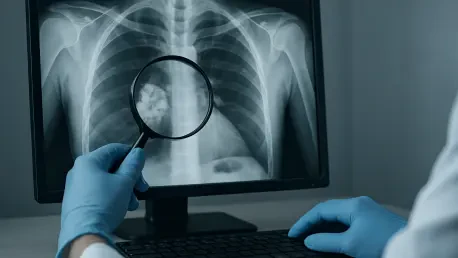

In the ongoing battle against lung cancer, early detection remains the most powerful weapon, yet the subtle nature of its initial signs often leads to diagnoses at advanced stages when treatment options are limited. Two prominent Dutch medical institutions, Catharina Ziekenhuis in Eindhoven and University Medical Center (UMC) Utrecht, are now pioneering a significant technological advancement by integrating a sophisticated artificial intelligence solution directly into their diagnostic processes. This strategic implementation aims to fundamentally shift the paradigm from reactive treatment to proactive detection, leveraging AI to identify potential lung cancers on chest X-rays with greater speed and consistency. By empowering radiologists with this advanced tool, the hospitals are not only enhancing their diagnostic capabilities but are also establishing a new standard of care that could dramatically improve patient outcomes across the nation and serve as a model for healthcare systems worldwide. This initiative represents a confident step forward in harnessing technology to address one of modern medicine’s most persistent challenges.
Integrating Advanced Diagnostics into Clinical Workflows
The core of this transformative project is the seamless integration of Qure.ai’s qXR software into the existing radiology workflows at both Catharina Ziekenhuis and UMC Utrecht, ensuring minimal disruption while maximizing clinical impact. This AI technology functions as an intelligent assistant for radiologists, meticulously analyzing chest X-rays to automatically flag suspicious lung nodules that may be too small or faint for the human eye to easily detect. A particularly innovative aspect of this implementation is the establishment of opportunistic screening pathways. This means the AI scrutinizes every chest X-ray for signs of lung nodules, even if the scan was ordered for an entirely different reason, such as investigating a persistent cough or a suspected rib fracture. This proactive approach effectively creates a wide-reaching, passive screening program, catching potential malignancies at their earliest and most treatable stages, long before a patient would typically be referred for specialized cancer screening. This method transforms routine diagnostic imaging into a powerful tool for early-stage cancer discovery.
The adoption of this AI system is driven by a strong consensus among medical experts that such technology is essential for the future of radiology, offering benefits that extend far beyond simple nodule detection. Representatives from both participating hospitals have underscored the AI’s critical role in enhancing the consistency of clinical decision-making. By providing an objective analysis, the software helps reduce the inherent variability in referral decisions that can occur between radiologists with different subspecialties or levels of experience. This is particularly valuable in a training environment like UMC Utrecht, where it provides a reliable benchmark for junior doctors and residents. Furthermore, there is growing evidence that this technology not only improves overall detection rates but also increases the positive predictive value for subsequent referrals, meaning that the patients who are flagged are more likely to have a clinically significant finding. This improves the efficiency of the diagnostic pipeline and ensures that specialist resources are focused on the patients who need them most.
A Strategic Shift Toward Proactive Healthcare
This initiative at Catharina Ziekenhuis and UMC Utrecht is part of a much broader and accelerating trend of AI adoption within the Dutch healthcare system, with other major institutions like Erasmus Medical Center in Rotterdam also engaging in similar collaborations. This widespread movement signifies a deliberate, strategic pivot in the national approach to oncology. The overarching goal, as articulated by the technology’s developers, is to reorient the focus from managing late-stage disease to championing early detection and intervention. The AI effectively acts as a tireless and ever-vigilant second set of eyes, systematically reviewing vast numbers of images without fatigue and accelerating this crucial transformation. By embedding this capability directly into standard clinical practice, these hospitals are unlocking significant clinical, operational, and economic value, creating a more resilient and effective healthcare ecosystem prepared for future challenges.
The successful deployment of this advanced AI for lung nodule detection marked a pivotal moment in Dutch healthcare, fundamentally altering the landscape of early cancer diagnosis. This effort did not merely introduce a new tool; it established a new and elevated clinical standard, proving that integrating intelligent systems into routine diagnostics was not only feasible but essential for modern medicine. Academic centers, in particular, recognized this as a dual victory. While patient care was immediately enhanced through more accurate and timely diagnoses, the initiative also provided an invaluable framework for educating the next generation of clinicians. By working alongside AI-enabled diagnostics from the outset of their training, these future doctors developed the skills and mindset necessary to thrive in a technologically advanced medical environment. This foresight ensured that the nation’s healthcare system was not just adopting new technology, but was also cultivating the human expertise required to sustain and build upon these innovations for decades to come.