
The modern medical landscape is currently undergoing a monumental shift from reactive treatment to proactive health management, a movement largely propelled by the innovative efforts of the medical technology startup PONS. Born from pioneering research at Rutgers University, the company is dedicated to fundamentally redefining how chronic conditions are identified and monitored in an increasingly decentralized healthcare environment. By integrating physics-guided software with existing ultrasound technology, PONS aims to convert what would typically be late-stage medical crises into manageable health events. This initiative is designed to provide patients with the “gift of time,” ensuring that life-threatening diseases are intercepted when they are most treatable. Through this approach, the company seeks to dismantle the traditional barriers that often delay diagnosis, ultimately transforming the prognosis for millions of individuals facing chronic illness.
The motivation driving this technological advancement is deeply personal for the founder, Dr. Ilker Hacihaliloglu, whose professional mission was forged by the loss of family members to diseases detected too late for effective intervention. This emotional catalyst is reflected in the company’s name; “PONS” refers both to a critical neurological bridge in the human brain and the Latin word for bridge. This dual meaning symbolizes the objective to connect high-quality diagnostic power with underserved communities, ensuring that geographical or economic barriers do not dictate a patient’s survival. By bridging the gap between sophisticated hospital-grade imaging and community-based care, the startup addresses a systemic failure in global health. The vision is clear: high-fidelity diagnostics should be a universal right rather than a privilege reserved for those with immediate access to major urban medical centers.
Bridging the Gap in Diagnostic Technology
Enhancing Imaging through Physics and Standardized Data
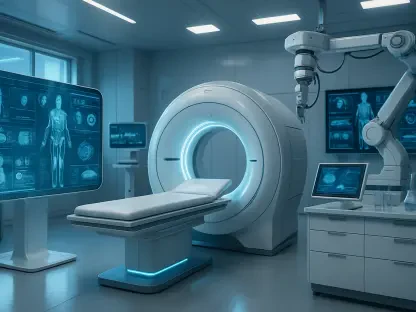
Traditional ultrasound remains a cornerstone of medical imaging due to its portable, non-radiating, and cost-effective nature, yet its clinical utility is often limited by inconsistent image quality and operator dependency. PONS addresses these inherent technical limitations by utilizing physics-guided processing to refine the structural representation of biological tissues at a fundamental level. Unlike traditional software that simply applies filters to an existing image, this approach reconstructs the data by accounting for the physical properties of sound waves as they interact with different densities. Such enhancement makes subtle abnormalities, such as early-stage tumor margins or the minute signs of organ degradation, significantly more visible to the human eye. By focusing on the underlying physics of acoustic propagation rather than just hardware specifications, the technology provides a much clearer and more reliable window into the human body.
A persistent hurdle in modern diagnostics is the lack of consistency across different imaging devices, which frequently leads to fragmented data and unreliable longitudinal tracking. PONS introduces a “vendor-neutral” approach that harmonizes data across various ultrasound machines, ranging from high-end hospital systems to affordable handheld tablets used in field clinics. This standardization ensures that diagnostic outputs remain reliable and comparable regardless of the specific hardware used or the environment in which the scan was performed. Consequently, clinicians can trust the data they receive, whether it originates from a world-class radiology suite or a remote mobile clinic. This level of data integrity is essential for maintaining a consistent patient history, allowing doctors to monitor the progression of a condition over months or years with total confidence that the changes they see are clinical, not technical.
Democratizing Care through Intuitive Navigation Systems
To further democratize healthcare and expand the reach of professional diagnostics, PONS has developed an advanced navigation system designed specifically for non-specialist users. This virtual guide provides real-time, interactive instructions to caregivers, such as nurses or home-health aides, on how to precisely manipulate the ultrasound probe to achieve optimal results. By removing the strict requirement for years of specialized sonographer training to capture high-quality data, the technology effectively moves the diagnostic process from the hospital directly to the patient’s bedside. This innovation is particularly transformative for elderly patients or those with mobility issues who find frequent hospital visits taxing. The software acts as an expert over the shoulder of the provider, ensuring that the data collected in a living room is just as clinically valid as that collected in a specialized imaging center.
The implementation of this navigation technology also addresses the growing shortage of specialized medical personnel by empowering a broader range of healthcare workers to perform essential screenings. As the software guides the user to the correct anatomical plane, it automatically validates the quality of the capture, preventing the need for repeat scans and reducing patient anxiety. This streamlined workflow allows for more frequent monitoring of chronic conditions, which is the key to catching early deviations from a healthy baseline. Moreover, by simplifying the technical aspects of ultrasound, the system allows the caregiver to focus more on the patient’s immediate comfort and overall care plan. This shift not only improves the efficiency of healthcare delivery but also fosters a more patient-centered approach where sophisticated diagnostics become a seamless part of routine home-based medical checkups.
Advancing AI Accuracy and Clinical Validation
Strengthening Data Models and Proven Medical Outcomes
Artificial intelligence in the medical field is only as effective as the quality and diversity of the data used to train it, and PONS solves the critical “data gap” by reducing noise and systematic bias. The technology allows for the scaling of existing datasets by up to 50 times, providing a robust and balanced foundation for AI models that are free from the racial or geographic disparities that often plague medical algorithms. By feeding high-quality, standardized inputs into these complex algorithms, PONS enables a level of diagnostic precision that was previously unattainable with standard, unrefined ultrasound data. This ensures that the AI can recognize patterns across a wide variety of body types and demographics, making the tool more equitable and effective for a global population. The result is a more reliable automated second opinion that assists clinicians in spotting the earliest signs of disease.
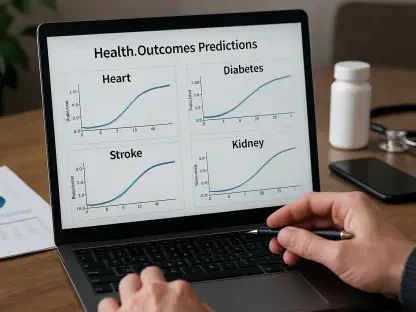
The efficacy of this platform has been empirically validated through extensive clinical research, most notably in a landmark study involving the analysis of over 62,000 breast ultrasound scans. In a high-profile collaboration with the Mayo Clinic, researchers found that AI models trained on PONS-enhanced data demonstrated a 64% improvement in diagnostic accuracy compared to those using standard images. These findings prove that the software can reveal minute structural details that traditional imaging typically misses, assisting radiologists in making critical decisions regarding tumor size, shape, and vascularity with far greater confidence. This dramatic increase in accuracy translates directly to fewer false positives and, more importantly, fewer missed diagnoses. By providing a clearer picture of the pathology, the technology reduces the need for invasive biopsies and allows for more targeted, less aggressive treatment plans when the disease is caught early.
Optimizing Clinical Workflows and Reducing Professional Burnout
Beyond improving patient outcomes, the integration of PONS technology significantly optimizes clinical workflows, providing much-needed relief to a healthcare system currently struggling with professional burnout. By automating the preliminary analysis of ultrasound images and highlighting areas of concern, the software allows radiologists to prioritize the most urgent cases in their queue. This targeted approach reduces the cognitive load on specialists, who are often forced to review hundreds of images in a single shift. The physics-guided enhancement ensures that the images they do review are of the highest possible clarity, reducing the time spent squinting at “noisy” data or requesting re-scans. This efficiency is vital in a high-stakes environment where every minute saved in the diagnostic phase can lead to a faster initiation of life-saving treatment protocols.
This technological assistance also serves as a vital safeguard against human error, which can occur when clinicians are overworked or fatigued. The AI acts as a consistent, objective observer that does not suffer from exhaustion, providing a reliable baseline for every scan performed within a network. This synergy between human expertise and machine precision creates a more resilient diagnostic framework that can handle higher patient volumes without sacrificing the quality of care. As hospitals continue to face staffing challenges, these AI-augmented tools become essential infrastructure rather than just optional upgrades. The ability to maintain high diagnostic standards under pressure ensures that the healthcare system remains robust and capable of delivering timely results to all patients, regardless of the current administrative or clinical workload of the facility.
Expanding Access and Future Healthcare Frontiers
Promoting Equity and Diversifying Clinical Applications
As the global healthcare industry moves toward “hospital-at-home” models, PONS serves as the essential “brain” that allows portable hardware to function at a professional grade. While handheld ultrasound devices often sacrifice image resolution for mobility and lower cost, this software restores that lost quality, making decentralized care a viable clinical reality. This shift is particularly vital for “healthcare deserts”—rural or underrepresented regions where residents may live hundreds of miles from the nearest major hospital. By enabling high-quality longitudinal monitoring in these areas, PONS ensures that patients can track disease progression or treatment efficacy without the need for frequent and expensive travel. This capability levels the playing field, ensuring that a patient’s zip code does not determine their access to the highest standard of early disease detection.
The growth of PONS has been carefully fostered by the Rutgers innovation ecosystem, which provided the necessary patenting and early-stage funding to transition from laboratory research to a commercial application. Today, the company is rapidly expanding its focus beyond traumatic brain injury and breast imaging to include the detection of early-stage liver disease and other metabolic conditions. This inherent versatility suggests that the physics-guided approach could eventually be applied to other imaging modalities, such as X-rays and mammography, solidifying its role as a foundational pillar in the future of global diagnostic equity. By continuously diversifying its clinical applications, the company is building a comprehensive diagnostic suite that can address a wide array of chronic health challenges. This expansion ensures that the benefits of physics-guided AI are felt across the entire spectrum of modern medicine.
Future Directions for Integrated Diagnostic Ecosystems
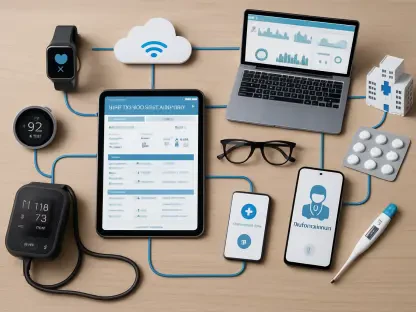
Looking toward the immediate future, the primary challenge for healthcare providers will be the seamless integration of these advanced diagnostic tools into existing digital infrastructures. Future considerations must focus on establishing interoperability standards that allow PONS-enhanced data to flow freely between home-health devices, primary care physician portals, and specialist hospital databases. This will enable a truly integrated diagnostic ecosystem where a patient’s health data is continuously updated and analyzed in real-time, regardless of where the data was originally captured. Developers and healthcare administrators should prioritize the adoption of cloud-based platforms that can handle the massive computational requirements of physics-guided AI. This infrastructure will be the backbone of a new era of personalized medicine, where the focus remains on the patient’s long-term wellness rather than just episodic crisis management.
In the coming years, the role of the patient in their own diagnostic journey was redefined by the accessibility of these high-fidelity tools. Future healthcare models should encourage the use of community-based screening programs that utilize PONS technology to identify at-risk populations before symptoms even manifest. By implementing such proactive strategies, health systems can significantly reduce the long-term costs associated with treating advanced-stage chronic diseases. Stakeholders are encouraged to invest in training programs for mid-level providers to maximize the utility of these autonomous navigation systems. Ultimately, the successful deployment of this technology will depend on a collaborative effort between tech innovators, policy makers, and clinical leaders to ensure that the “gift of time” is delivered to every patient. The transition to a more equitable and effective diagnostic future is already underway, driven by the realization that early detection is the most powerful tool in the medical arsenal.