
Modern medical professionals are currently grappling with an unprecedented deluge of biometric information streaming from millions of wrist-worn sensors and high-tech biometric patches. While the sheer volume of data is staggering, the industry has reached a crossroads where the ability to collect information has far outpaced the capacity to interpret it in a meaningful clinical setting. This data surplus represents a double-edged sword: it offers a window into the daily lives of patients that was previously inaccessible, yet it remains largely untapped due to a fundamental disconnect between consumer hardware and professional medical workflows. The transition from mere fitness tracking to clinical health intelligence represents the current frontier of digital medicine, marking a pivotal shift in how we approach human longevity. This shift is not being driven by the arrival of more sensitive sensors alone, but rather by the development of sophisticated software ecosystems that can filter, contextualize, and validate raw numbers. Consequently, the challenge for modern healthcare providers is no longer the acquisition of data, but rather the creation of architectural bridges that turn noisy signals into life-saving insights that can be utilized in real-time.
The Limitations of Consumer-Facing Applications
Structural Deficiencies: Traditional Fitness Apps
Mainstream consumer applications have historically prioritized user engagement and aesthetic design over clinical utility, leading to a landscape defined by fragmented data silos. A typical user might record their cardiovascular activity on a proprietary smartwatch, log their nutritional intake in a third-party calorie counter, and track their sleep patterns using an independent bedside sensor. These applications rarely possess the interoperability required to exchange information seamlessly, which prevents a comprehensive analysis of how these variables interact. For instance, a physician cannot easily see how a change in diet recorded in one app might be influencing the heart rate variability patterns logged in another. This fragmentation forces patients and providers to manually piece together a mosaic of health information, a process that is prone to error and omission. Without a unified software environment, the potential for identifying complex physiological correlations is lost, leaving the data as a collection of interesting but ultimately isolated snapshots of a person’s physical state that offer little to no long-term diagnostic value for the medical community.
Furthermore, the underlying logic of these consumer platforms is often built upon generic population averages that fail to account for the unique physiological baselines of individual users. A one-size-fits-all approach to health metrics, such as the standard goal of ten thousand steps or eight hours of sleep, does not consider pre-existing conditions, age-related factors, or specific medication regimens that may alter what is considered normal for a specific patient. In a clinical context, a sudden drop in resting heart rate might be a sign of improved fitness for one individual, but a dangerous side effect of a new medication for another. Current fitness applications lack the contextual intelligence to make these distinctions because they do not have access to the user’s broader electronic health record or specialized medical background. This absence of clinical context means that the advice provided by these apps is often superficial or, in some cases, potentially misleading to the end user. To move forward, the industry must move away from these generalized algorithms and toward personalized models that understand the individual’s medical history and current health status in a truly dynamic and responsive manner.
Regulatory and Security Shortfalls: The Trust Gap
Beyond the functional limitations of consumer apps, there is a significant discrepancy in how data security and regulatory compliance are handled compared to professional medical systems. Many popular fitness trackers operate in a legal gray area where they are not classified as medical devices, allowing them to bypass the rigorous validation processes required for clinical tools. This lack of oversight can lead to inconsistencies in sensor accuracy, where heart rate or oxygen saturation readings may fluctuate wildly during intense physical activity or across different skin tones. For a healthcare provider, making a diagnosis based on unverified data is a liability risk that many are unwilling to take. Furthermore, the data privacy policies of many consumer tech companies are often more focused on targeted advertising than on the stringent protections required by healthcare regulations. This creates a trust gap that prevents the full integration of wearable data into the professional medical ecosystem, as clinicians must be certain that the data they are viewing is both accurate and securely handled.
The architectural integrity of these consumer platforms often fails to meet the end-to-end encryption standards necessary for transmitting sensitive health information between patients and doctors. In a world where cyber threats are increasingly sophisticated, the possibility of a breach involving intimate physiological data is a catastrophic concern for both patients and healthcare organizations. Custom healthcare software addresses this by building security into the foundation of the platform, ensuring that every data point is encrypted at rest and in transit. These systems are designed to provide comprehensive audit trails, allowing administrators to see exactly who accessed what data and when. Without these robust security frameworks, the dream of utilizing wearable data for clinical purposes remains a distant possibility rather than a practical reality. Bridging this gap requires a commitment to building software that treats biometric data with the same level of care and legal protection as a traditional hospital record, ensuring that patient privacy is never sacrificed for the sake of convenience or user engagement.
The Architecture of Custom Healthcare Solutions
Technical Superiority: Integration and Analytics
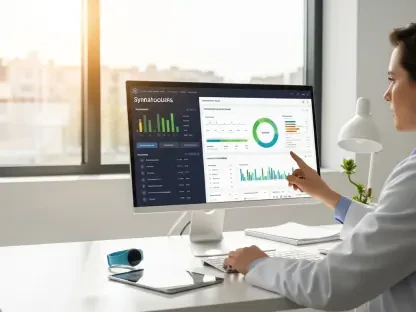
Custom healthcare software distinguishes itself by acting as a high-performance engine that can ingest and process disparate data streams from a variety of hardware sources. Unlike consumer apps that are tied to a specific brand of device, these specialized platforms utilize advanced Application Programming Interfaces to aggregate data from smartwatches, continuous glucose monitors, and even smart clothing simultaneously. This multi-stream ingestion allows for the creation of a holistic physiological profile that reflects the complex reality of human health. By viewing heart rate data alongside blood glucose levels and respiratory rates, the software can identify patterns that would be invisible if the data points were viewed in isolation. This architectural flexibility is essential for modern medicine, as it allows providers to select the best hardware for a patient’s specific needs without being limited by software compatibility issues. The ability to harmonize these data streams is the first step in turning raw numbers into a reliable clinical tool that can support complex medical decisions.
At the heart of these custom solutions lies a layer of AI-driven clinical analytics that goes far beyond simple threshold alerts. These systems use machine learning models trained on vast datasets to identify subtle markers of physiological stress or impending illness that might escape human observation. For example, a custom platform can detect a microscopic trend of increasing nocturnal heart rate coupled with a decrease in blood oxygen saturation, which might indicate the onset of a respiratory infection days before the patient feels any symptoms. This predictive capability is what transforms a wearable from a reactive recording device into a proactive health guardian. By applying clinically grounded logic to the data, the software can filter out the noise and present the physician with only the most relevant information. This prevents “alarm fatigue,” a common problem in healthcare where providers are overwhelmed by a constant stream of low-value notifications. Instead, the software ensures that every alert is backed by data-driven evidence, allowing for more precise and timely interventions.
Seamless Synchronization: Bridging Life and Clinic
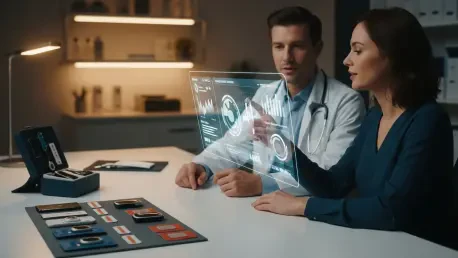
One of the most transformative features of custom healthcare software is its ability to synchronize directly with Electronic Health Records, creating a continuous loop of information between the patient’s home and the doctor’s office. Historically, a patient’s medical record was a static document, updated only during infrequent clinical visits. With the integration of wearable data, the EHR becomes a living entity that reflects the patient’s daily physiological reality. This synchronization allows clinicians to see how a patient’s heart rate or blood pressure responds to real-world stressors, exercise, and sleep patterns, providing a level of detail that a standard office exam could never replicate. When a patient reports feeling unwell, the doctor can look back at weeks of objective data to find the root cause, rather than relying solely on the patient’s subjective memory. This connectivity is the backbone of a modern, data-driven healthcare system that prioritizes continuous monitoring over periodic check-ups.
To maintain the highest standards of safety and efficacy, these platforms are built within a framework of rigorous security and compliance that exceeds the capabilities of standard consumer software. Every component of the system, from the data ingestion layer to the user interface, is designed to meet the strict requirements of international health regulations. This includes the implementation of multi-factor authentication, role-based access controls, and sophisticated encryption protocols that protect the data at every stage of its journey. Beyond just security, these systems are also designed for scalability, allowing healthcare organizations to monitor thousands of patients simultaneously without a loss in performance. This level of technical sophistication is necessary to ensure that the transition to digital health intelligence is both sustainable and safe for the entire population. By providing a secure and integrated environment for data analysis, custom healthcare software empowers both patients and providers to take control of health outcomes in a way that was once thought impossible.
Practical Impact on Patient Outcomes
Proactive Management: Cardiovascular and Chronic Health
The marriage of wearable technology and custom analytical software has fundamentally altered the management of cardiovascular health by enabling the detection of conditions that often remain hidden during traditional screenings. Atrial fibrillation, a leading cause of stroke, is frequently intermittent, meaning it may not occur while a patient is sitting in a doctor’s office. However, with continuous monitoring through a smartwatch and a custom software platform, these irregular rhythms can be captured and flagged in real-time. The software can then automatically generate a report for the patient’s cardiologist, providing the necessary evidence for a quick and accurate diagnosis. This early detection capability allows for the initiation of treatment long before a major cardiac event occurs, significantly reducing the risk of long-term disability or death. By turning the patient’s wrist into a 24-hour cardiac monitor, we are effectively extending the reach of the clinic into the everyday lives of those at risk.
For patients living with chronic conditions such as type 2 diabetes or hypertension, this technology offers a path toward a more proactive and less invasive care model. Continuous glucose monitors integrated with custom software provide a real-time view of how specific foods, activities, and stress levels affect blood sugar. Instead of reacting to a high reading after it happens, the software can identify trends and suggest adjustments to medication or lifestyle choices to keep the patient within their target range. This continuous feedback loop empowers patients to make better decisions in the moment, while also providing their care team with the data needed to fine-tune their treatment plan. The result is a more stable health profile and a significant reduction in the emergency room visits that often stem from poorly managed chronic diseases. By shifting the focus from crisis management to daily optimization, these integrated systems are helping patients lead healthier, more active lives with a much greater sense of security.
Optimization and Recovery: From Athletes to Post-Op Care
The application of clinical health intelligence extends beyond the management of disease and into the realm of human performance and recovery. In the world of professional sports, coaches and trainers are using integrated platforms to monitor the physiological “readiness” of their athletes. By analyzing metrics such as sleep quality, heart rate variability, and training load, these systems can predict when an athlete is at a high risk for injury or burnout. This allows for the customization of training schedules, ensuring that athletes are pushed to their limits only when their bodies are fully recovered. This same logic is being applied in the corporate world, where organizations are using wellness platforms to help employees manage stress and avoid the physical and mental tolls of burnout. By providing individuals with objective data about their own physiological state, these systems foster a culture of health that is based on evidence rather than intuition, leading to improved productivity and long-term well-being.
In the clinical setting, the period following a major surgical procedure is often the most critical and the most difficult to monitor once the patient is discharged. Custom software is now filling this gap through Remote Patient Monitoring programs that track vital signs as patients recover in the comfort of their own homes. These systems can monitor surgical site temperature to detect early signs of infection, track mobility to ensure recovery is progressing as expected, and monitor cardiac and respiratory health to prevent complications. If any metric falls outside of the expected range, the care team is immediately notified, allowing for a telehealth consultation or a return to the clinic before the situation becomes an emergency. This not only improves patient outcomes but also reduces the burden on hospital resources by preventing unnecessary readmissions. The ability to provide high-quality, continuous care outside of the hospital setting is a major milestone in the evolution of modern medicine, making the recovery process safer and more efficient for everyone involved.
Navigating Challenges and Future Directions
Ethical Governance and Technical Accuracy
As we move deeper into this data-driven era, the medical community must confront the persistent challenges of sensor accuracy and the ethical implications of massive biometric data collection. Not all wearable devices are created equal, and the discrepancy in data quality between a medical-grade patch and a budget fitness tracker can be significant. Custom software must be engineered with advanced noise-filtering algorithms that can account for these hardware limitations, ensuring that a clinician is never making a decision based on faulty data. Furthermore, the ethical question of who owns this data remains a topic of intense debate. As physiological profiles become increasingly detailed, the risk of this information being used by third parties, such as insurance companies or employers, to the detriment of the individual is a serious concern. Establishing clear guidelines for data ownership and consent is essential to maintaining the public trust that is required for these technologies to flourish in the long term.
The integrity of the digital health ecosystem depends on our ability to navigate these ethical and technical hurdles with transparency and rigor. We must ensure that the algorithms used to interpret health data are free from bias and that they perform consistently across diverse populations. This requires a commitment to ongoing clinical validation and the open exchange of information between researchers and developers. As we refine these systems, the goal must remain focused on the improvement of human health rather than the mere collection of data for its own sake. By prioritizing the needs of the patient and the clinician, we can build a future where technology serves as a powerful ally in the quest for longevity. The path forward involves a careful balance of innovation and oversight, ensuring that as we push the boundaries of what is possible, we never lose sight of the fundamental principles of medical ethics and patient privacy that have guided the profession for generations.
The Predictive Frontier: Actionable Intelligence
As the industry moved into this more integrated era, the focus shifted toward establishing clear protocols for data governance and the implementation of predictive analytics as a standard of care. Stakeholders realized that the successful conversion of wearable data into health intelligence required a collaborative effort between software developers, clinicians, and regulatory bodies to ensure that every byte of information served a clear medical purpose. Moving forward, the most effective strategy involved the deployment of digital health coaches that utilized real-time biometric feedback to provide immediate, personalized interventions. Practitioners were encouraged to prioritize platforms that offered direct synchronization with hospital systems, thereby reducing the administrative burden and allowing for more face-to-face patient interaction. By embracing these sophisticated software layers, the medical community successfully turned the tide against chronic disease, moving toward a model where prevention was driven by objective data rather than reactive treatment.
The next logical step for providers remains the expansion of these systems to include non-invasive metabolic sensors, further closing the gap between the digital and physical realms of human health. Future implementations should focus on refining the user interface to ensure that complex data is presented in a way that is easily digestible for both patients and busy medical staff. Organizations must also invest in training for healthcare professionals to ensure they are equipped to interpret and act upon the insights provided by these advanced analytical tools. By fostering a deeper understanding of the relationship between lifestyle and physiology, the medical community can move toward a truly personalized approach to care. The ultimate success of this transformation will be measured not by the amount of data we collect, but by the tangible improvements in quality of life and the prevention of avoidable illness. As we continue to refine the code that connects the wearable to the clinic, the potential for digital health intelligence to save lives and optimize human performance continues to grow, setting the stage for a new era of medical excellence.